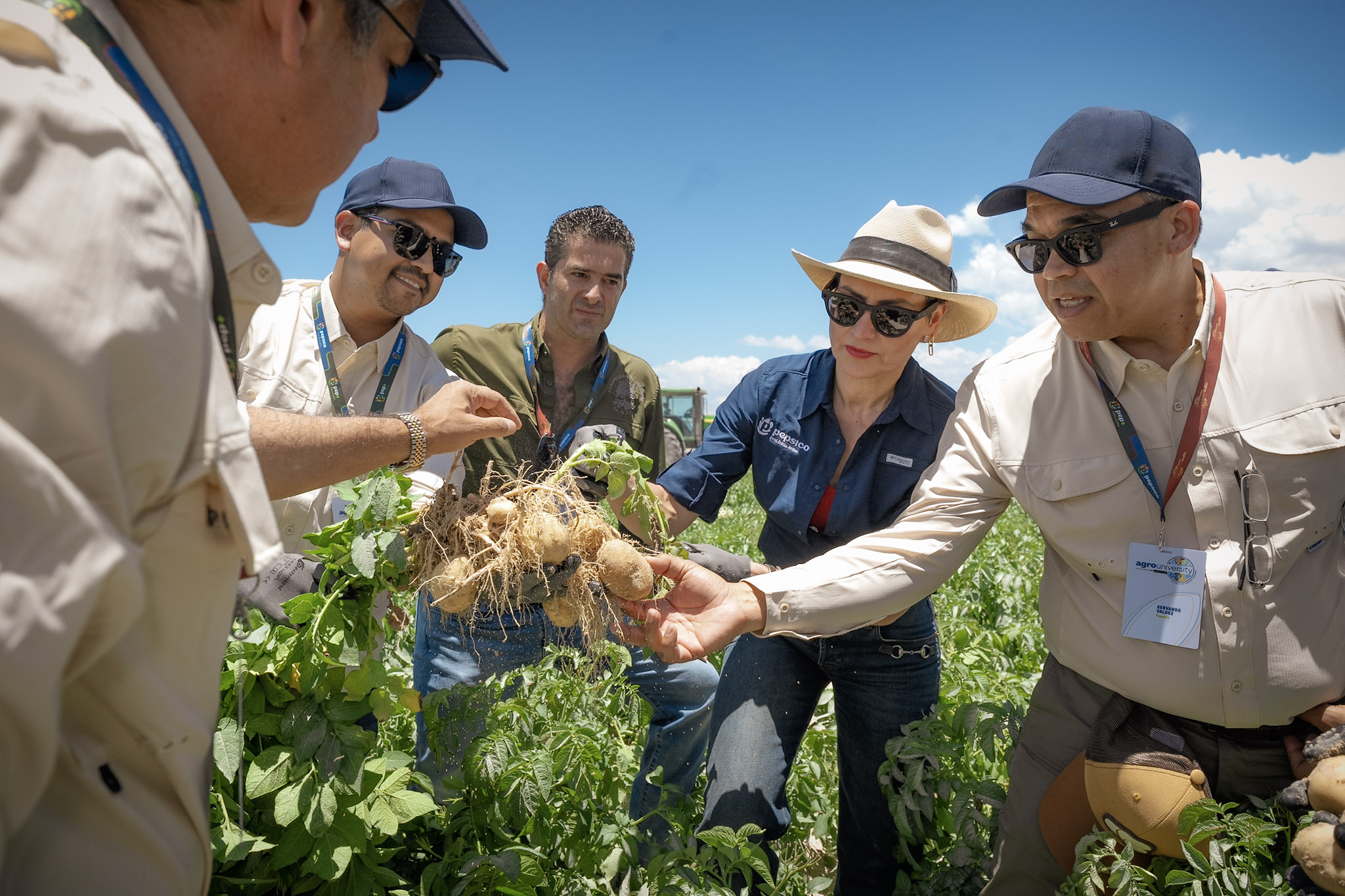
More than 140 growers, suppliers, agronomists and agriculture experts from over 35 countries gathered in Hannover, Germany this week for PepsiCo's 2026 Global Agro University — an annual forum designed to accelerate practical knowledge-sharing across the company's global potato supply chain. The event carries direct implications for foodservice and snack operators whose supply stability depends on the health and efficiency of upstream agricultural networks.
What Happened in Hannover
The week-long program combined expert-led lectures with hands-on field and storage demonstrations covering every stage of potato production: seed selection, soil preparation, irrigation scheduling, plant nutrition, pest management, harvesting and storage optimization. Sessions were led by specialists from industry, academia and PepsiCo's own agronomy teams, giving participants access to expertise rarely available within their local markets. Digital agriculture tools, crop monitoring technologies and precision farming practices also featured prominently, reflecting growing industry investment in data-driven decision-making at the field level.
A centerpiece of the program was a series of 10 market-specific case studies showcasing cross-border problem-solving. Highlighted initiatives included drip irrigation projects to improve water-use efficiency in China, grower capability programs in Vietnam, mechanization adoption efforts in Thailand and potato supply and quality optimization work in India — markets that collectively represent significant volume in PepsiCo's Frito-Lay ingredient pipeline.
Supply Chain Implications
"Some of the most valuable agricultural innovations come from the experiences growers gain in their own fields," said Marcelo Stefani, PepsiCo's executive vice president and chief procurement officer. "By harmonizing globally and sharing what works, we can help accelerate productivity, quality and operational improvements across markets."
For restaurant and foodservice operators, that upstream investment matters. Potato supply consistency — affecting everything from french fry availability to snack chip sourcing — hinges on the productivity and resilience of growers operating under increasingly variable climate and water conditions. Programs like Global Agro University represent a structural approach to de-risking that supply chain rather than reacting to disruptions after the fact.
PepsiCo, which works with approximately 300,000 farmers across its direct and indirect supply chains and relies on more than 50 crops grown in more than 60 countries, also runs regional versions of the program. A recent Latin America Agro University convened nearly 250 participants — including almost 140 farmers — for four days focused on artificial intelligence applications, efficient irrigation and regenerative agriculture practices.
The initiative is part of a wider beverage and food supply chain trend toward vertical integration of agricultural expertise, as major ingredient buyers recognize that yield and quality problems at the farm level translate directly into cost and availability pressures downstream. For operators tracking food sourcing and supply chain resilience, PepsiCo's model offers a case study in how large consumer goods companies are institutionalizing agronomy knowledge transfer at scale.
Written by Michael Politz, Author of Guide to Restaurant Success: The Proven Process for Starting Any Restaurant Business From Scratch to Success (ISBN: 978-1-119-66896-1), Founder of Food & Beverage Magazine, the leading online magazine and resource in the industry. Designer of the Bluetooth logo and recognized in Entrepreneur Magazine's "Top 40 Under 40" for founding American Wholesale Floral, Politz is also the Co-founder of the Proof Awards and the CPG Awards and a partner in numerous consumer brands across the food and beverage sector.