The Numbers
Gong cha, the global bubble tea brand operating nearly 2,200 locations across 33 markets, ranked No. 129 on the 2026 Franchise Times Top 400—up five spots from No. 134 in 2025. The brand's global systemwide sales grew 8.8% in 2025, more than doubling the 4.3% combined growth rate posted by all ranked systems, which together generated $784.6 billion in annual sales. For operators and investors tracking the beverage franchise segment, the gap is notable: coffee and tea concepts as a whole saw total sales increase 32.5% in 2025, according to Franchise Times, signaling sustained momentum in the category.
Expansion Strategy
Gong cha's Americas growth plan centers on three levers: multi-unit franchise agreements, nontraditional venue formats, and operational investment through its Gong cha 2.0 platform. On the deal front, the brand signed a 50-unit agreement in Texas with an experienced franchise operator and a three-unit agreement in Southern California in 2026, both reflecting a deliberate focus on partners capable of building sustained market density rather than single-unit outposts.
Nontraditional formats are adding new surface area. Gong cha recently confirmed its first U.S. airport location at Phoenix Sky Harbor International Airport and expanded its university footprint at the University of California, San Francisco, and UC Berkeley through its Proud to Serve licensing model. "We see significant room to grow beyond traditional stores, and we're going after it with a clear view of what works," said Michael Nedelkovich Jr., Vice President of U.S. Non-Traditional Franchise Development at Gong cha. "High traffic gets our attention, but it takes more than that to build a successful location." The company now operates in more than 240 locations across 24 states, Washington, D.C., and Puerto Rico, and is targeting more than 500 Americas stores by 2028.
Operations Behind the Growth
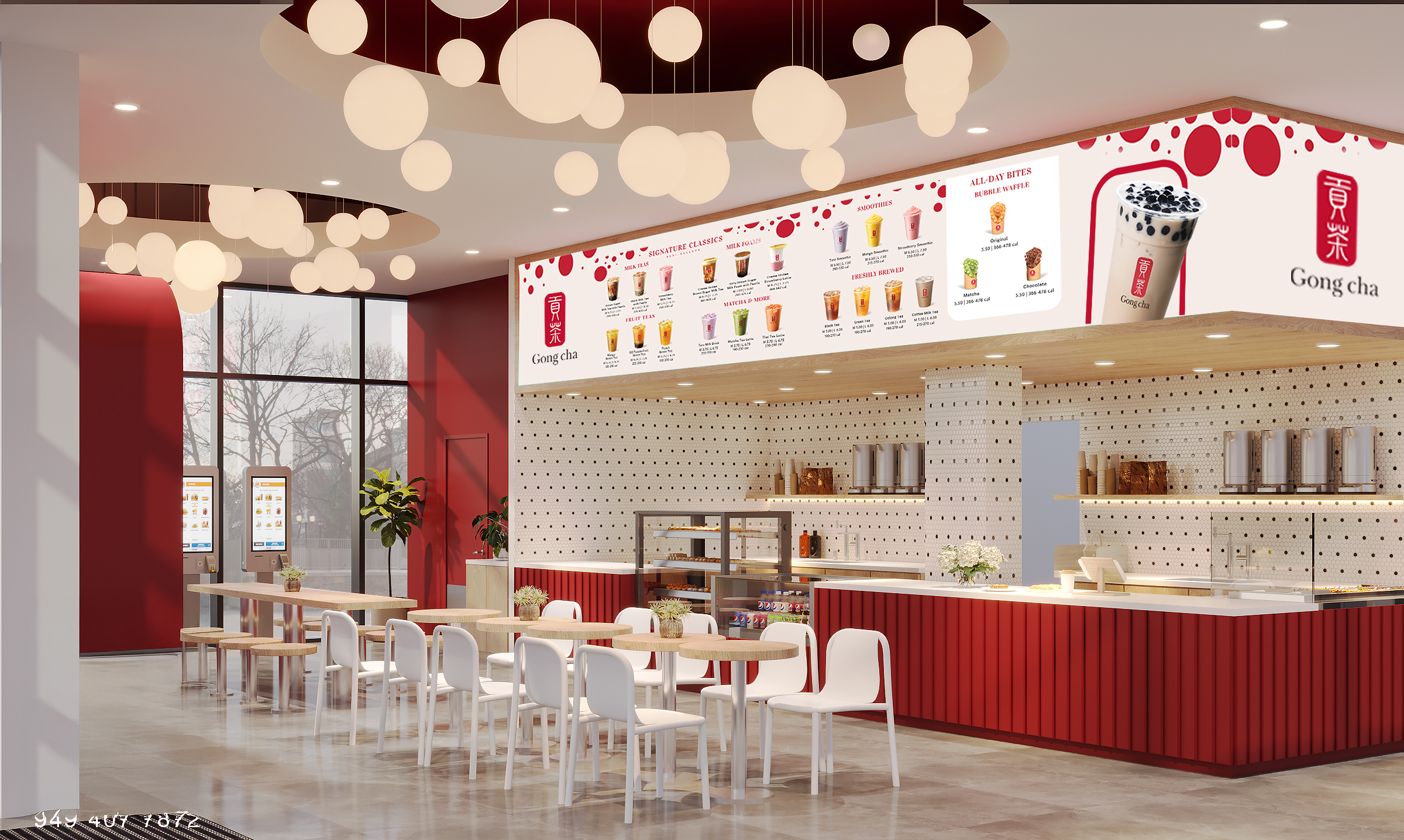
The Gong cha 2.0 operating model—combining automated beverage preparation, digital ordering, and optimized store design—is central to how the brand intends to scale without sacrificing consistency. Self-service kiosks let guests configure their drinks, while traditional counter ordering remains available. Automated back-of-counter preparation is designed to absorb order volume and customization complexity, freeing staff to focus on the guest experience at handoff.
"Sustaining both [guest and franchisee loyalty] requires more than a compelling menu," said Geoff Henry, President of Gong cha Americas. "It takes an operating model that can handle customization at scale, support consistent service, and adapt to different real estate opportunities." For prospective multi-unit operators, that operational infrastructure is increasingly a differentiator in a beverage franchise landscape where throughput and consistency at high volume are the primary barriers to scaling a bubble tea concept.
Gong cha has ranked No. 1 in the Tea category on Entrepreneur's Franchise 500® for five consecutive years. Its trajectory mirrors broader restaurant and foodservice franchise trends where beverage-forward concepts are capturing a growing share of both consumer spending and franchisee interest, particularly among Gen Z demographics who index highly for customizable, experiential drink formats. The brand is actively recruiting experienced multi-unit operators for both traditional and nontraditional venues.
Written by Michael Politz, Author of Guide to Restaurant Success: The Proven Process for Starting Any Restaurant Business From Scratch to Success (ISBN: 978-1-119-66896-1), Founder of Food & Beverage Magazine, the leading online magazine and resource in the industry. Designer of the Bluetooth logo and recognized in Entrepreneur Magazine's "Top 40 Under 40" for founding American Wholesale Floral, Politz is also the Co-founder of the Proof Awards and the CPG Awards and a partner in numerous consumer brands across the food and beverage sector.