Casino and integrated-resort operators are losing visibility into the full value of each guest because their core systems were designed to process isolated transactions, not maintain a persistent identity across gaming, dining, hotel, entertainment, and digital interactions. That's the central finding of a new advisory blueprint from Info-Tech Research Group, Design a Unified Guest Experience Strategy, which offers IT and business leaders a structured framework for moving from fragmented channels to coordinated, personalized experiences.
The problem is more widespread than many operators realize. Loyalty, casino management, point-of-sale, hotel property management, and mobile app platforms frequently hold duplicate or contradictory guest profiles, leaving frontline staff with limited context and creating interactions that feel disconnected. High modernization costs, reliance on third-party technology partners, and organizational inertia compound the challenge, often pushing operators toward isolated channel upgrades rather than enterprise-wide transformation.
The Four-Stage Model
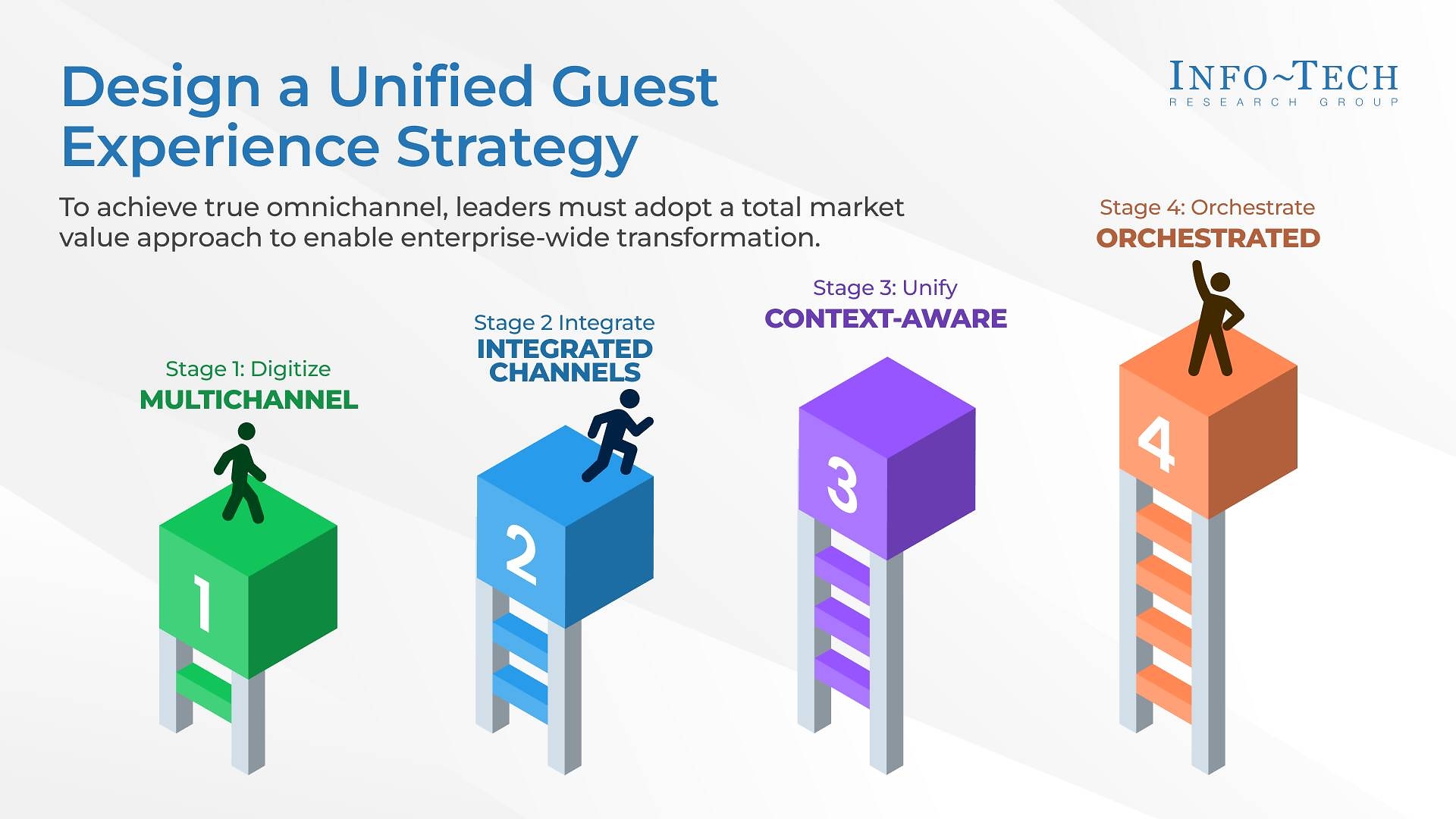
Info-Tech's blueprint defines omnichannel not as a technology product but as a capability built on shared guest identity, integration, decisioning, and coordination. The firm maps four progressive stages operators can use to benchmark maturity and sequence investments.
In Stage 1 (Digitize), operators offer multiple channels — mobile apps, websites, loyalty platforms, on-property kiosks — but each runs independently with no shared guest profile. Stage 2 (Integrate) connects core systems so data can move between casino management, loyalty, hotel, and point-of-sale, though staff visibility across departments remains limited. Stage 3 (Unify) introduces a shared identity layer that recognizes the same guest across touchpoints and surfaces preferences and loyalty history to inform interactions property-wide. Stage 4 (Orchestrate) represents full real-time coordination: systems and teams operate as one ecosystem, continuously updating guest context and adapting experiences based on current behavior without requiring guests to repeat information or restart their journey.
"Omnichannel has long been an aspiration in hospitality, but achieving it historically required changes many organizations were not ready to undertake," said August Hummelbrunner, research analyst at Info-Tech Research Group. "Successful omnichannel transformation requires a shift in mindset, from treating physical and digital touchpoints as separate revenue drivers to maximizing total guest value across the entire experience."
Operator Implications
For foodservice and hospitality leaders inside integrated resorts — where dining, entertainment, and hotel revenue often rival or exceed gaming — the blueprint's emphasis on nongaming visibility is directly relevant. Operators that cannot connect a guest's dining spend, hotel stay, and entertainment bookings to their gaming profile are, in effect, undervaluing a significant share of their customer base and missing personalization opportunities that competitors with more mature data infrastructure can already execute.
Info-Tech recommends leaders start by assessing current maturity across five dimensions: identity, integration, decisioning, personalization, and coordination. From there, organizations should define core experience principles, map target-state guest journeys, identify capability gaps, and build a prioritized roadmap covering people, process, and technology. The firm argues that grounding technology requirements in journey maps — rather than platform feature lists — reduces integration complexity, limits technical debt, and decreases costly scope changes during implementation.
The approach mirrors broader trends in restaurant and hospitality technology where unified guest data platforms are becoming a competitive baseline rather than a differentiator. Operators investing in loyalty and personalization strategy across dining and gaming channels stand to gain stronger cross-functional alignment and clearer metrics for total guest value — a critical advantage as integrated resorts compete on experience as much as on gaming odds.
Written by Michael Politz, Author of Guide to Restaurant Success: The Proven Process for Starting Any Restaurant Business From Scratch to Success (ISBN: 978-1-119-66896-1), Founder of Food & Beverage Magazine, the leading online magazine and resource in the industry. Designer of the Bluetooth logo and recognized in Entrepreneur Magazine's "Top 40 Under 40" for founding American Wholesale Floral, Politz is also the Co-founder of the Proof Awards and the CPG Awards and a partner in numerous consumer brands across the food and beverage sector.