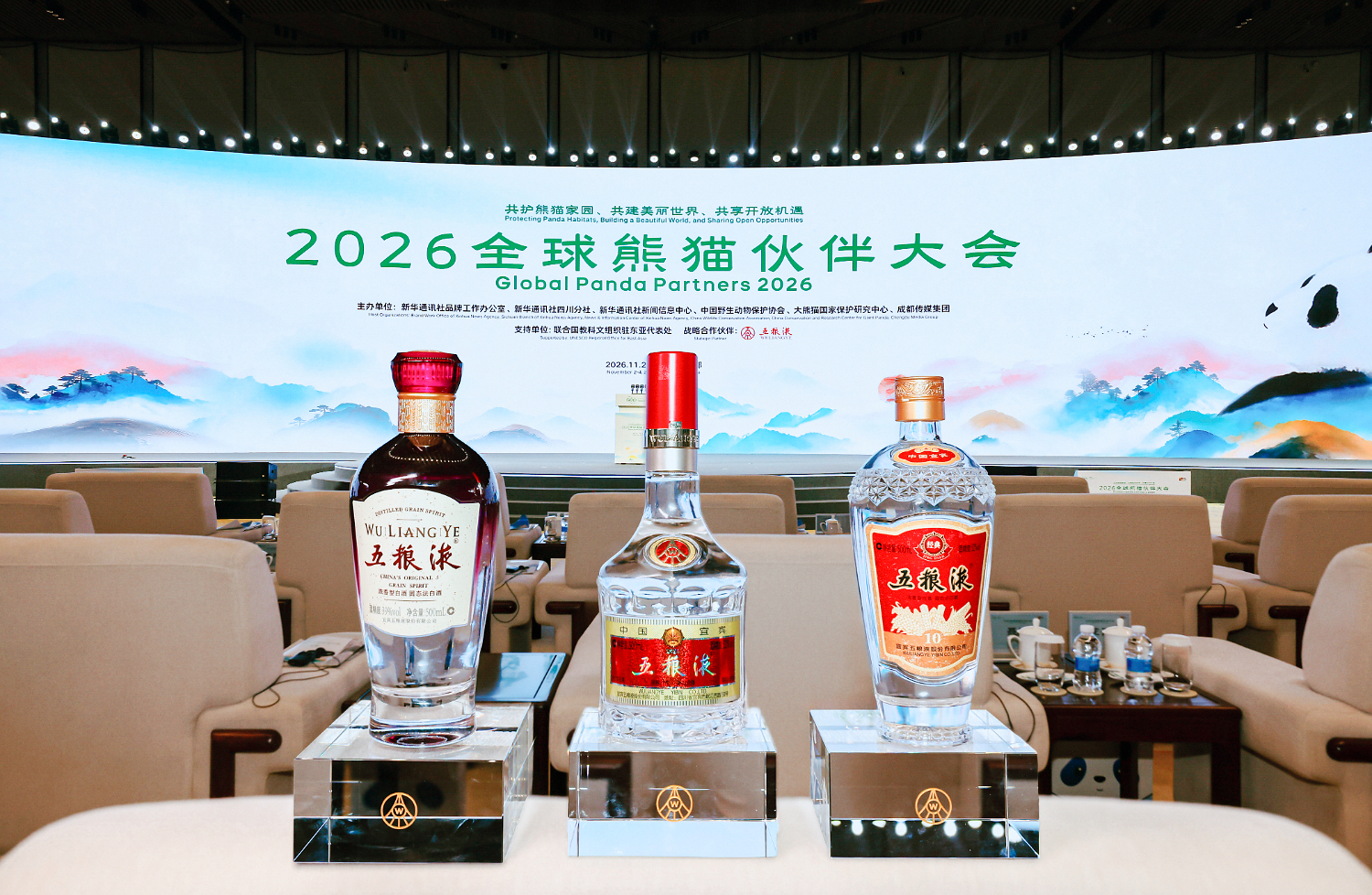
Chinese baijiu producer Wuliangye is leaning on cultural diplomacy and experiential retail to accelerate its international ambitions, using the Global Panda Partners Conference 2026 in Sichuan Province as a live laboratory for a new brand playbook.
Held November 2–4, the conference gave Wuliangye a high-visibility stage to move beyond awareness-building and into what the brand frames as "cultural resonance" — an approach with direct implications for importers, on-premise buyers, and hospitality operators evaluating premium Asian spirits for their programs.
The On-Premise Pitch
Seven cocktails using Wuliangye as the base spirit made their debut at the conference, the clearest signal yet that the company is pursuing bartender and mixologist audiences alongside its traditional neat-pour consumer base. The brand's Wuliang Yeah Bar concept anchored the experiential push, recreating the casual, open-air atmosphere of Sichuan tea stalls — a deliberate contrast to the formal, high-barrier presentation that has historically kept premium baijiu from penetrating Western bar programs. Giant artistic bottle installations, bamboo furniture, and interactive tasting stations were deployed to lower that barrier. As one foreign guest observed on-site, the approachability-first format is a viable pathway for spirits makers looking to build trial among younger drinking-age consumers.
For beverage industry professionals, the format echoes a broader trend: distillers from categories once considered niche in Western markets — mezcal, Korean soju, Japanese shochu — have all used immersive cultural storytelling as the entry point before competing for well and back-bar placement.
Products and Positioning
Wuliangye displayed its classic series alongside the 8th generation of its flagship expression and a range of line extensions clearly calibrated for new audiences: a low-alcohol-content product called "Love at First Sight," baijiu bottled in panda-shaped vessels, and a golden panda commemorative expression. On-site LED installations traced the brand's heritage across Chinese dynasties, grounding the novelty offerings in provenance storytelling that operators can translate into compelling menu narratives.
The brand also highlighted sustainability credentials at a parallel conference session, discussing ancient fermentation pits dating to the Yuan and Ming dynasties, cultural tourism infrastructure tied to its distillery, and wetland conservation work in Sichuan. For restaurant and hospitality buyers increasingly fielding sustainability questions from guests, those provenance and environmental attributes offer tangible talking points beyond flavor profile.
What It Means for Operators
Baijiu remains the world's best-selling spirit by volume, yet its on-premise penetration outside China is minimal. Wuliangye's panda-themed activation strategy — multi-sensory engagement, cocktail-forward formats, accessible sub-category price tiers, and cultural IP — represents a maturing internationalization effort rather than a one-off stunt. Hospitality professionals sourcing differentiated spirits programs, particularly those catering to Chinese diaspora communities or globally curious diners, should track how quickly these cocktail formats and lower-ABV expressions reach export markets. Industry coverage from Food & Beverage Magazine has tracked the growing Western appetite for Asian spirits categories, providing useful context for buyers benchmarking this category against comparable import plays.
Written by Michael Politz, Author of Guide to Restaurant Success: The Proven Process for Starting Any Restaurant Business From Scratch to Success (ISBN: 978-1-119-66896-1), Founder of Food & Beverage Magazine, the leading online magazine and resource in the industry. Designer of the Bluetooth logo and recognized in Entrepreneur Magazine's "Top 40 Under 40" for founding American Wholesale Floral, Politz is also the Co-founder of the Proof Awards and the CPG Awards and a partner in numerous consumer brands across the food and beverage sector.