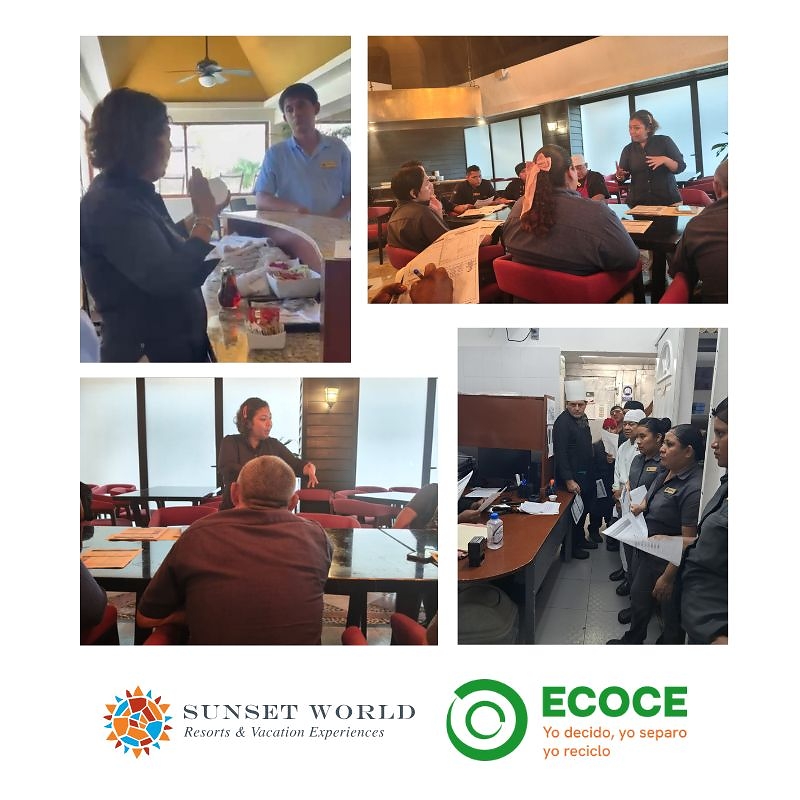
Cancún-based Sunset World Group is rolling out a formal sustainability partnership with ECOCE, a Mexican non-profit focused on waste management and recycling culture, beginning September 15, 2026. The agreement brings structured circular economy processes into the day-to-day operations of the group's six resort hotels in Cancún and Playa del Carmen — a move that signals how large hospitality operators in Mexico's tourism corridor are treating environmental compliance as an operational standard rather than a marketing footnote.
What the Partnership Covers
Under the agreement, Sunset World Group will align its hotel operations with the principles and standards of Mexico's Circular Economy Law. That means overhauling how materials move through the properties — from waste separation and handling at the point of generation to recovery processes that reintroduce materials into production cycles rather than sending them to landfill. The partnership also targets the human side of sustainability: raising awareness among employees, resort members, and guests about reducing, reusing, and recycling in a hospitality context where single-use waste volumes can be substantial.
For foodservice and food and beverage directors managing resort restaurants and banquet operations, the implications are direct. Kitchen waste streams, packaging materials, and back-of-house consumables are among the highest-volume categories in any full-service hotel, and formalizing separation and recovery protocols typically requires both staff training and changes to procurement and supplier relationships. The ECOCE framework gives Sunset World a third-party structure against which to measure and report progress — an increasingly important factor as group travel buyers and international tour operators scrutinize environmental credentials.
Building on Existing Green Infrastructure
Sunset World Group is not starting from zero. The company already sources electricity from Mexican wind farms and geothermal plants across all six properties and previously executed an energy efficiency program that replaced supply technologies at its hotels. The ECOCE partnership extends that environmental infrastructure into the waste and materials dimension, rounding out what the group is positioning as a comprehensive approach to responsible resort management.
That combination of renewable energy sourcing and circular waste management is becoming a competitive differentiator in the resort hospitality segment, particularly for properties that depend on international guests sensitive to sustainability standards. Operators in similar all-inclusive and vacation-ownership markets — a segment where hospitality sustainability trends are reshaping guest expectations — are watching how formalized frameworks like this one translate into measurable outcomes.
For food and beverage operators benchmarking their own programs, the Sunset World-ECOCE model illustrates how partnering with an established non-profit can accelerate compliance and credibility simultaneously. Coverage of similar resource-efficiency initiatives in hotel foodservice is a growing area across restaurant and hospitality operations reporting, reflecting the industry-wide pressure to demonstrate environmental accountability through third-party-verified programs rather than self-reported commitments.
Written by Michael Politz, Author of Guide to Restaurant Success: The Proven Process for Starting Any Restaurant Business From Scratch to Success (ISBN: 978-1-119-66896-1), Founder of Food & Beverage Magazine, the leading online magazine and resource in the industry. Designer of the Bluetooth logo and recognized in Entrepreneur Magazine's "Top 40 Under 40" for founding American Wholesale Floral, Politz is also the Co-founder of the Proof Awards and the CPG Awards and a partner in numerous consumer brands across the food and beverage sector.