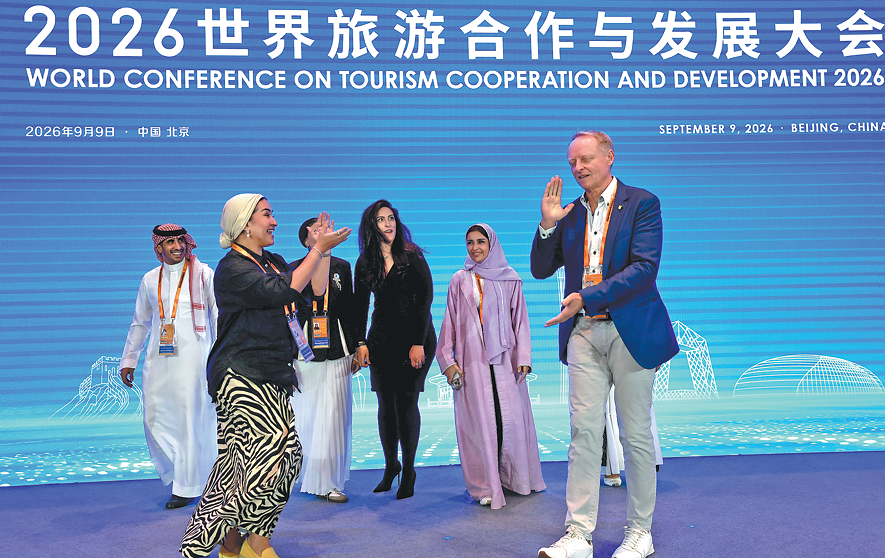
A new AI-powered English cultural tourism platform called "China Bound•Beijing" launched this week at the World Conference on Tourism Cooperation and Development 2026 in Beijing, signaling a broadening push by Chinese authorities to attract and serve inbound international visitors — with direct implications for hospitality and foodservice operators eyeing the China market.
Developed jointly by China Daily and the Beijing Municipal Bureau of Culture and Tourism, the platform is accessible via an English-language website as well as dedicated pages on Alipay and WeChat mini-programs. It bundles itinerary planning, AI-powered travel assistance, and curated cultural experiences — including immersive intangible cultural heritage offerings — into a single interface designed for overseas travelers unfamiliar with Chinese digital ecosystems.
"We aim to tell Beijing's cultural-tourism stories in a language overseas audiences understand, and translate the city's resource advantages into inbound tourism appeal," said Zheng Fang, deputy director of the Beijing Municipal Bureau of Culture and Tourism, at the platform's unveiling. "We promote immersive experiences such as intangible cultural heritage to enable inbound visitors to stay longer for in-depth travel."
Operator Implications
For hospitality and restaurant operators — whether running international properties in Beijing or developing inbound travel packages — the platform's reach into Alipay and WeChat represents meaningful distribution. Both super-apps are deeply embedded in Chinese consumer life and increasingly support cross-border payment and booking functions. A multilingual, AI-guided visitor who arrives with pre-planned itineraries and seamless payment tools is, in practical terms, a higher-value, lower-friction guest. That dynamic echoes broader hospitality industry trends around frictionless guest experience as a driver of spend and dwell time.
The conference, hosted by the World Tourism Cities Federation and themed "Smart Tourism, Shared Prosperity," drew representatives from more than 50 countries. Speakers emphasized that digital tools should complement, not replace, human connection in tourism. Ben Montgomery, vice-chairwoman of the Pacific Asia Travel Association, put it plainly: "Artificial intelligence, data analytics and digital platforms are reshaping how people discover, book and experience destinations worldwide. As we embrace these tools, we must remember a fundamental truth: Tourism is ultimately about people."
Rankings and Policy Context
The conference also saw the unveiling of the World Tourism Cities Development Report (2025–26), which ranked Beijing fifth globally — behind New York, Tokyo, Paris, and London — citing the city's cultural resources, smart governance, and safety assurance as key drivers of its improved standing. Shanghai, Hong Kong, Milan, Istanbul, and Dubai rounded out the top ten.
China's expanding visa-free policy was cited by multiple attendees as a structural tailwind. Olaf McKay, mayor of Valletta, Malta, noted that the policy is making China increasingly accessible to younger European travelers, a cohort that tends to pursue experience-led, food-forward itineraries. For the restaurant and foodservice sector, that translates to growing demand for culturally immersive dining as part of the inbound tourism mix — precisely the kind of "in-depth travel" the new platform is designed to encourage.
The "China Bound•Beijing" platform is live at chinabound.cn/beijing and is part of a broader China Bound initiative that covers multiple Chinese destinations. As food and beverage operators in global gateway cities watch Chinese outbound tourism recover and evolve, platforms like this one illustrate how destination authorities are investing in digital infrastructure to compete for longer stays and higher per-visitor spending.
Written by Michael Politz, Author of Guide to Restaurant Success: The Proven Process for Starting Any Restaurant Business From Scratch to Success (ISBN: 978-1-119-66896-1), Founder of Food & Beverage Magazine, the leading online magazine and resource in the industry. Designer of the Bluetooth logo and recognized in Entrepreneur Magazine's "Top 40 Under 40" for founding American Wholesale Floral, Politz is also the Co-founder of the Proof Awards and the CPG Awards and a partner in numerous consumer brands across the food and beverage sector.