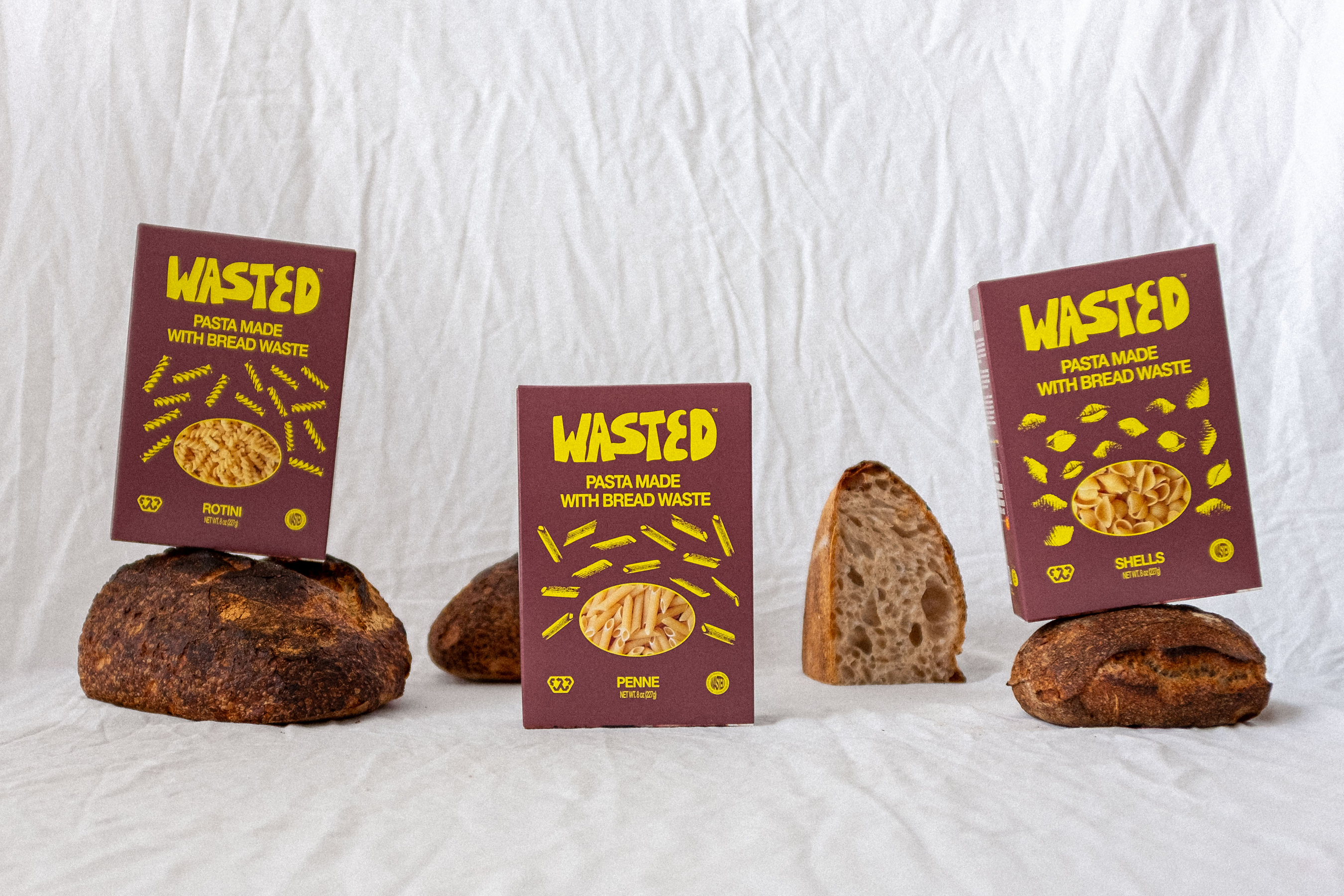
Copenhagen-born Eat Wasted is entering the U.S. foodservice and retail market with a product line that converts surplus artisanal European bread into premium dried pasta — a format the brand says delivers superior sauce adhesion and flavor while diverting bread from landfill. The company launched its American presence through community dinners in New York City, with its first event selling out in under a day. Retail distribution at Misfits Market is already live, and placement at Whole Foods Market is expected later this summer.
The Product & Process
Founded by Leif Friedmann and Jorge Aguilar, Eat Wasted rescues surplus loaves from European bakeries and processes them using traditional pasta-making methods at a European facility. The bread-based dough produces a naturally rough surface that grips sauces — a texture profile that has earned the brand placements in Michelin-starred kitchens as well as neighborhood soup kitchens. Each serving, the company states, saves approximately one slice of bread from going to waste. Products ship in recyclable paper packaging, and the company donates one pasta portion for every ten sold.
"After years working in food and hospitality, I saw firsthand how much perfectly good bread gets thrown out every day," said Friedmann. "We've created a pasta that stands on its own for taste, texture, and quality, while also helping to reduce food waste."
Why Operators Should Pay Attention
For restaurant and foodservice buyers, Eat Wasted represents a growing class of ingredients that carry both culinary credibility and a verifiable sustainability story — increasingly valuable on menus as diners scrutinize sourcing. The brand's event-driven U.S. entry mirrors how farm-to-table and hyper-local concepts built early momentum: community gatherings first, then retail shelf. Having hosted more than 10,000 guests across cities worldwide, the company arrives with demonstrated consumer demand; a waitlist of more than 3,000 prospective customers signals appetite well beyond the initial dinner circuit.
The move also fits squarely within the broader restaurant sustainability and food-waste reduction trends reshaping procurement decisions across independent and chain operations alike. Upcycled ingredients — those made from byproducts or surplus that would otherwise be discarded — have gained traction with both culinary teams and the retail buyers who source specialty grocery, a dynamic well documented in recent food and beverage industry analysis.
Co-founder Aguilar framed the commercial opportunity plainly: "Our goal is to build a brand that changes perceptions by showing that some of the best ingredients are the ones that already exist. When people taste the pasta, they immediately understand that sustainability can actually make a product better."
With Whole Foods distribution on deck, Eat Wasted will soon be competing directly in the premium dry-pasta set — a category where differentiation on provenance and purpose is increasingly a purchasing driver for both retail and foodservice operators. Food & Beverage Magazine has tracked similar upcycled-ingredient brands scaling quickly once major natural-channel retailers commit shelf space, suggesting the Whole Foods listing could be a meaningful velocity catalyst.
Written by Michael Politz, Author of Guide to Restaurant Success: The Proven Process for Starting Any Restaurant Business From Scratch to Success (ISBN: 978-1-119-66896-1), Founder of Food & Beverage Magazine, the leading online magazine and resource in the industry. Designer of the Bluetooth logo and recognized in Entrepreneur Magazine's "Top 40 Under 40" for founding American Wholesale Floral, Politz is also the Co-founder of the Proof Awards and the CPG Awards and a partner in numerous consumer brands across the food and beverage sector.