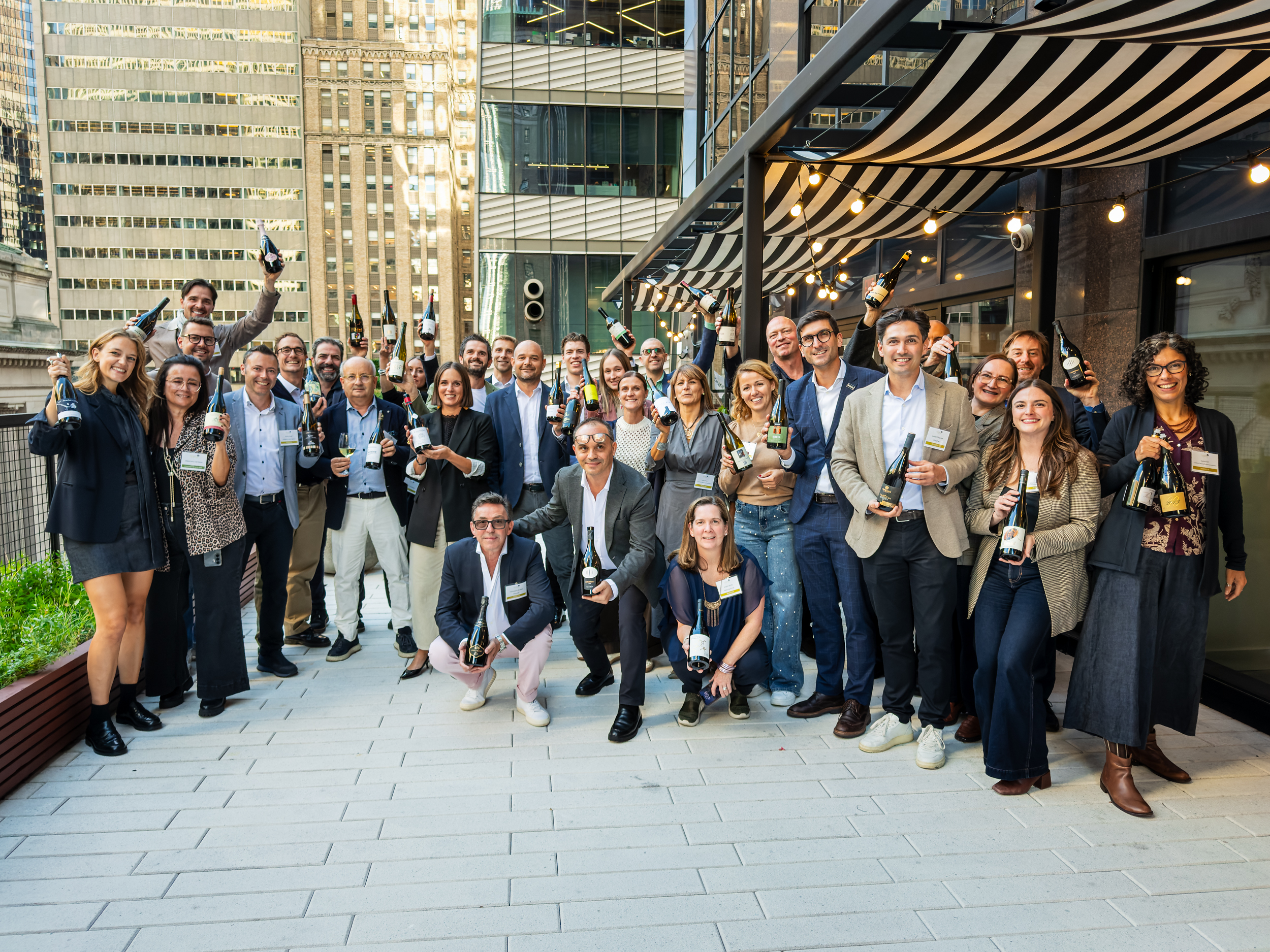
Twenty years after Consorzio Alto Adige Wines first formally presented its bottles to American wine journalists at a New York event in October 2006, the Italian alpine region returned to the city with its largest U.S. trade gathering to date. On October 6, 28 producers poured for nearly 200 wine professionals at 22 Vanderbilt in Manhattan, marking two decades of sustained investment in what the consortium calls its second most important export market by value.
What the Event Offered
The four-hour walkaround tasting gave sommeliers, importers, restaurateurs, and media direct access to the breadth of Alto Adige's portfolio — from signature whites like Pinot Bianco and Gewürztraminer to reds including Pinot Nero and indigenous variety Lagrein. Three thematic tasting bars explored diversity, terroir, and aging potential. Two sold-out masterclasses, led by Madeline Puckette, co-founder of Wine Folly, guided attendees through the region's most compelling expressions and its capacity for bottle age — a point increasingly relevant as restaurant wine programs seek cellar-worthy Italian alternatives.
For on-premise buyers, the format underscored a practical truth: direct education moves bottles. Trade events that pair structured masterclasses with open-floor pours give procurement teams the vocabulary to sell a lesser-known appellation to curious diners. Alto Adige's fruit-forward whites, in particular, align with the continued beverage industry trend toward lighter, high-acid wines that pair broadly across modern menus.
Two Decades, One Market
The event was organized by IDM South Tyrol in collaboration with the Consorzio Alto Adige Wines. Eduard Bernhart, Director of the Consorzio Alto Adige Wines, noted that the U.S. ranks as the region's fourth largest market by sales volume. "After 20 years of consistent investment, we have built a strong foundation in the United States, where wine professionals have shown a strong appreciation for the freshness, precision and diversity of Alto Adige wines, particularly our fruit-forward whites," Bernhart said, pointing to the longstanding presence of Italian restaurants as a key channel for building consumer awareness.
Margit Gamper, Director of Business Development at IDM South Tyrol, acknowledged a tougher trading environment but framed continued presence as essential to protecting relationships with the trade. The backdrop is real: shifting consumer preferences, economic pressure on discretionary spending, and a maturing imported-wine category have complicated growth for European appellations across the U.S. market. Still, operators in the restaurant wine and beverage space have shown resilience in supporting regionally distinctive imports that carry a compelling story — precisely the kind of narrative Alto Adige has spent two decades building.
The Consorzio was formally established in 2007, a year after that inaugural 2006 New York tasting hosted by the Chamber of Commerce of Bolzano introduced 34 U.S. wine journalists and critics to the region. A second, larger tasting followed in 2007, and coordinated trade engagement — spanning media relations, educational programming, and importer support — has continued since. Twenty grape varieties are cultivated across Alto Adige's vineyards, which span Mediterranean-influenced valley floors to Alpine hillsides, giving the region unusual range for its compact size.
Written by Michael Politz, Author of Guide to Restaurant Success: The Proven Process for Starting Any Restaurant Business From Scratch to Success (ISBN: 978-1-119-66896-1), Founder of Food & Beverage Magazine, the leading online magazine and resource in the industry. Designer of the Bluetooth logo and recognized in Entrepreneur Magazine's "Top 40 Under 40" for founding American Wholesale Floral, Politz is also the Co-founder of the Proof Awards and the CPG Awards and a partner in numerous consumer brands across the food and beverage sector.