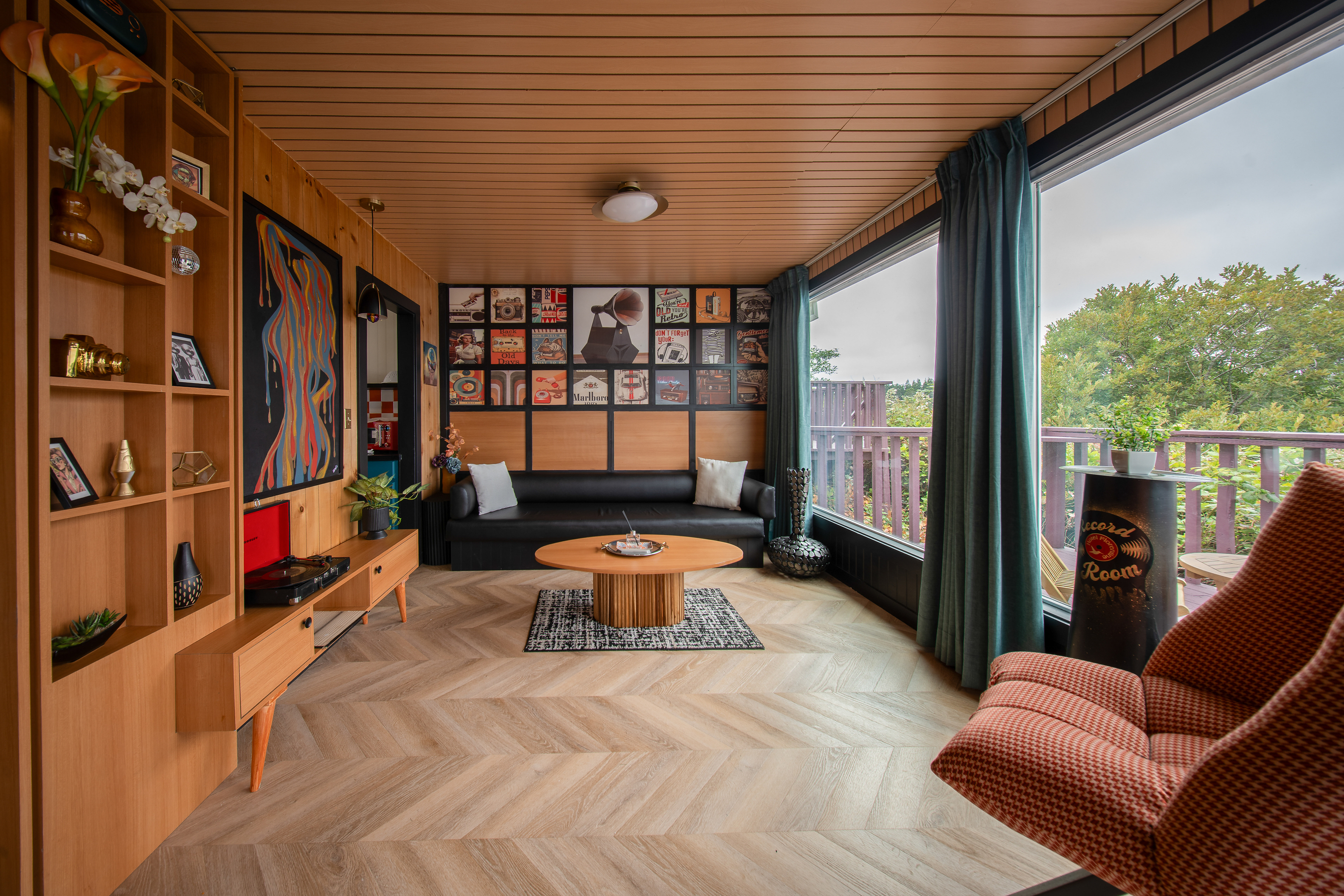
A 10-unit boutique hotel on Oregon's central coast has earned regional recognition less than a year after reopening, with The Florentine Waterfront Hotel receiving the 2026 Eugene, Cascades & Coast Destination Award from Travel Lane County on July 16, 2026. The honor was presented at the Visitor Industry Celebration, which also featured the public debut of Lane County's Destination Master Plan — a community-developed roadmap for regional tourism growth.
From Abandoned to Award-Winning
Owners Robin Singh and Sharan Kaur acquired the derelict 1940s-era property in November 2024 and immediately launched remediation work on a building that had sat vacant and required significant structural repair. Over six months, the pair restored two acres of lakeside grounds and modernized the interiors of all 10 cabins. The property soft-opened on April 15, 2025, reached full operation in June 2025, and has since reported an average year-round occupancy rate of 78% — a meaningful result for an independent property in a secondary coastal market.
For hospitality operators tracking adaptive reuse and boutique hotel development, the Florentine's trajectory offers a useful case study. The project demonstrates how a focused restoration of a small-footprint, historically significant property can generate competitive occupancy metrics while differentiating on environment and experience rather than amenity scale.
Sustainability as a Positioning Strategy
The ownership team framed the project explicitly around ecological stewardship from the outset. "When we first stepped onto the property, we knew our responsibility went beyond just rebuilding cabins; we needed to protect and highlight the incredible ecosystem of Siltcoos Lake," said Sharan Kaur. "Our vision was to restore this footprint thoughtfully, creating a sanctuary where guests can deeply connect with the raw beauty of the Oregon Coast, without disrupting the natural environment."
That positioning — nature-immersive lodging with minimal environmental disruption — aligns with broader demand trends in experiential travel and sustainable hospitality that have accelerated across independent and boutique segments. The property sits 8 miles south of Florence, Oregon, with cabins architecturally oriented toward Siltcoos Lake water views and integrated into an active wildlife habitat that includes a documented bald eagle nest in an onsite Douglas fir.
Regional Tourism Infrastructure
Travel Lane County President & CEO Samara Phelps framed the award in terms of destination-building impact rather than guest experience alone. "A hotel brought back to life... that's the work that makes a destination," Phelps said during the ceremony. The award formally recognizes organizations making verifiable contributions to regional tourism infrastructure — a distinction that positions winning properties as partners in destination development, not merely hospitality vendors.
For independent hoteliers and regional tourism boards alike, the Florentine's story reinforces a durable principle: restoring underutilized or abandoned lodging inventory can expand a destination's capacity and competitiveness without the capital intensity of ground-up development.
Written by Michael Politz, Author of Guide to Restaurant Success: The Proven Process for Starting Any Restaurant Business From Scratch to Success (ISBN: 978-1-119-66896-1), Founder of Food & Beverage Magazine, the leading online magazine and resource in the industry. Designer of the Bluetooth logo and recognized in Entrepreneur Magazine's "Top 40 Under 40" for founding American Wholesale Floral, Politz is also the Co-founder of the Proof Awards and the CPG Awards and a partner in numerous consumer brands across the food and beverage sector.