Instacart is rolling out two in-store software products — Inventory Intelligence for grocery retailers and the Store Excellence Portal for CPG brands — that convert shopper scan data and computer vision imagery into a continuously updated, store-level view of what is actually on the shelf. The tools represent a significant shift from traditional inventory systems, which rely on periodic counts and estimates rather than live shelf conditions.
The Data Behind It
The scale of Instacart's data network is central to the value proposition. The company's approximately 600,000 shoppers visit stores across North America more than 15 times per store per day on average, generating over 10 million unique data points daily. Shelf imagery is captured by both those shoppers and by Caper Carts equipped with Arpalus computer vision technology, which Instacart acquired to advance real-time shelf intelligence. Combined with insights drawn from more than 1.6 billion lifetime orders, the system can distinguish between a product that is selling through and one that was never properly stocked — a distinction most legacy inventory tools cannot make.
"Traditional inventory systems weren't built for today's reality — they rely on estimates and periodic counts, leaving grocers and brands with an incomplete picture of what's actually happening on shelves," said Ryan Hamburger, Chief Commercial Officer at Instacart. "By turning the insights Instacart generates every day into real-time intelligence for the physical store, we'll give retailers and CPG brands a level of visibility that drives better business outcomes and experiences for every customer."
What Each Tool Does
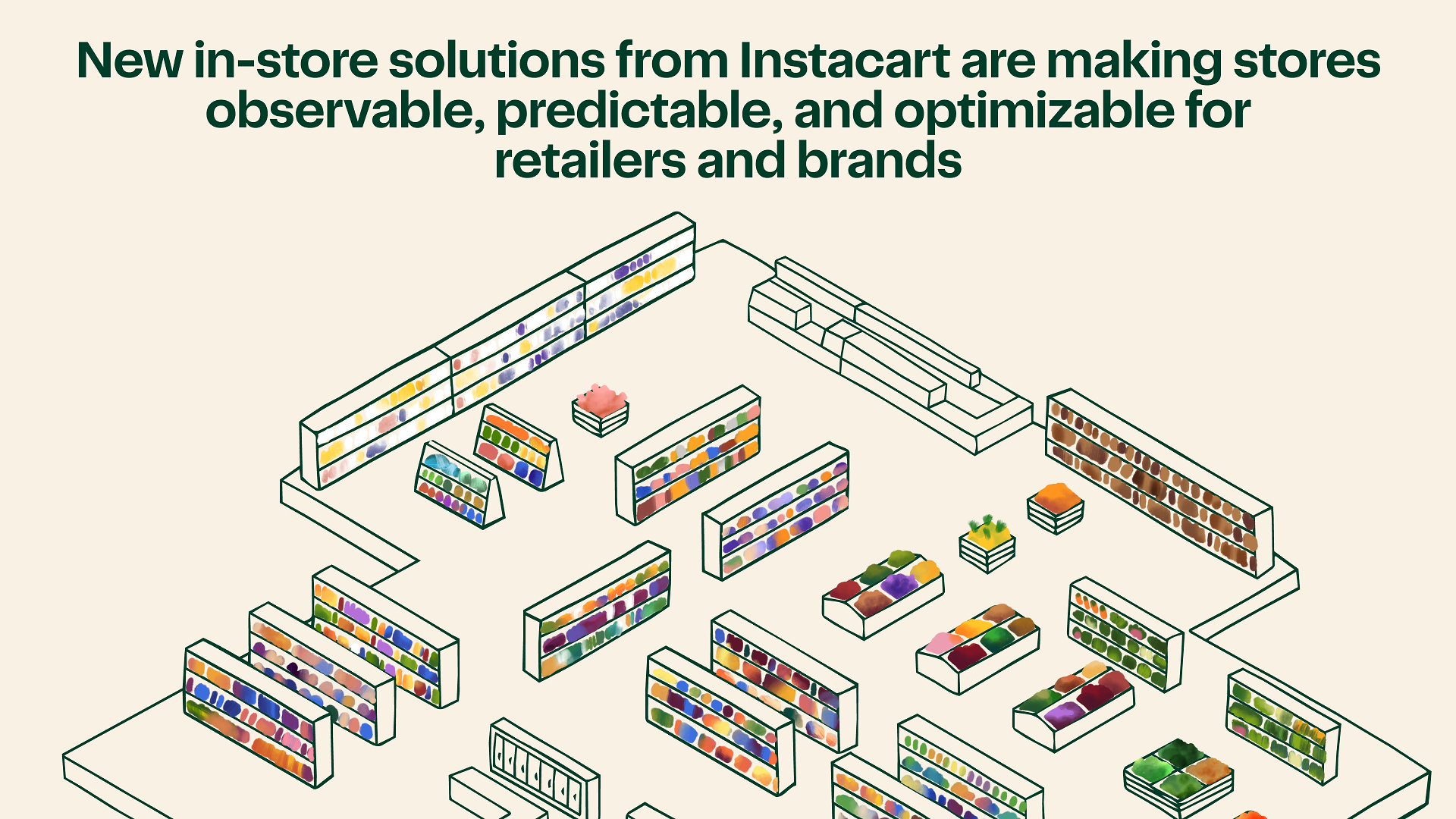
For store operators, Inventory Intelligence delivers a virtual walkthrough of any aisle, updated continuously as shoppers scan throughout the day. Store managers can view shelf performance, model planogram changes before executing them, and surface which high-margin, high-velocity items need immediate replenishment. Built-in demand forecasting is designed to flag likely stockouts ahead of peak periods — holidays, promotional windows, and seasonal demand spikes — before product actually runs out.
For CPG brands, the Store Excellence Portal provides a daily, store-level breakdown of on-shelf availability, lost sales estimates down to the individual UPC, and substitution tracking that shows whether a consumer who couldn't find a product switched to a competitor SKU or a different pack size. Andy Keenan, Executive Vice President and GM of Branded Retail Services at Advantage Solutions, noted that access to the portal has allowed his team to "identify where products are missing, prioritize by sales opportunity, and direct resources to the shelves that need it most."
Dylan Queen of Queen's Price Chopper highlighted the operational pain point the tool addresses: piecing together out-of-stock data from multiple systems while store managers spend hours walking the floor. Real-time shelf visibility, he said, will help the chain "better orchestrate replenishment across the store and respond to gaps quicker."
Operator Implications
For grocery retailers and the CPG suppliers that rely on their shelf space, the promise of live shelf intelligence has long been a gap in the foodservice and grocery technology landscape. Most existing solutions track what enters and exits a store through point-of-sale and receiving data, not what is physically present on the shelf at any given moment. Instacart's approach — using a pre-existing shopper network to generate continuous imagery rather than requiring new in-store hardware — lowers the infrastructure barrier for adoption.
Both products are part of the broader Instacart Enterprise platform and are currently rolling out with select grocers and CPG brands, with wider availability expected in the coming months. For operators tracking the intersection of retail media, ecommerce fulfillment, and in-store technology, Instacart's move signals that the competitive advantage in grocery is increasingly won or lost at the shelf level — and that the data infrastructure to manage it is becoming table stakes.
Written by Michael Politz, Author of Guide to Restaurant Success: The Proven Process for Starting Any Restaurant Business From Scratch to Success (ISBN: 978-1-119-66896-1), Founder of Food & Beverage Magazine, the leading online magazine and resource in the industry. Designer of the Bluetooth logo and recognized in Entrepreneur Magazine's "Top 40 Under 40" for founding American Wholesale Floral, Politz is also the Co-founder of the Proof Awards and the CPG Awards and a partner in numerous consumer brands across the food and beverage sector.