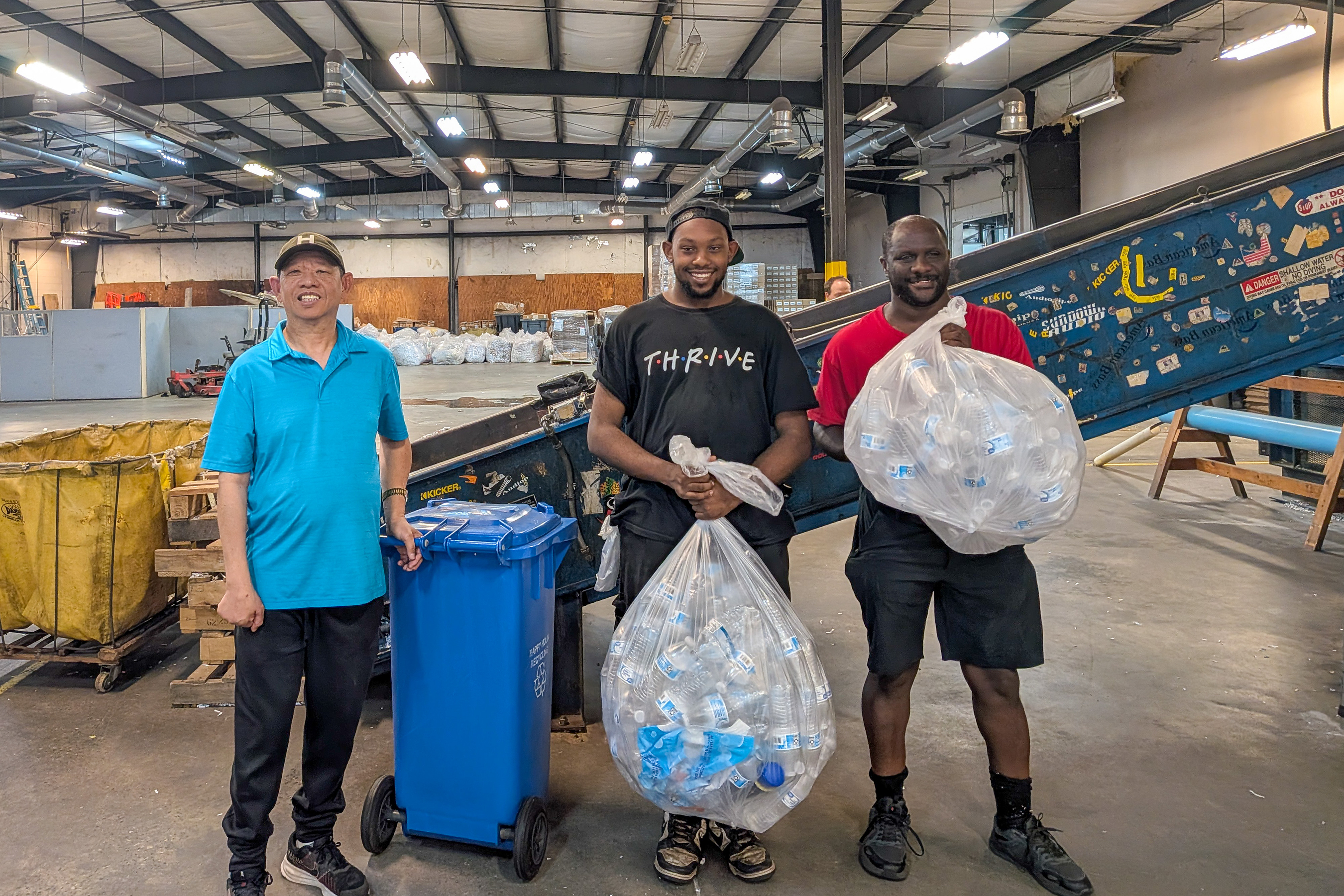
A beverage-industry-funded nonprofit is putting $137,500 behind six Georgia recycling projects aimed at keeping bottles and cans out of landfills—an investment that underscores growing pressure on beverage producers and foodservice operators to demonstrate credible sustainability commitments.
Made to Be Remade Georgia, established by the Georgia Beverage Association and its member companies after launching as a statewide initiative in 2025, announced the 2026 grant recipients this month. The Keep Georgia Beautiful Foundation, which operates a network of approximately 70 local affiliates, serves as the program's official sustainability partner.
The 2026 Recipients
The six funded organizations represent a range of approaches to the recycling access gap. Keep Columbus Beautiful Commission ($25,000) will run Crush It & Clean It Columbus, combining neighborhood cleanups and recycling drives. Keep Hall Beautiful ($25,000) is expanding its Green Schools Initiative with recycling stations and education expected to reach more than 9,700 students and educators. Keep Pickens Beautiful ($25,000) is launching Recycle Main Street, a downtown Jasper collection station serving local businesses in partnership with the City of Jasper and Pickens County Recycling Center—a model with direct relevance to foodservice operators who generate high volumes of beverage container waste.
Keep Douglasville Beautiful ($12,500) is targeting 1,000 to 1,200 students through classroom competitions and collection activities. The Houston County Association for Exceptional Citizens ($25,000) will upgrade equipment at its Happy Hour recycling center while supporting vocational opportunities for adults with disabilities. Keep North Fulton Beautiful ($25,000) will install a dedicated baler at the Sandy Springs Recycling Center to boost processing capacity for plastic bottles and aluminum cans.
Results From Year One
The 2025 inaugural cohort is already producing measurable results. Keep Macon-Bibb Beautiful's outreach reached an estimated 26,000 residents through school visits and more than 15,000 educational mailers. A pilot program led by the Athens-Clarke County Solid Waste Department increased recycling diversion by nearly 25% at Cedar Shoals High School after introducing new bins, clearer signage, and staff training. In Warner Robins—where municipal curbside recycling isn't available—the Houston County Association for Exceptional Citizens upgraded its center to accept more types of plastics, filling a gap that affects both residents and local businesses.
Why This Matters for Operators
For restaurant and hospitality operators navigating sustainability expectations in foodservice, programs like Made to Be Remade Georgia signal that the beverage supply chain is investing in downstream infrastructure. Community recycling capacity directly affects whether the cans and bottles operators divert from their own waste streams actually get processed rather than landfilled.
Kevin Perry, president of the Georgia Beverage Association, emphasized the practical focus of the grants: "These six organizations are bringing practical solutions to the places people live, learn, and work, helping turn more used bottles and cans into new materials instead of sending them to landfills."
The nonprofit model—industry-funded but independently operated—reflects a broader trend in beverage industry sustainability where brands and trade groups are moving beyond pledge-making toward financing the physical infrastructure that makes container circularity possible. For Georgia operators, the expansion of accessible drop-off points and processing capacity could make it meaningfully easier to meet internal sustainability targets in the years ahead.
Written by Michael Politz, Author of Guide to Restaurant Success: The Proven Process for Starting Any Restaurant Business From Scratch to Success (ISBN: 978-1-119-66896-1), Founder of Food & Beverage Magazine, the leading online magazine and resource in the industry. Designer of the Bluetooth logo and recognized in Entrepreneur Magazine's "Top 40 Under 40" for founding American Wholesale Floral, Politz is also the Co-founder of the Proof Awards and the CPG Awards and a partner in numerous consumer brands across the food and beverage sector.