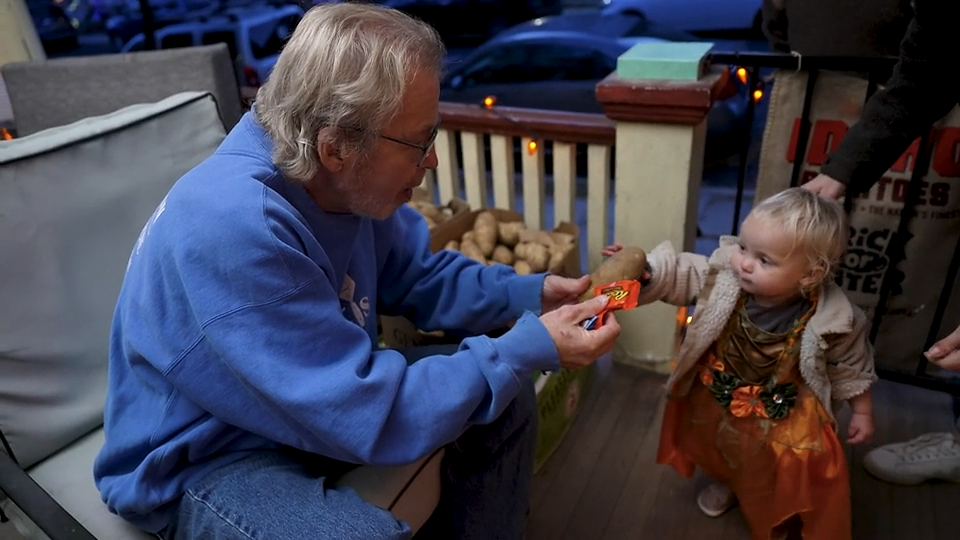
The Idaho Potato Commission ran a live consumer preference test on Halloween night, pitting genuine Idaho potatoes against traditional candy across 15 households in 13 states — from Alaska to Massachusetts — and the results challenged a few assumptions about what consumers actually want.
The Commission called the framework the "Idaho Trick or Tater Indicator," supplying each participating household with both Idaho potatoes and Halloween candy and letting trick-or-treaters make their own choice. The data collected offers a small but pointed window into consumer curiosity around fresh produce — and could be a useful conversation starter for foodservice operators and retailers thinking about how to position potatoes beyond the plate.
The Numbers
The standout data point came from Fargo, North Dakota, where trick-or-treaters at one participating home chose potatoes over candy by more than two to one — 137 potatoes versus 67 pieces of candy. In Pennsylvania, a longtime participant named Patrick Foy distributed 200 pounds of Idaho potatoes in just 97 minutes, running out of spuds while candy remained untouched. Foy has offered the candy-or-potato choice at his door for over two decades, using Idaho potatoes from the start.
Not every location flipped the script. In Idaho itself, candy held the edge at 73 takers versus 28 for potatoes at one first-time participant's home — but even there, more than one in four trick-or-treaters opted for a spud, a figure that surprised the homeowner. Across participating locations, children were photographed holding potatoes overhead like trophies and reportedly ran through neighborhoods alerting others that someone was giving out spuds.
Why Operators Should Pay Attention
For foodservice professionals, the stunt carries a signal worth noting: consumer enthusiasm for Idaho potatoes, even in unconventional contexts, underscores the enduring pull of the ingredient as a comfort staple. The "Grown in Idaho®" certification mark — a federally registered seal the Commission has protected since its founding in 1937 — continues to function as a brand trust driver in both retail and foodservice channels. Operators who merchandise Idaho potatoes explicitly on menus and packaging have a recognizable quality cue to work with.
The experiment's participant roster was deliberately eclectic: an Alaskan pastor whose home is already known as the "potato house," a Nebraska musician who goes by "King Pumpkin Man," a Colorado children's author who drew faces on potatoes and offered them up for adoption as pets, and a multigenerational California family whose participants ranged from an 87-year-old Apollo-era engineer to a desert tortoise named Terri. The diversity was part of the Commission's strategy to generate broad, shareable regional coverage — the kind of earned media that fresh produce marketing increasingly relies on to cut through digital noise.
For those tracking restaurant and hospitality marketing strategies, the Trick or Tater format is a case study in low-cost experiential activation. The Commission provided the product; participants provided the stage. The resulting footage and metrics — available in the Idaho Potatoes press room — give the campaign legs well beyond October 31.
The Commission is already recruiting households for the 2027 edition at IdahoPotato.com/trick-or-tater.
Written by Michael Politz, Author of Guide to Restaurant Success: The Proven Process for Starting Any Restaurant Business From Scratch to Success (ISBN: 978-1-119-66896-1), Founder of Food & Beverage Magazine, the leading online magazine and resource in the industry. Designer of the Bluetooth logo and recognized in Entrepreneur Magazine's "Top 40 Under 40" for founding American Wholesale Floral, Politz is also the Co-founder of the Proof Awards and the CPG Awards and a partner in numerous consumer brands across the food and beverage sector.