A South Korean food manufacturer has filed a patent on a rice noodle production method designed to break one of the category's most persistent technical barriers: the requirement to build products around a single rice variety.
HanAll F&B Farming Association Corporation, based in Taebaek, Gangwon Province, submitted the patent application in June 2026 after three years of internal R&D. The core challenge the company was trying to solve — raising domestic rice content to 50% or more while using diverse rice varieties — has historically constrained manufacturers and limited the range of rice noodle products available to foodservice buyers and processors.
Three Years of R&D
The development program consumed approximately 6 tons of rice flour across that period as engineers worked to improve noodle separability, a practical quality concern that affects texture, cooking performance, and ultimately menu execution in both foodservice and retail applications. The company describes the filed patent not as a finished product but as a technical platform — a foundation from which additional variety compatibility and product formats can be built.
HanAll F&B's existing capabilities run deeper than noodles alone. The company has built its manufacturing track record processing wild mountain greens and regional specialty foods from Gangwon Province, applying food hygiene protocols from the washing stage and refining aging and recipe processes. That base of production discipline is now being redirected toward rice processing, with a stated focus on increasing the use of local agricultural ingredients across its portfolio.
Expansion Into Pasta and Naengmyeon
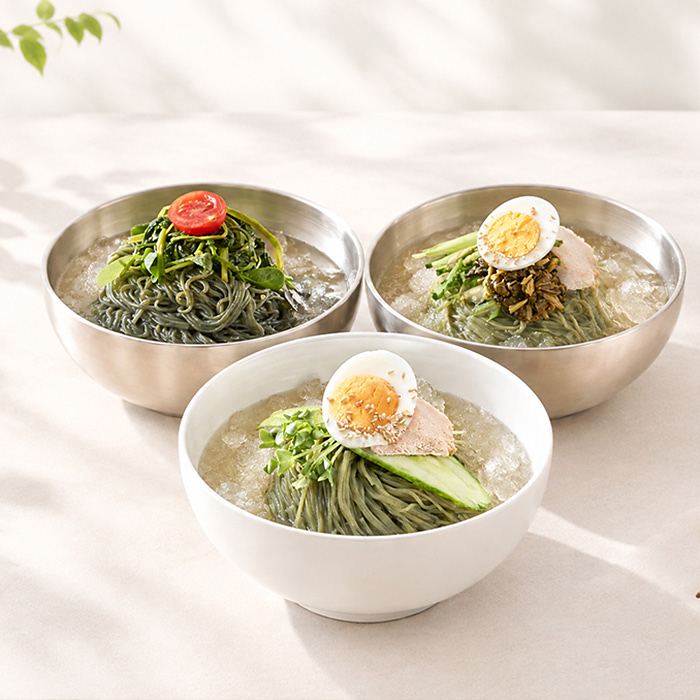
With the patent application in place, the company is developing follow-on products including rice pasta and rice naengmyeon — the cold noodle format with deep roots in Korean culinary tradition. The move to extend across cooking methods and noodle formats signals a strategy aimed at multiple foodservice segments rather than a single SKU.
For operators sourcing Asian noodle formats for menu development, the implication is gradual: if HanAll F&B's technology achieves its stated goal of enabling production from a wider range of regional rice varieties, more manufacturers could eventually bring diverse rice noodle products to market at scale. The company has said it also plans to engage directly with domestic and international buyers to assess demand and collect feedback for product and channel development.
The broader context matters for the restaurant and foodservice supply chain. Gluten-free and rice-based noodle formats have been gaining consistent interest across both Asian and Western menus, driven by dietary preference and culinary diversification. However, supply constraints tied to specific rice varieties have historically made large-scale production inconsistent. A manufacturing approach that reduces variety dependency could lower the barrier for regional producers to enter the category.
HanAll F&B has framed its long-term ambition as an industry-wide goal: enabling many manufacturers — not just itself — to produce a wider variety of Korean domestic rice noodles. Whether that vision translates into meaningful market expansion will depend on the continued technical development the company acknowledges is still ahead.
Written by Michael Politz, Author of Guide to Restaurant Success: The Proven Process for Starting Any Restaurant Business From Scratch to Success (ISBN: 978-1-119-66896-1), Founder of Food & Beverage Magazine, the leading online magazine and resource in the industry. Designer of the Bluetooth logo and recognized in Entrepreneur Magazine's "Top 40 Under 40" for founding American Wholesale Floral, Politz is also the Co-founder of the Proof Awards and the CPG Awards and a partner in numerous consumer brands across the food and beverage sector.