Two Decades of Reporting
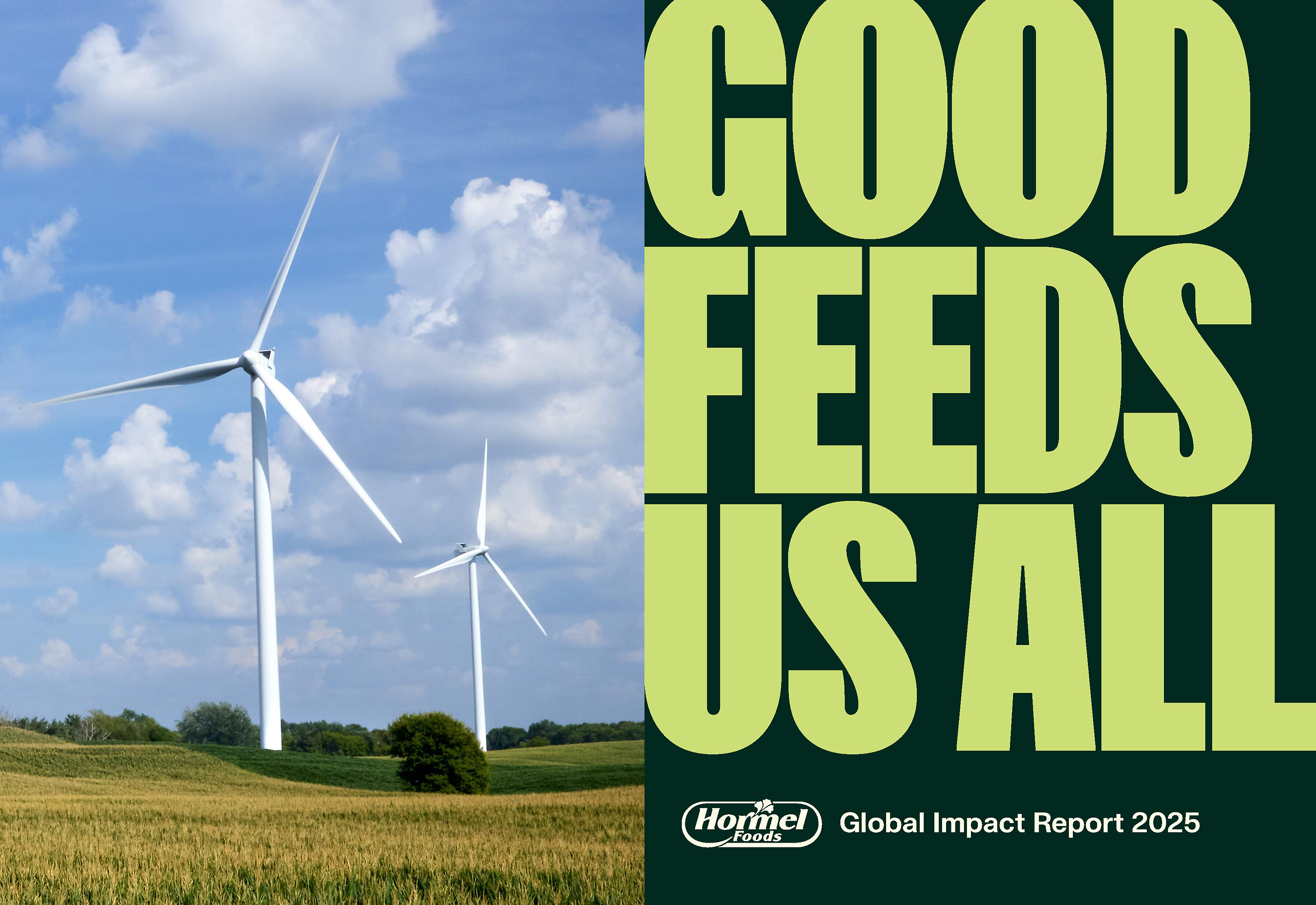
Hormel Foods Corporation has published its 20th annual Global Impact Report, marking two decades of formalized sustainability disclosure for one of the food industry's largest branded manufacturers. The FY2025 report tracks progress across the company's "Good Feeds Us All" framework, organized around Planet and Society pillars, and offers operators and supply chain partners a concrete look at where the $12 billion company is directing its environmental and social investment.
The milestone comes at a moment when foodservice operators and retail buyers are under growing pressure to document the sustainability credentials of their supplier base. For purchasing teams evaluating Hormel's portfolio — which spans APPLEGATE®, SPAM®, SKIPPY®, JENNIE-O®, COLUMBUS®, and more than 30 other brands — the report provides third-party-verifiable data points that can support procurement decisions and menu-labeling claims.
Environmental Progress
On the packaging side, Hormel reported removing more than 2.5 million pounds of virgin plastics from its packaging content compared to a 2021 baseline, with separate packaging initiatives yielding approximately 1.1 million pounds of additional material savings. For foodservice distributors and operators managing sustainability commitments, those reductions translate directly into downstream packaging waste metrics.
The company's Applegate Farms subsidiary achieved 100% sourcing of beef for its APPLEGATE® beef hot dog portfolio from certified regenerative farms — a benchmark that aligns with growing operator interest in regenerative agriculture claims on menus and packaging. Hormel also reached 100% traceability of purchased palm oil to the plantation level, with all palm oil purchases carrying Roundtable on Sustainable Palm Oil (RSPO) certification.
Innovation and Community Impact
Beyond environmental metrics, the report highlights 420-plus new items launched across Hormel's Retail, Foodservice, and International segments during FY2025 — a product velocity that signals continued investment in food and beverage innovation even as the company navigates a leadership transition. John Ghingo, president and chief executive officer-elect, framed the sustainability work as inseparable from the company's core operating strategy, noting that integrating environmental and social priorities into operations is central to building long-term resilience.
On the community investment side, Hormel donated approximately $12.4 million in cash and product during the fiscal year, including delivery of more than 5 million pounds of food to expand worldwide food access — figures that matter to operator partners who track supplier community engagement as part of ESG supplier scorecards. The company also invested more than $575,000 in tuition assistance for employees and more than $650,000 through its Inspired Pathways program, which provides free two-year college education to dependent children of U.S. team members. In an industry where workforce retention remains a persistent challenge, those workforce benefits carry weight as a competitive differentiator in labor markets.
Interim CEO Jeff Ettinger tied the report's release to the company's 135-year operating history, framing sustainability not as a compliance exercise but as a long-standing business value. The full FY2025 report is available at hormelfoods.com/globalimpact.
Written by Michael Politz, Author of Guide to Restaurant Success: The Proven Process for Starting Any Restaurant Business From Scratch to Success (ISBN: 978-1-119-66896-1), Founder of Food & Beverage Magazine, the leading online magazine and resource in the industry. Designer of the Bluetooth logo and recognized in Entrepreneur Magazine's "Top 40 Under 40" for founding American Wholesale Floral, Politz is also the Co-founder of the Proof Awards and the CPG Awards and a partner in numerous consumer brands across the food and beverage sector.