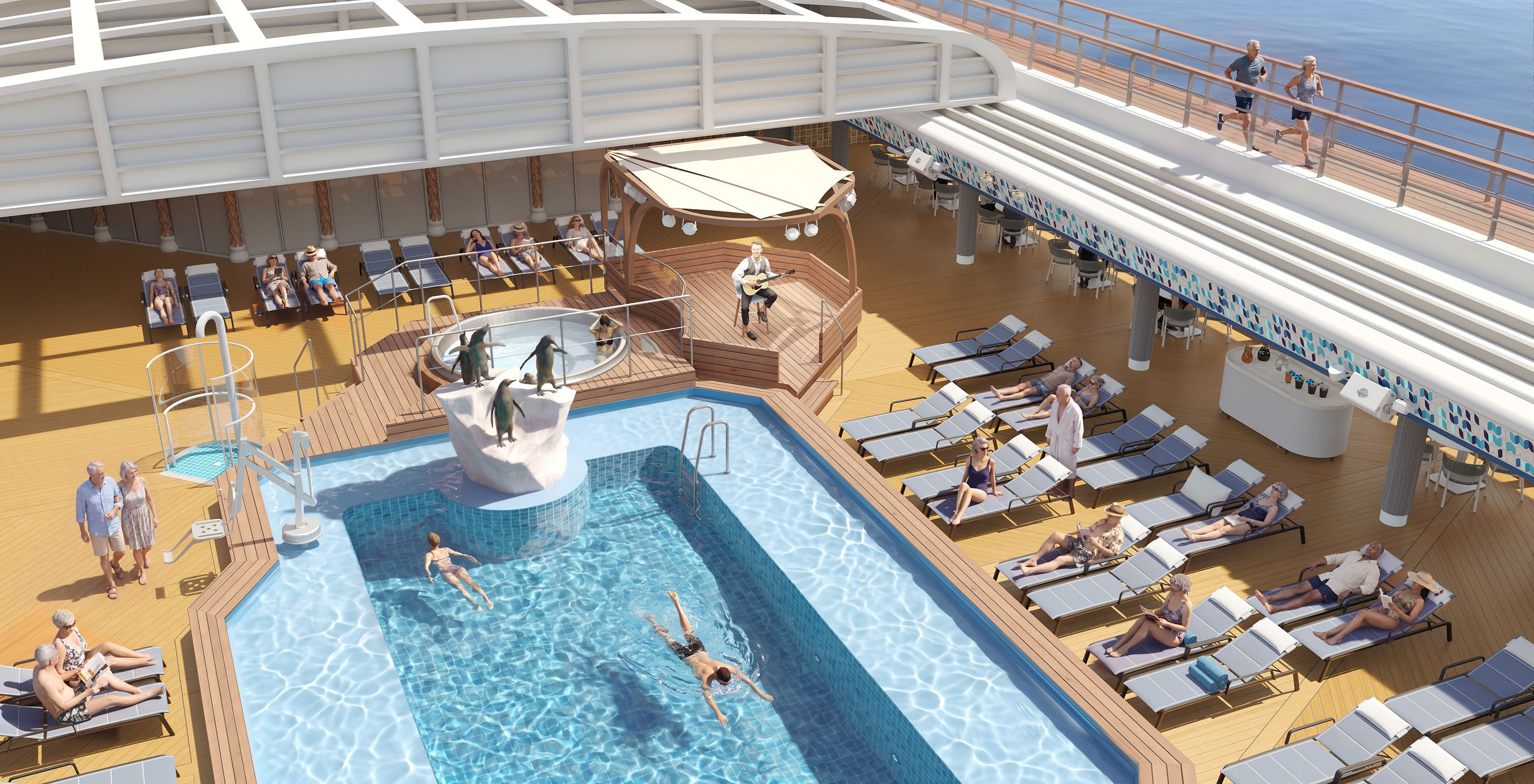
Holland America Line is adding dedicated poolside bandstands to Oosterdam and Zuiderdam as part of Holland America Evolution, its more than $500 million refurbishment program targeting six Vista and Signature Class ships — the largest fleet update in the cruise line's 153-year history. The first bandstand debuts on Oosterdam following its fall 2027 dry-dock transformation, with Zuiderdam to follow.
The new venues sit at each ship's Lido Pool, already one of the most heavily trafficked social zones aboard both vessels. Programming will range from solo performers to full live bands during sailaways, themed events, and the line's signature Orange Party. A retractable glass roof over the Lido Pool allows the space to function year-round regardless of weather — a practical design detail that extends the revenue-generating window for onboard entertainment.
Why Entertainment Infrastructure Matters
For hospitality operators tracking cruise sector trends, the investment signals a broader industry push to treat entertainment venues with the same capital rigor typically reserved for dining or stateroom upgrades. Holland America Line President Beth Bodensteiner framed the move as data-driven, saying the line has been guided by "what our guests tell us they love most" in expanding its entertainment footprint. Dedicated, purpose-built performance spaces — rather than repurposed deck areas — allow for better sightlines, acoustic control, and event programming flexibility, all of which translate directly to guest satisfaction scores and onboard revenue.
The bandstands join a broader package of Evolution upgrades aboard Oosterdam and Zuiderdam that includes introduction of the Grand Dutch Café and new stateroom and suite categories. Together, the changes are designed to bring Pinnacle Class-level amenities to the wider fleet, tightening the experiential gap between Holland America's flagship vessels and its workhorse ships. Bookings for post-refurbishment sailings on both ships are currently open.
Fleet-Wide Implications
The Evolution program's scope — six ships, $500 million, new venues plus additional cabins — reflects a capital allocation strategy that hospitality industry observers have noted across premium cruise operators: invest in social and entertainment infrastructure as a differentiator against land-based resort competition. For hospitality food and beverage operators who supply or partner with cruise lines, expanded poolside venues typically drive incremental bar and light-fare revenue, creating downstream opportunity in beverage programming and poolside menu development.
The addition also underscores how live entertainment trends in hospitality are reshaping venue design priorities fleet-wide. As cruise lines compete for a premium leisure traveler who increasingly expects resort-caliber programming at sea, permanent bandstands — rather than portable staging — signal a commitment to consistent, bookable entertainment schedules that guests can plan around before they even board.
Written by Michael Politz, Author of Guide to Restaurant Success: The Proven Process for Starting Any Restaurant Business From Scratch to Success (ISBN: 978-1-119-66896-1), Founder of Food & Beverage Magazine, the leading online magazine and resource in the industry. Designer of the Bluetooth logo and recognized in Entrepreneur Magazine's "Top 40 Under 40" for founding American Wholesale Floral, Politz is also the Co-founder of the Proof Awards and the CPG Awards and a partner in numerous consumer brands across the food and beverage sector.