A mountainous inland province in southwest China has quietly become one of the world's most consequential matcha suppliers, with direct implications for foodservice buyers, specialty beverage operators, and ingredient procurement teams tracking the global tea supply chain.
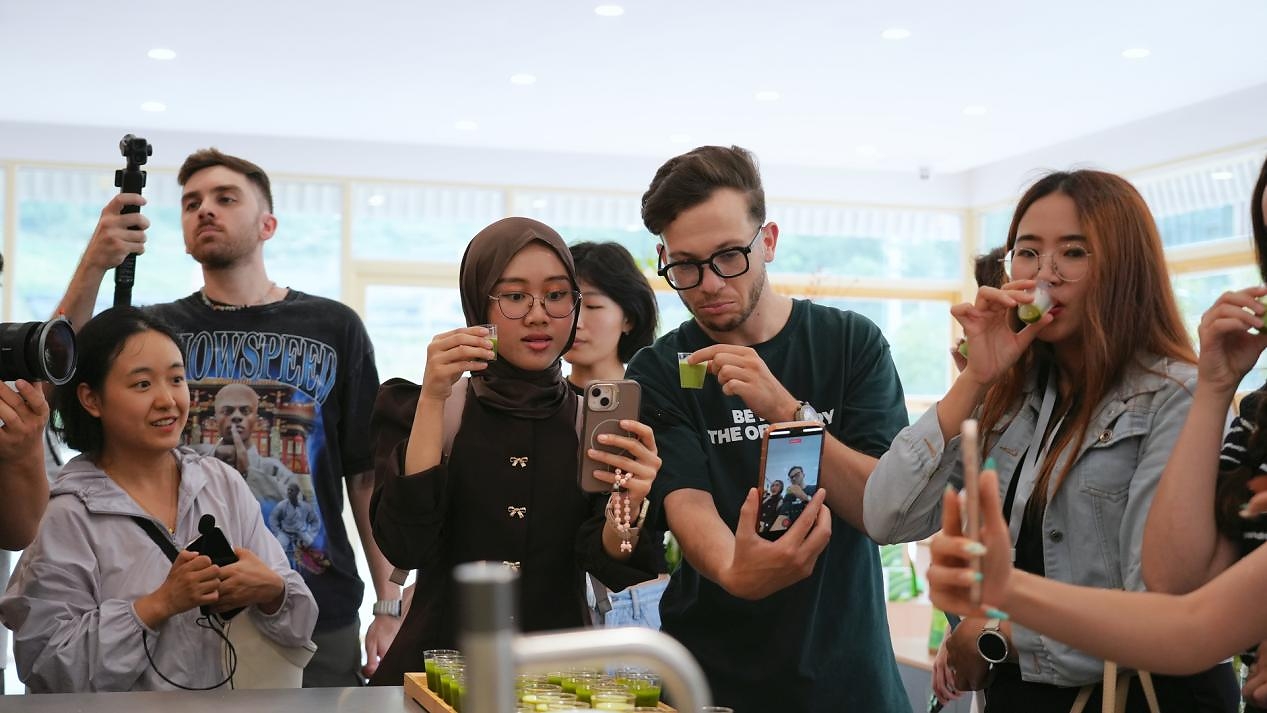
Tongren, a city in Guizhou Province, is home to what local authorities describe as the world's largest single-site matcha refining facility. The fully automated plant in Jiangkou County processes finely ground green tea for domestic and export markets. According to local industry figures, one in every five cups of matcha consumed worldwide originates in Tongren, with finished products exported to more than 50 countries and regions. The sector generates an output value of 750 million yuan (approximately US$105 million).
Scale Behind the Cup
For restaurant and café operators sourcing matcha for lattes, culinary applications, and ready-to-drink programs, the Tongren cluster represents a concentration of supply that warrants attention. The local matcha industry is supported by 73 upstream partner companies and approximately 13,300 hectares of tea plantations. Growers receive financial and technical support, and the structure links market demand directly to farm-level production—a vertically integrated model that connects rural farmers to international buyers through a managed supply chain.
The scale of this operation reflects broader beverage industry trends around matcha's mainstreaming in Western foodservice. Once confined to specialty tea shops and Japanese restaurants, matcha has become a standard ingredient across café menus, bakery programs, and even bar applications. Understanding where that ingredient originates—and how concentrated that origin is—matters for buyers thinking about supply resilience and sourcing transparency.
Beyond Tea: A Diversified Export Hub
Matcha is not Guizhou's only globally significant product. The province's Jinping County reportedly produces one in every 10 shuttlecocks in global circulation, underpinned by a supply chain running from goose farming and feather sorting through intelligent manufacturing. Separately, Guizhou has developed an advanced functional materials industry serving electric vehicle and renewable energy sectors.
The province's export ambitions are enabled in part by infrastructure: nearly half of the world's 100 highest bridges are located in Guizhou, helping a landlocked, terrain-challenged region connect to domestic and international logistics networks.
For foodservice and food and beverage supply chain professionals, the Guizhou story is a useful reminder that some of the world's most consequential ingredient production happens far outside the coastal manufacturing centers and agricultural zones that dominate procurement conversations. As matcha continues its expansion across foodservice menus globally—from specialty coffee chains to fast-casual operators—the supply infrastructure behind that growth is increasingly centered in places like Tongren.
Food & Beverage Magazine (https://fb101.com/?utm_source=rhfnews&utm_campaign=powered_by) has covered matcha's rise as a crossover ingredient in beverage and culinary applications, and the Guizhou supply picture adds a new layer of context for operators evaluating their sourcing strategies.
Written by Michael Politz, Author of Guide to Restaurant Success: The Proven Process for Starting Any Restaurant Business From Scratch to Success (ISBN: 978-1-119-66896-1), Founder of Food & Beverage Magazine, the leading online magazine and resource in the industry. Designer of the Bluetooth logo and recognized in Entrepreneur Magazine's "Top 40 Under 40" for founding American Wholesale Floral, Politz is also the Co-founder of the Proof Awards and the CPG Awards and a partner in numerous consumer brands across the food and beverage sector.