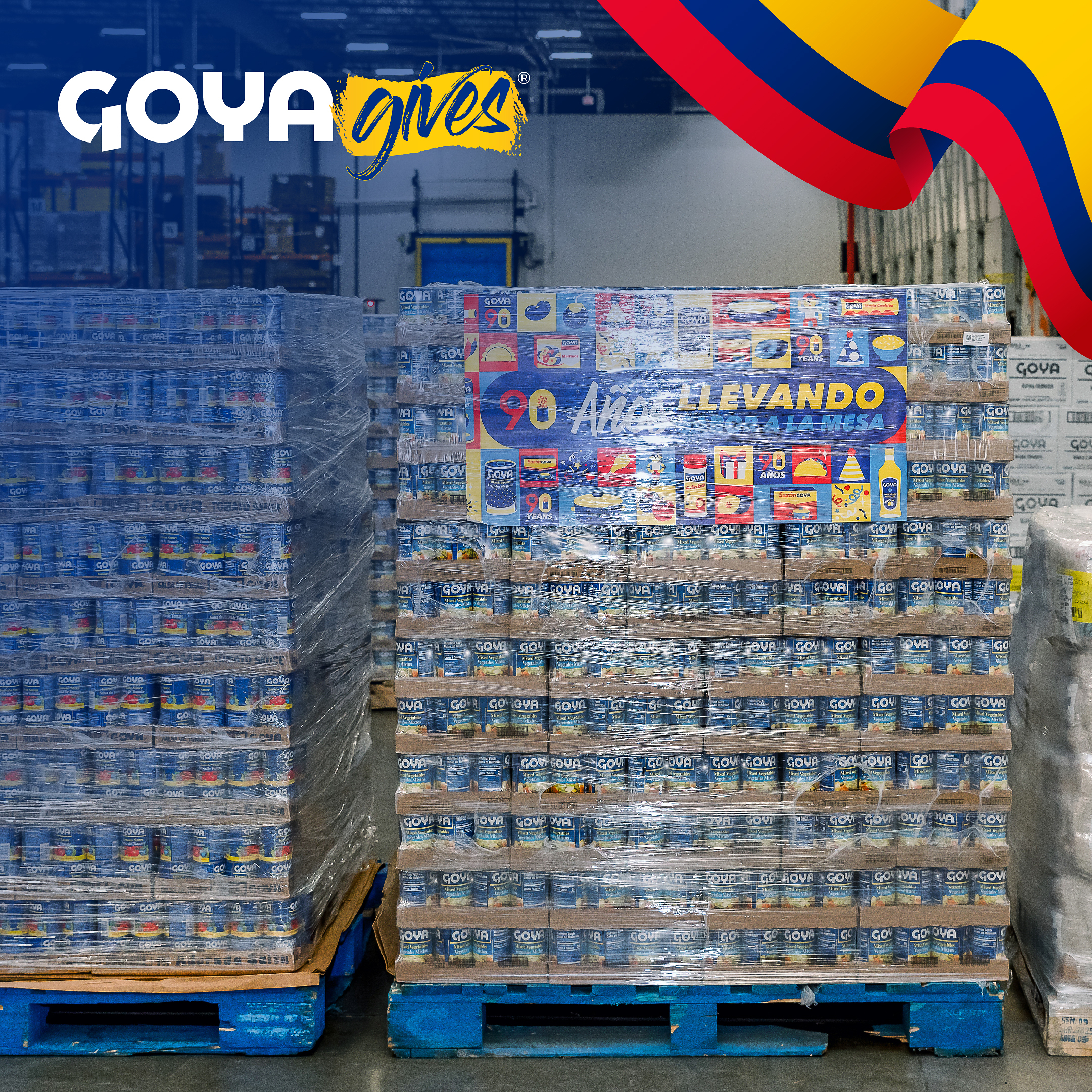
Goya Foods is shipping more than 200,000 pounds of food to Colombia following a series of devastating earthquakes, marking one of the company's largest single international disaster-relief deployments in recent memory. The donation — five truckloads of Goya pantry products — is being distributed in partnership with Global Empowerment Mission (GEM), a disaster-response nonprofit built around rapid in-country logistics.
The Partnership Model
GEM's involvement is central to the effort's speed. "This donation gives GEM the ability to rapidly move essential resources directly into the hands of families impacted by the earthquakes in Colombia," said Michael Capponi, Founder and President of Global Empowerment Mission. "Our model is built around speed, efficiency and strong partnerships, ensuring aid arrives quickly and reaches the communities where it has the greatest impact." For food manufacturers weighing corporate giving strategies, the Goya-GEM model illustrates how pairing product volume with a logistics-focused NGO can accelerate last-mile delivery in disaster zones where infrastructure is compromised.
Goya Gives in Context
The Colombia effort runs through Goya Gives, the company's global community initiative that partners with more than 300 organizations — including food banks, shelters, schools, and cultural institutions — to address food insecurity and disaster relief. Co-President Peter Unanue framed the donation within the company's 90-year history of disaster response. "For 90 years, Goya has stood with communities in times of need," he said. "We hope this donation provides nourishment and comfort to families as they recover and rebuild."
The Colombia shipment follows a similar relief effort Goya directed toward earthquake-affected communities in Venezuela, underscoring a pattern of sustained regional engagement that goes beyond one-time giving. For foodservice operators and food manufacturers tracking corporate social responsibility benchmarks, Goya's repeat-response approach — leveraging existing supplier relationships and an established NGO network — offers a replicable framework for disaster-relief programming at scale.
The broader food and beverage industry has increasingly treated disaster-relief donations as both a humanitarian obligation and a supply-chain exercise, requiring the same coordination skills that govern everyday distribution. Food and beverage industry analysis from recent years shows that companies with pre-existing NGO partnerships consistently move product faster after a crisis than those building relationships from scratch. Restaurant and hospitality CSR coverage has similarly noted that brand equity gains from disaster giving are most durable when tied to transparent, measurable outcomes — precisely what GEM's model is designed to deliver.
For more information on the Goya Gives initiative, visit www.goyagives.com.
Written by Michael Politz, Author of Guide to Restaurant Success: The Proven Process for Starting Any Restaurant Business From Scratch to Success (ISBN: 978-1-119-66896-1), Founder of Food & Beverage Magazine, the leading online magazine and resource in the industry. Designer of the Bluetooth logo and recognized in Entrepreneur Magazine's "Top 40 Under 40" for founding American Wholesale Floral, Politz is also the Co-founder of the Proof Awards and the CPG Awards and a partner in numerous consumer brands across the food and beverage sector.