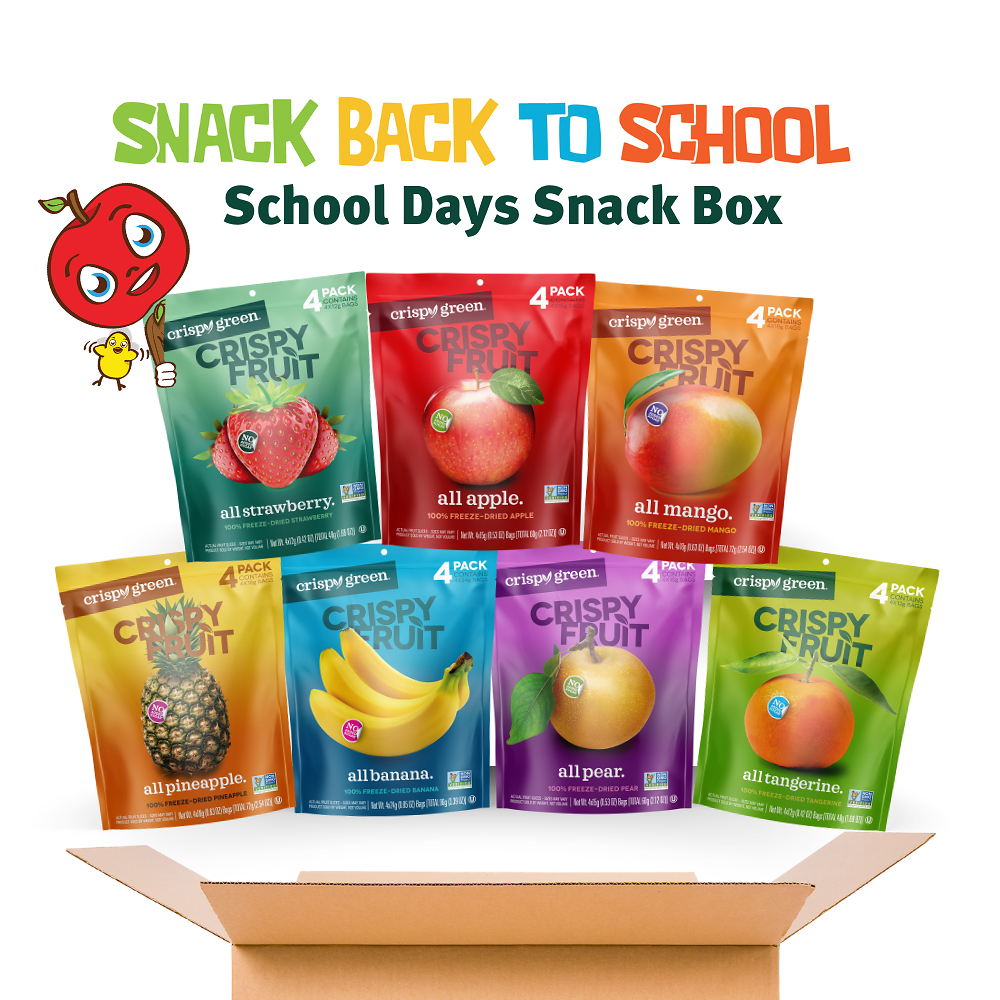
Children consume nearly one-third of their daily snack calories between 3 p.m. and 6 p.m., according to an analysis of U.S. National Health and Nutrition Examination Survey (NHANES) data — a statistic that Crispy Green is using to sharpen its back-to-school retail and foodservice messaging around what the brand calls the "3–6 P.M. Snack Rush."
The Fairfield, N.J.-based company, whose Crispy Fruit® line holds the top-selling position in the freeze-dried fruit snack category in the U.S., is positioning portable, single-ingredient snacks as a practical solution for time-pressed households navigating packed after-school schedules. The same NHANES analysis found that most children's snack calories originate from grocery stores — a data point that directly implicates retail buyers and category managers in shaping after-school nutrition outcomes.
The Operator Angle
For foodservice and retail operators, the timing data reinforces an already-crowded conversation around better-for-you snacking in high-traffic afternoon dayparts. Convenience-channel and school nutrition operators have increasingly leaned into grab-and-go formats to capture impulse purchases from parents and kids between pickup and dinner. Crispy Fruit's 4-PACK grab-and-go format — shelf-stable, no refrigeration required, and made with one ingredient — fits squarely within the planogram logic many grocery and natural food retailers apply to their produce-adjacent snack sets. The product is currently carried at Whole Foods Market and Sprouts Farmers Markets.
Angela Liu, founder and CEO of Crispy Green Inc., framed the positioning around simplicity: "Life gets busy, especially during the after-school rush. Choosing snacks made with real fruit and simple ingredients should be the easy part."
Health Messaging and Retail Strategy
The brand is anchoring its seasonal campaign to its "Health Over Hype™" platform, a philosophy it describes as prioritizing practical nutrition over trending ingredient claims. Toby Amidor, MS, RD, CDN — a registered dietitian and Wall Street Journal bestselling author — contributed five consumer-facing recommendations, ranging from stocking snacks in cars and sports bags to involving children in snack selection. The guidance is squarely aimed at household purchase decision-makers, reinforcing the grocery channel's central role in the after-school eating occasion.
The freeze-dried fruit segment has benefited from broader better-for-you snacking trends that accelerated through the early 2020s, as both retail buyers and restaurant and hospitality operators looked to meet growing consumer demand for clean-label, minimally processed options. Crispy Green, founded in 2004, reports it has been in the market for more than 20 years, giving it shelf-space history that newer entrants in the freeze-dried category lack.
For category managers evaluating snack assortments heading into the fall selling season, the NHANES-backed daypart data offers a quantifiable hook for merchandising decisions — particularly in stores near schools or in neighborhoods with high concentrations of school-age children. As Food & Beverage Magazine has noted in its coverage of functional and better-for-you segments, single-ingredient snacks continue to outperform more complex formulations in clean-label perception studies, making the format increasingly relevant for retailers prioritizing transparency.
Written by Michael Politz, Author of Guide to Restaurant Success: The Proven Process for Starting Any Restaurant Business From Scratch to Success (ISBN: 978-1-119-66896-1), Founder of Food & Beverage Magazine, the leading online magazine and resource in the industry. Designer of the Bluetooth logo and recognized in Entrepreneur Magazine's "Top 40 Under 40" for founding American Wholesale Floral, Politz is also the Co-founder of the Proof Awards and the CPG Awards and a partner in numerous consumer brands across the food and beverage sector.