Child hunger relief organization Feed the Children is marking World Food Day on Oct. 16 with a campaign built around first-person accounts from children across four countries, paired with operational data that signals the deepening scale of food insecurity—a challenge with direct implications for foodservice operators, food manufacturers, and supply chain partners invested in community nutrition.
According to the United Nations Food and Agriculture Organization, an estimated 645 million people faced hunger in 2025. UNICEF data cited by the organization puts the number of children under age 5 living in severe food poverty at 181 million worldwide. In the U.S., the FDA estimates that up to 40% of the food supply is wasted annually—a figure that continues to frame conversations across the food and beverage industry about distribution efficiency, donation logistics, and corporate social responsibility.
FY2025 Distribution Numbers
In fiscal year 2025, Feed the Children distributed nearly 78 million meals to nearly 15 million people across almost every U.S. state and eight countries, including El Salvador, Guatemala, Honduras, Kenya, Malawi, Tanzania, Uganda, and the Philippines. Those figures place the organization among the most operationally significant nonprofit food distributors in the sector—and represent a substantial demand on food manufacturing, cold chain logistics, and packaging partners who support hunger relief at scale.
For foodservice professionals and food-industry donors, the numbers are a reminder that institutional hunger relief depends on the same supply infrastructure that feeds commercial kitchens. Operators exploring food waste reduction strategies or structured donation programs will find the organization's distribution footprint a relevant benchmark.
School Hub Expansion
This October, Feed the Children is opening two new Food & Essentials Hub locations: School of Dreams Academy Charter School in Los Lunas, New Mexico, and Mater Academy of Nevada East Campus in Las Vegas. The hub model—which provides food, household essentials, personal care items, books, and school supplies directly through school districts—has grown to serve more than 154,900 students and 58,600 households across 834 schools in 11 states in fiscal year 2026.
The program delivered more than 686,000 meals and more than $6.7 million in food, essentials, and supplies during that period. Notably, 87% of participating school districts reported improvements in student confidence and attendance, and nearly two-thirds of caregivers said the hubs helped reduce the need to cut or skip meals for their children. Those outcomes align closely with research linking consistent nutrition access to learning readiness—a data point increasingly relevant to school foodservice and institutional nutrition programs.
"No child should go to bed hungry. No child. Anywhere," said Emily Callahan, president and CEO of Feed the Children. "When children have enough to eat, they show up to school, they stay healthy and they start building the futures they deserve."
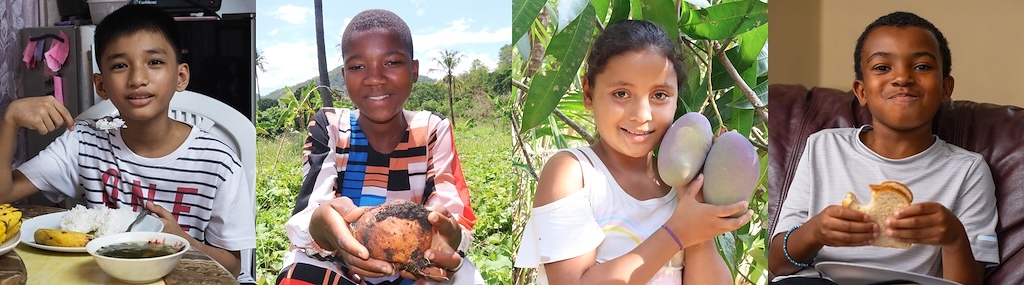
The World Food Day campaign, titled "It All Begins with Food," centers the voices of four children—Daniela, 9, from El Salvador; Halima, 12, from Tanzania; Andrew, 10, from the Philippines; and Bodi, 9, from the United States—each describing their aspirations in their own words. The campaign is running across feedthechildren.org and social channels through Oct. 16.
Written by Michael Politz, Author of Guide to Restaurant Success: The Proven Process for Starting Any Restaurant Business From Scratch to Success (ISBN: 978-1-119-66896-1), Founder of Food & Beverage Magazine, the leading online magazine and resource in the industry. Designer of the Bluetooth logo and recognized in Entrepreneur Magazine's "Top 40 Under 40" for founding American Wholesale Floral, Politz is also the Co-founder of the Proof Awards and the CPG Awards and a partner in numerous consumer brands across the food and beverage sector.