Multi-unit restaurant operators can now connect their back-of-house operating data directly to AI tools like ChatGPT, Claude, and Gemini without paying per-location fees or waiting on a vendor's proprietary roadmap. Decision Logic, a provider of back-of-house operations software, has launched Open Semantic Access, a capability it says is the first of its kind in the restaurant technology space.
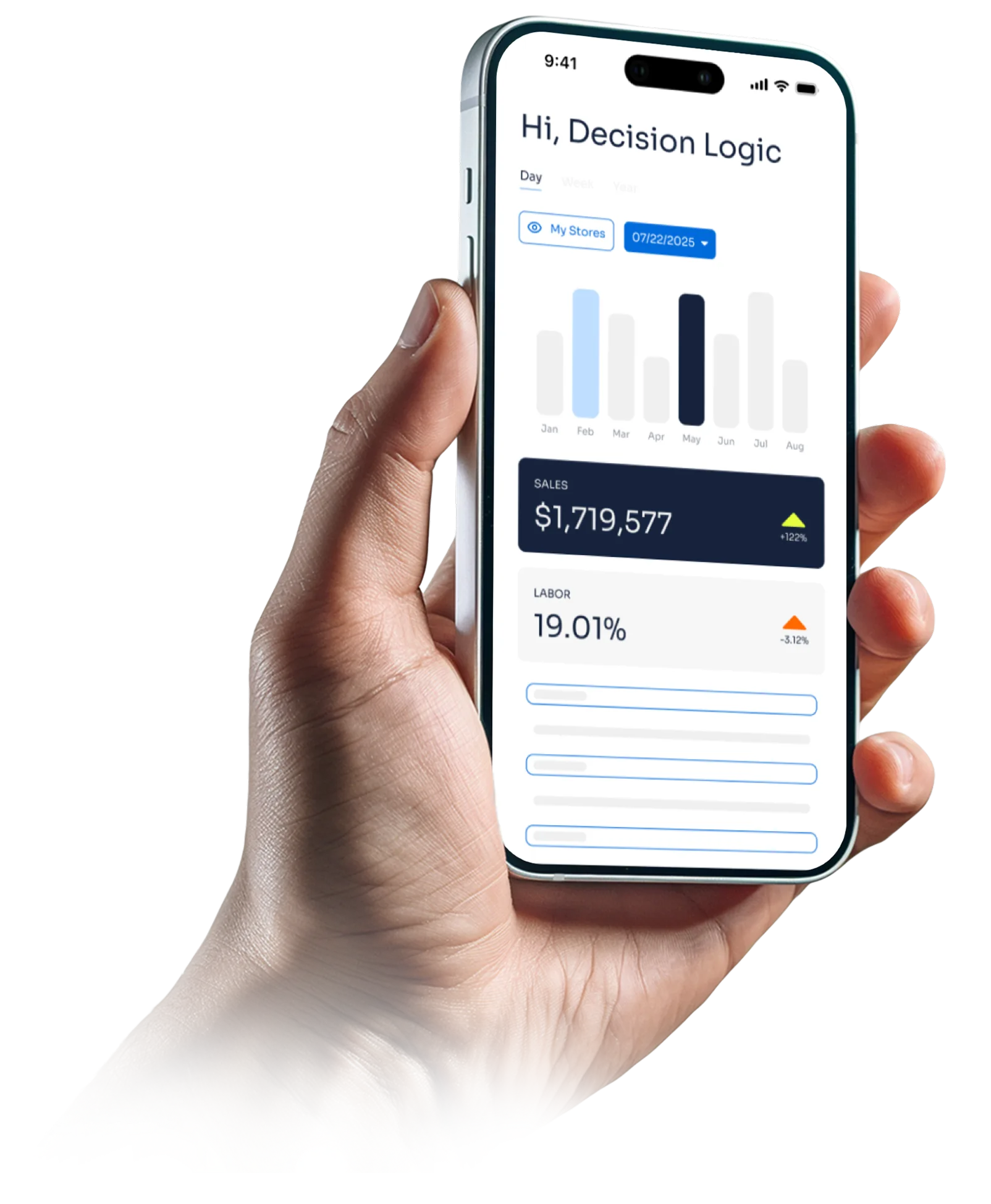
The feature gives operators read-only access to their Decision Logic data—spanning sales, labor, inventory, and food cost—along with the semantic context that tells an AI tool what that data actually means. That distinction matters: without it, an AI model cannot reliably distinguish between gross and net sales, or a case quantity and an individual unit, before attempting to answer an operational question.
The Workflow Shift
For large restaurant groups, answering a question that falls outside an existing dashboard has traditionally meant exporting data location by location, cleaning it, and waiting weeks or months for a custom report. Open Semantic Access is designed to collapse that cycle. Decision Logic estimates the approach can make the path from question to answer three to four times faster in applicable use cases.
In practice, an operator could prompt an AI tool to compare ideal versus actual performance for a menu item, analyze true guest traffic trends, or construct a margin view built around the brand's own cost structure—tasks that previously required a new report or a dedicated analyst. Leadership can start with a business question rather than first asking whether a report already exists.
No Per-Location AI Tax
Pricing is where the launch may get the most attention across the [restaurant technology](/ restaurants/technology) sector. Open Semantic Access is included in existing Decision Logic subscriptions at no additional charge. The company illustrates the stakes with a straightforward comparison: an AI or API add-on priced at $300 per location would cost a 450-unit brand more than $135,000 annually—a figure that compounds with every new opening.
"Restaurant operators shouldn't have to buy their own data back just because they want to use it with AI," said Keegan Conrey, CEO of Decision Logic. "Open Semantic Access is built around a straightforward principle: it's your data. You should be able to use it with the tools you choose, ask the questions that matter to your business and get answers without waiting for someone else's roadmap."
The bring-your-own-tool model also insulates operators from AI platform churn. Because credentials and methodologies live on the operator's side, brands can swap AI tools as the technology evolves without losing underlying data access—a meaningful hedge given how rapidly the AI and data analytics landscape is shifting for foodservice operators.
Open Semantic Access is available now. Decision Logic is demonstrating the capability at FSTEC 2026 and offering demos at its website. Current platform partners include Golden Corral, Taco John's, Twin Peaks, RibCrib BBQ, and 54th Street Restaurants.
For broader context on how AI is reshaping restaurant back-of-house operations, see Food & Beverage Magazine's ongoing coverage of foodservice technology trends.
Written by Michael Politz, Author of Guide to Restaurant Success: The Proven Process for Starting Any Restaurant Business From Scratch to Success (ISBN: 978-1-119-66896-1), Founder of Food & Beverage Magazine, the leading online magazine and resource in the industry. Designer of the Bluetooth logo and recognized in Entrepreneur Magazine's "Top 40 Under 40" for founding American Wholesale Floral, Politz is also the Co-founder of the Proof Awards and the CPG Awards and a partner in numerous consumer brands across the food and beverage sector.