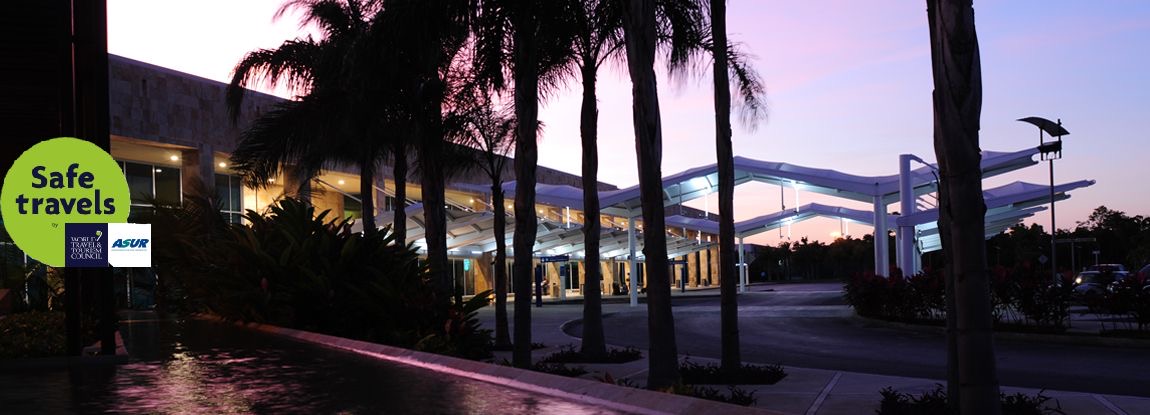
International passenger traffic through ASUR's Mexican airports fell 11.5% in July 2026 compared to the same month a year earlier, pulling total Mexico traffic down 4.0% to 3.47 million passengers. The decline was concentrated at Cancún (CUN), where international arrivals dropped 12.7% to 1.49 million — a significant headwind for the resort economy that relies on inbound visitor spending at hotels, restaurants, and food-and-beverage outlets throughout the Yucatán Peninsula.
Across ASUR's full three-country network — Mexico, Puerto Rico, and Colombia — total traffic reached 6.38 million passengers in July, a 1.9% decrease versus July 2025. Year-to-date through July, the group has handled 42.6 million passengers, down just 0.6% from the prior-year period, suggesting the summer dip is modest in the broader context of annual hospitality travel trends.
Cancún vs. Colombia
The contrast between ASUR's two largest market clusters could hardly be starker. While Cancún's combined domestic and international volume fell 8.4% to 2.41 million passengers, Colombia's airports collectively grew 5.8% to 1.60 million passengers. Colombian domestic traffic led the charge, up 7.8% for the month, and year-to-date Colombia is running 7.0% ahead of 2025 — a trajectory that bodes well for foodservice and hospitality operators serving those gateways. Montería (MTR) was a standout, surging 28.3% in domestic traffic for July.
San Juan's Luis Muñoz Marín International (SJU), in which ASUR holds a 60% interest through Aerostar Airport Holdings, saw traffic fall 5.1% to 1.31 million passengers in July. Both domestic and international volumes at SJU declined at roughly the same rate, down 5.1% and 5.0% respectively. Year-to-date, Puerto Rico is off 3.2%, a continued drag on the island's inbound tourism and its associated restaurant and hospitality economy.
Bright Spots in Mexico
Not every Mexican airport followed Cancún's trajectory. Oaxaca posted a 10.3% total traffic gain in July, and Veracruz climbed 11.9%, signaling growing consumer interest in cultural and secondary-city destinations — a pattern restaurant and food operators serving those markets may want to monitor as dining demand tracks closely with footfall volumes. Tapachula delivered the month's most dramatic figure anywhere in the network, with international traffic up 374.5%, albeit from a very small base. Villahermosa also stood out with international traffic rising 113.5%.
For airport concessionaires, food-and-beverage tenants, and hospitality brands with exposure to ASUR's Mexican resort markets, the sustained decline in Cancún's international arrivals — down 5.2% year-to-date — represents a meaningful revenue consideration heading into the shoulder season. Colombia's consistent growth, by contrast, offers an offsetting opportunity for operators positioned in those markets.
Written by Michael Politz, Author of Guide to Restaurant Success: The Proven Process for Starting Any Restaurant Business From Scratch to Success (ISBN: 978-1-119-66896-1), Founder of Food & Beverage Magazine, the leading online magazine and resource in the industry. Designer of the Bluetooth logo and recognized in Entrepreneur Magazine's "Top 40 Under 40" for founding American Wholesale Floral, Politz is also the Co-founder of the Proof Awards and the CPG Awards and a partner in numerous consumer brands across the food and beverage sector.