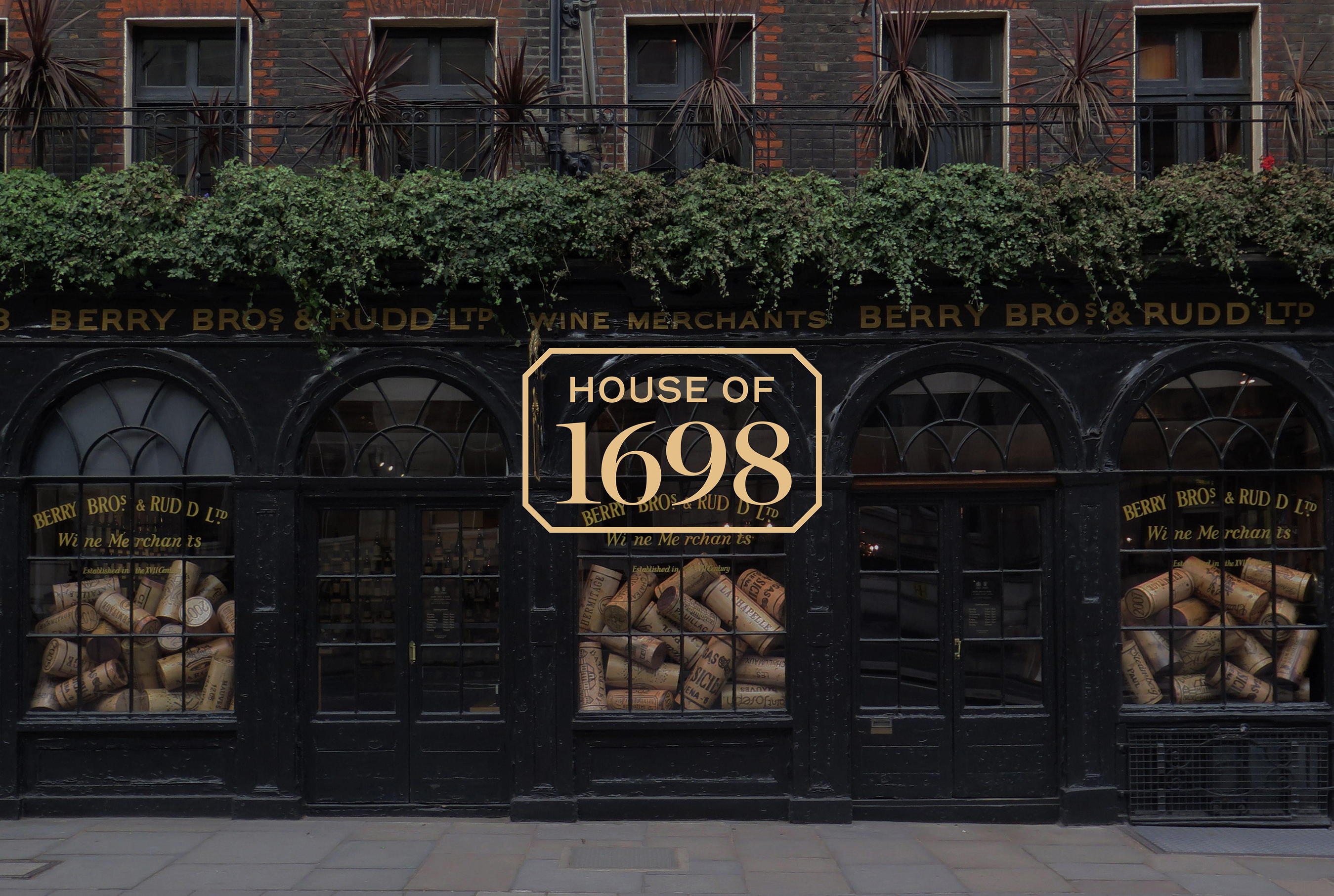
One year into its American debut, Berry Bros. & Rudd has formalized its US private-client offering with the launch of House of 1698, a three-tier membership program giving American fine wine and spirits collectors structured access to rare allocations, producer relationships, and curated experiences both domestically and abroad.
The program carries three spend-based levels: Green ($15,000 annual minimum), Gold ($50,000), and Black ($100,000). Clients may qualify either by documenting purchases over the prior twelve months or by placing the qualifying amount on account for future use. Each step up unlocks increasingly personalized service, priority access to limited bottles, exclusive event invitations, and introductions to globally recognized producers.
The Membership Model
House of 1698 takes its name from the year the merchant was founded at No. 3 St James's Street in London, where it has operated without interruption ever since. The structure reflects a broader shift in how high-net-worth consumers engage with fine wine and spirits collecting—moving away from purely transactional retail toward relationship-driven, experience-rich programming that mirrors models long established in luxury goods and private banking.
"Some of the greatest pleasures of wine and spirits are the conversations, friendships and gatherings that grow around them," said Lizzy Rudd, Chair of Berry Bros. & Rudd. "House of 1698 builds on that tradition for the way people collect today."
Claudia Chamberlain, Head of US, noted that the first year in Washington confirmed strong American appetite for producer access and communal collecting experiences. "They want to meet the people who make the wines, visit the places they come from and share them with others who love wine as much as they do," she said. The US operation currently maintains private client teams in Washington, DC, New York, Miami, and Houston.
US Rollout and Context
Since opening in November 2025, the Washington, DC location has hosted masterclasses, winemaker dinners, and an inaugural Paulée-style dinner—where clients contributed bottles from their own cellars—establishing an event cadence that House of 1698 is designed to formalize and expand. The program launches globally, with each regional market offering a locally tailored benefits structure.
The membership rollout follows a busy period of strategic moves for the merchant. Earlier this summer, Berry Bros. & Rudd named Emily Rae and Rob Symington as Co-CEOs. Its US and auctions businesses are led by Jamie Ritchie, formerly Global Chairman of Wine & Spirits at Sotheby's—a hire that signals the company's intent to compete at the highest tier of the American collector market, where auction participation and cellar-building advice increasingly overlap.
For operators and hospitality professionals tracking the ultra-premium beverage segment, House of 1698 represents a pointed example of how heritage merchants are adapting centuries-old private-client models for a US audience accustomed to membership-based access in sectors from private aviation to restaurant dining. The spend thresholds—starting at five figures annually—position the program squarely in the same territory as top-tier restaurant wine programs and collector-focused allocation lists, and may influence how fine-dining beverage directors think about their own high-value guest engagement strategies.
Written by Michael Politz, Author of Guide to Restaurant Success: The Proven Process for Starting Any Restaurant Business From Scratch to Success (ISBN: 978-1-119-66896-1), Founder of Food & Beverage Magazine, the leading online magazine and resource in the industry. Designer of the Bluetooth logo and recognized in Entrepreneur Magazine's "Top 40 Under 40" for founding American Wholesale Floral, Politz is also the Co-founder of the Proof Awards and the CPG Awards and a partner in numerous consumer brands across the food and beverage sector.