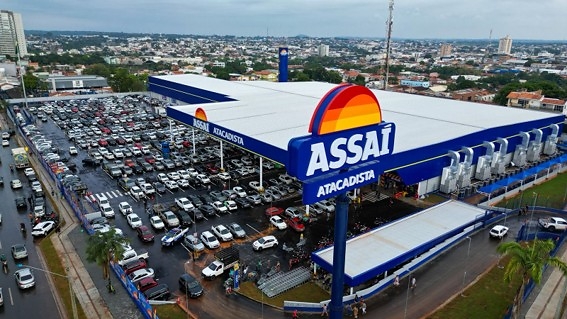
Brazilian cash-and-carry operator Assaí posted a 55.2% jump in adjusted recurring net income to R$ 248 million in the third quarter of 2026, even as Brazilian consumers grappled with elevated household indebtedness. Accounting net income came in higher still — R$ 427 million, a 119% increase — boosted by R$ 179 million in extemporaneous PIS/COFINS tax credits. Despite the challenging macroeconomic backdrop, customer traffic climbed 2.1%, pushing monthly footfall past 40 million customers.
Revenue and Margin Picture
Gross revenue reached R$ 21.3 billion, up 2.7% year-over-year, as the company widened its gross margin to 17.2%, a gain of 0.45 percentage points. Expense growth was held to 4.2%, running below Brazil's IPCA inflation rate of 4.4% — a discipline that helped sustain adjusted EBITDA at R$ 1.1 billion with a stable margin of 5.7%. Rolling 12-month operating cash flow generation of R$ 3.3 billion enabled Assaí to cut its net-debt-to-EBITDA leverage ratio from 3.03x a year ago to 2.15x. A lower cost of debt and a 61% reduction in receivables-discounting costs trimmed net financial expenses by 8.8%.
"The third quarter demonstrated Assaí's ability to safeguard operations and make progress on variables within our control," said Belmiro Gomes, CEO of Assaí. "We delivered top-line growth, stable market share, preserved profitability, and leverage reduction."
Ecosystem Diversification
For foodservice and hospitality operators who source from cash-and-carry formats, Assaí's ecosystem moves are worth watching. Assaí Farma, the company's pharmacy concept, closed the quarter with 11 units in São Paulo — all opened between July and November — and remains on track for 25 locations by December, alongside an e-commerce launch within the 'Meu Assaí' app offering in-store pickup. The dietary supplement category has been expanded to 300 stores, a category that increasingly overlaps with foodservice wellness menus.
In private label, Assaí added more than 30 items during the quarter, lifting its total to 140 SKUs across four brands — Assaí, Assaí Chef, Econobom, and the newly introduced Assaí Bloom — with a target of 250 SKUs before year-end. The growth of proprietary branded goods at scale mirrors trends seen across global food retail and wholesale channels, where margin-rich private label programs have become a competitive differentiator.
On the digital and convenience front, last-mile delivery sales surged 204% across 104 stores. Assaí also acquired 18 gas stations in São Paulo, a convenience format set to begin operations in August 2027. The move positions the retailer alongside a broader wave of hybrid convenience-and-foodservice models reshaping grocery and foodservice retail globally. For B2B buyers in the hospitality and restaurant sector, the combination of digital ordering, last-mile fulfillment, and expanded private label signals a wholesale operator increasingly competing on service depth, not just price.
Written by Michael Politz, Author of Guide to Restaurant Success: The Proven Process for Starting Any Restaurant Business From Scratch to Success (ISBN: 978-1-119-66896-1), Founder of Food & Beverage Magazine, the leading online magazine and resource in the industry. Designer of the Bluetooth logo and recognized in Entrepreneur Magazine's "Top 40 Under 40" for founding American Wholesale Floral, Politz is also the Co-founder of the Proof Awards and the CPG Awards and a partner in numerous consumer brands across the food and beverage sector.