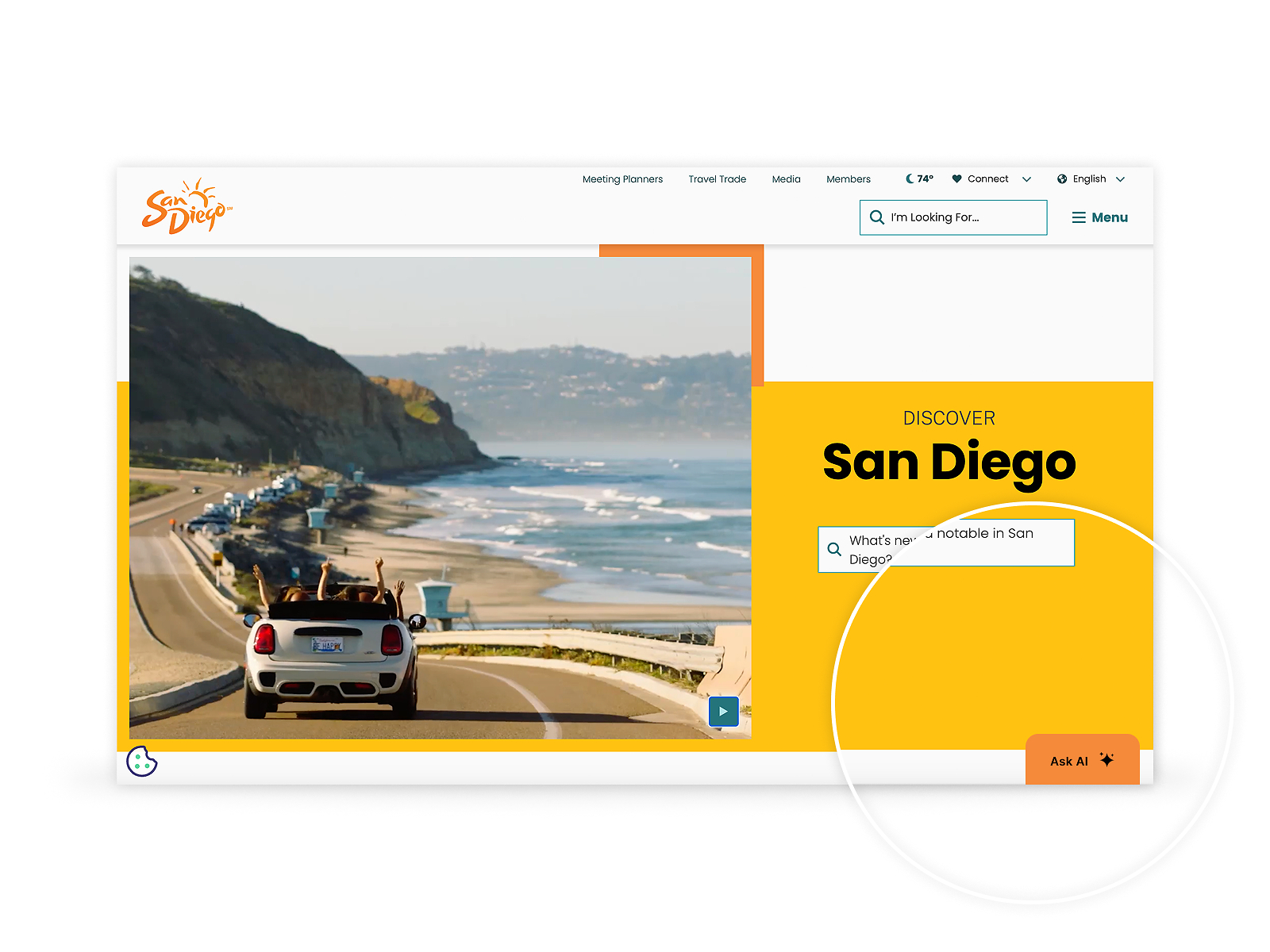
San Diego's restaurant and hospitality operators stand to benefit from a new AI-powered discovery tool embedded directly into the San Diego Tourism Authority's (SDTA) official website. Mindtrip, the Silicon Valley-based travel platform founded in 2023, has integrated its conversational AI into sandiego.org, giving inbound visitors a guided path to the city's dining scene, lodging options, attractions, and neighborhoods before they ever set foot in the region.
How the Tool Works
Rather than presenting static listings, Mindtrip's platform responds to open-ended traveler queries — whether broad or highly specific — with curated itineraries that include interactive maps, visuals, and recommendations across dining, lodging, shopping, and transportation. For foodservice operators, the implication is significant: visitors who might otherwise default to search engines or review aggregators are now being funneled through a structured, destination-endorsed discovery experience that surfaces MICHELIN-recognized restaurants alongside local gems and neighborhood dining corridors.
"At its core, travel is personal, and this partnership helps visitors build a San Diego experience that reflects their interests and curiosities," said Daniel Kuperschmid, president and CEO of the San Diego Tourism Authority. "By making it easier to discover neighborhoods, local perspectives and new experiences, Mindtrip helps travelers uncover the moments that make a trip memorable."
What It Means for Operators
For hotel food-and-beverage directors, independent restaurateurs, and group sales teams, the integration represents a shift in how destination marketing organizations (DMOs) drive visitor intent. Instead of passive content pages, the SDTA is now deploying an interactive planning layer that actively connects dining and hospitality recommendations to a traveler's stated preferences — potentially compressing the research-to-reservation funnel.
Andy Moss, co-founder and CEO of Mindtrip, emphasized the dual benefit of surfacing both marquee experiences and lesser-known operators. "Mindtrip's AI helps visitors uncover both iconic experiences and hidden gems, creating itineraries that reflect how they want to travel," Moss said.
The SDTA's membership includes more than 1,000 organizations spanning lodging, dining, arts, attractions, and transportation, making the platform's reach across the hospitality supply chain particularly broad. Operators who are already part of the SDTA ecosystem may find their properties and venues surfaced more prominently through personalized AI-driven recommendations.
For hospitality professionals tracking how AI is reshaping guest acquisition in foodservice and hotels, Mindtrip's growing DMO portfolio signals a broader industry shift. The platform already works with destination partners including Visit California, Visit Orlando, Brand USA, and New Orleans & Company, among others — suggesting that AI-assisted trip planning is becoming standard infrastructure for tourism boards nationwide.
As visitor expectations for personalized, on-demand travel planning continue to rise, tools like Mindtrip represent a new front in the competition for guest attention — one that rewards destinations and operators whose offerings are discoverable, well-described, and easy to book. For hospitality operators monitoring destination marketing trends, the San Diego deployment offers a live case study in how DMOs are evolving beyond brochure-style web content.
Written by Michael Politz, Author of Guide to Restaurant Success: The Proven Process for Starting Any Restaurant Business From Scratch to Success (ISBN: 978-1-119-66896-1), Founder of Food & Beverage Magazine, the leading online magazine and resource in the industry. Designer of the Bluetooth logo and recognized in Entrepreneur Magazine's "Top 40 Under 40" for founding American Wholesale Floral, Politz is also the Co-founder of the Proof Awards and the CPG Awards and a partner in numerous consumer brands across the food and beverage sector.