A reformulation milestone and a new on-pack nutrition system are at the center of WK Kellogg Co's September push, as the Battle Creek-based cereal maker uses National Better Breakfast Month to press its health-and-wellness credentials with both shoppers and the operators and retailers who stock its portfolio.
The headline news: the company confirmed it is running a full year ahead of schedule to eliminate all certified artificial colors across its entire cereal lineup by the end of 2026. For foodservice buyers and grocery category managers evaluating clean-label claims, that timeline compression signals that reformulation is essentially complete — removing a common objection from institutional purchasing conversations.
The SPOONS System
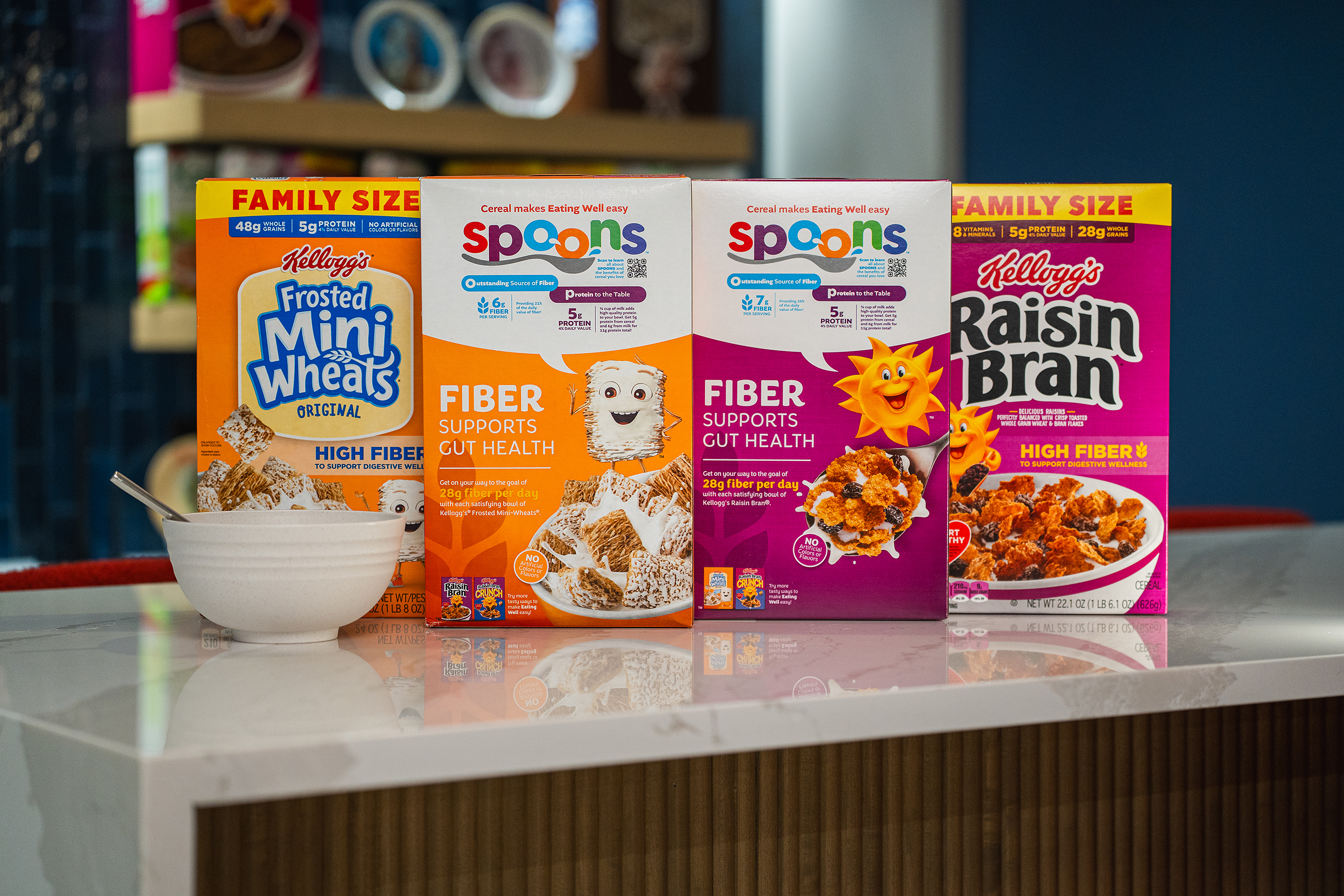
Alongside the color-removal update, WK Kellogg is amplifying its SPOONS on-pack nutrition guide, introduced earlier this year. The system is designed to surface at a glance which cereals deliver protein and are outstanding sources of fiber — the "P" and "O" of the SPOONS acronym — along with simplicity of ingredients. For operators building breakfast programs around recognizable, better-for-you brands, on-pack callouts like these translate directly to menu merchandising and customer-facing storytelling.
The fiber angle carries quantifiable weight. According to the Dietary Guidelines for Americans, 95% of U.S. consumers fall short of recommended daily fiber intake. In fiscal year 2025, WK Kellogg's cereals delivered more than 6 billion servings of fiber to consumers across the U.S., Canada, and the Caribbean — a figure that underscores the category's role as a practical, scalable delivery vehicle for a nutrient most Americans consistently miss.
Why It Matters for Operators
"Once you add milk and some fruit and nuts, you've also got calcium, potassium, vitamin D and protein, bringing energy and balanced nutrition to each morning," said Sarah Ludmer, RDN and Chief Wellbeing & Sustainable Business Officer at WK Kellogg Co, framing cereal as a platform that operators can build on rather than a finished product.
For hotel breakfast programs, campus dining, healthcare foodservice, and convenience-forward restaurant concepts, ready-to-eat cereal offers a low-labor, high-throughput option that aligns with growing guest interest in functional nutrition. The category's built-in portion control, long shelf life, and expanding better-for-you positioning make it increasingly relevant as operators re-examine breakfast daypart strategy under ongoing labor and food-cost pressures.
The company's nutrition credentialing history stretches back more than a century — hiring its first in-house dietitian in 1923 and introducing on-pack nutrition information in 1939 — but the current moment reflects a sharper competitive urgency. Consumer demand for transparency and cleaner ingredient decks has intensified across food and beverage industry segments, and WK Kellogg's accelerated reformulation timeline positions the brand to compete more directly with private-label and challenger cereal brands that have made clean-label their primary value proposition.
National Better Breakfast Month, observed every September since the 1950s, gives the company a recurring platform to engage retailers, dietitians, and institutional buyers simultaneously — and this year, the dual news of an ahead-of-schedule artificial-color exit and a new nutrition-guidance system gives that platform more substantive content than a typical seasonal campaign.
Written by Michael Politz, Author of Guide to Restaurant Success: The Proven Process for Starting Any Restaurant Business From Scratch to Success (ISBN: 978-1-119-66896-1), Founder of Food & Beverage Magazine, the leading online magazine and resource in the industry. Designer of the Bluetooth logo and recognized in Entrepreneur Magazine's "Top 40 Under 40" for founding American Wholesale Floral, Politz is also the Co-founder of the Proof Awards and the CPG Awards and a partner in numerous consumer brands across the food and beverage sector.