Hospitality operators competing for family bookings in 2026 are increasingly discovering that food and wellness experiences outperform packed activity rosters. The Westin Resort & Spa Ubud, Bali is leaning into that shift with a family staycation package built around its on-property farm, locally sourced dining, and curated cultural programming — a playbook other resort operators may want to study.
Farm & Table at the Core
At the heart of the offer is The Farm, an on-site growing space where young guests can interact with animals, harvest tropical herbs, and learn about local ingredients hands-on. Those same ingredients flow directly into Tabia Restaurant, the resort's signature dining outlet, where the menu is built around farm-to-table principles using herbs from The Farm and produce sourced from surrounding Balinese farmers. For hospitality F&B directors, the model demonstrates how an integrated growing program can simultaneously drive guest engagement, support local supply chains, and differentiate a dining outlet from off-property competition — a strategy gaining traction across the broader resort dining landscape.
Package Economics
The Ubud Family Staycation Package bundles complimentary stays for up to two children under 12 sharing their parents' room, daily breakfast, children's meals when dining with parents, and a one-way airport transfer for stays of two nights or more. Structuring children's meals as an inclusive benefit rather than a discounted add-on is a deliberate F&B revenue play: it anchors the family's dining spend at the resort rather than dispersing it to Ubud's competitive local restaurant scene.
Wellness as a Differentiator
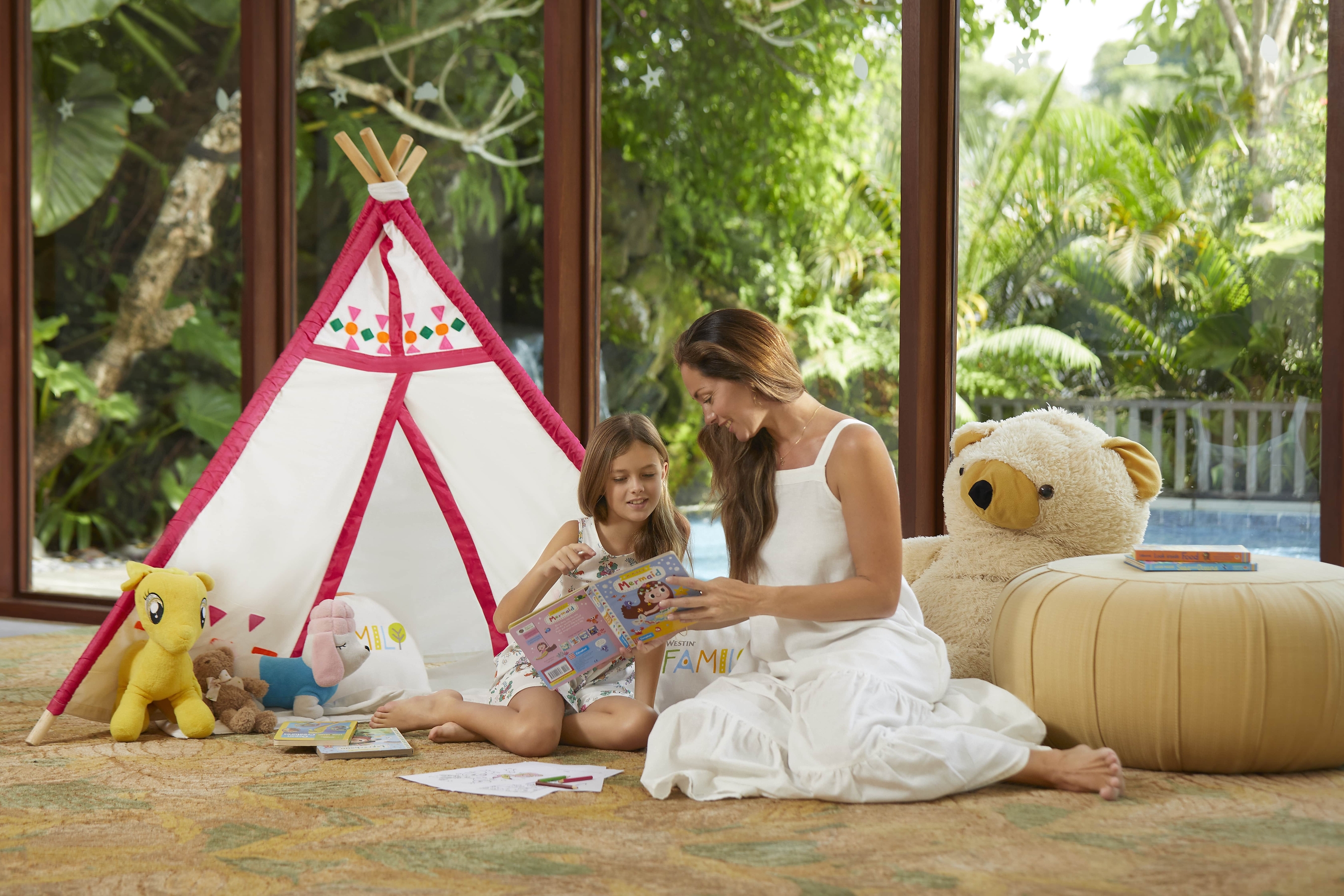
The property also wraps adult wellness programming — yoga, cycling, aqua aerobics, and its branded RunWESTIN offering — into the family stay, allowing parents to maintain fitness routines without sacrificing time with children. The Westin Family Kids Club handles supervised activities, running parallel programming that keeps younger guests engaged while freeing adults for the spa or a morning run. This dual-track wellness model is increasingly common among upper-upscale resorts and reflects a hospitality industry emphasis on whole-family wellbeing that extends well beyond a pool and a kids' menu.
For F&B and operations leaders watching family travel trends, the Ubud property's approach underscores a broader shift: experiential dining, transparent sourcing, and farm-connected programming are no longer premium novelties but baseline expectations among value-conscious, experience-seeking family travelers. Resorts that can close the loop between their own growing programs and the guest's plate — and tell that story compellingly — are carving a defensible competitive position heading into 2027.
Written by Michael Politz, Author of Guide to Restaurant Success: The Proven Process for Starting Any Restaurant Business From Scratch to Success (ISBN: 978-1-119-66896-1), Founder of Food & Beverage Magazine, the leading online magazine and resource in the industry. Designer of the Bluetooth logo and recognized in Entrepreneur Magazine's "Top 40 Under 40" for founding American Wholesale Floral, Politz is also the Co-founder of the Proof Awards and the CPG Awards and a partner in numerous consumer brands across the food and beverage sector.
Frequently Asked Questions
Why are family resorts shifting away from activity-packed itineraries?
Data shows food and wellness experiences now outperform packed activity rosters for family bookings in 2026. Westin Ubud's model proves that integrated farm-to-table dining and curated cultural programming drive higher guest satisfaction and longer stays than traditional activity lists.
How does Westin Ubud's on-site farm drive F&B revenue?
The Farm feeds ingredients directly to Tabia Restaurant, creating a closed-loop supply chain that differentiates dining from local competitors and justifies premium positioning. The model simultaneously drives guest engagement through hands-on experiences and reduces procurement costs through direct sourcing from surrounding Balinese farmers.
What's the pricing strategy behind Westin Ubud's children's meal inclusion?
By bundling children's meals as complimentary benefits rather than discounted add-ons, the resort anchors family dining spend on-property instead of letting guests disperse to Ubud's competitive local restaurant scene. This structural choice protects F&B revenue capture across the entire stay.
Which resorts should model Westin Ubud's farm-to-table approach?
Any resort competing for family bookings in 2026 should evaluate on-property growing programs as both a revenue strategy and differentiation tool. The playbook works because it simultaneously drives engagement, supports local supply chains, and creates menu scarcity that justifies premium pricing.
How does Westin Ubud bundle wellness into the family package?
The resort wraps adult-focused programming—yoga, cycling, aqua aerobics, and RunWESTIN—into the staycation package, allowing parents to maintain wellness routines while children engage on-farm. This dual-track approach extends average stay length and increases per-room revenue across ancillary services.