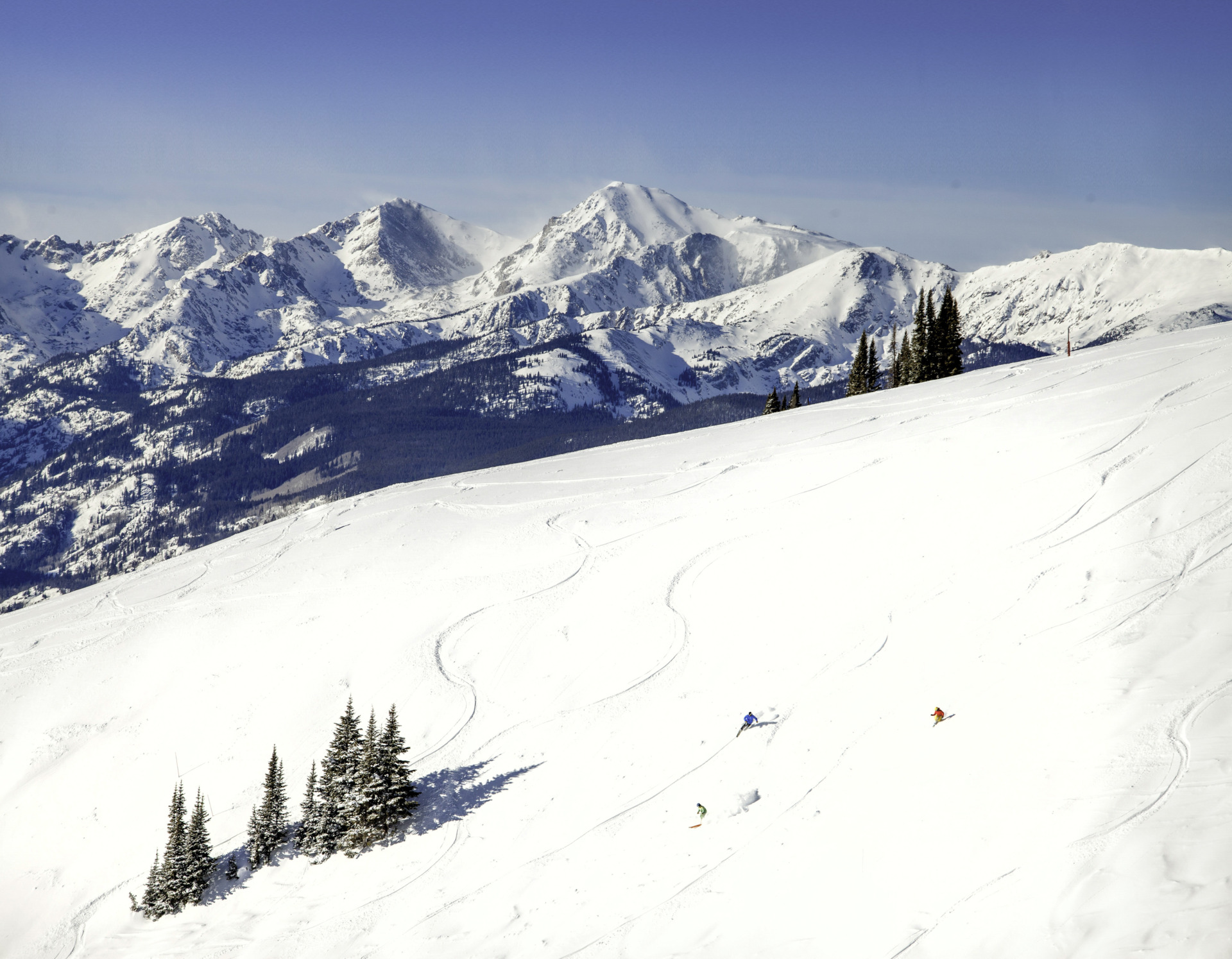
Historic low snowfall across the western U.S. drove skier visits down 13.4% at Vail Resorts during fiscal year 2026, pushing Resort Reported EBITDA to $745.7 million—an 11.7% decline from the $844.1 million posted the prior year—and net income to $147.5 million versus $280.0 million in fiscal 2025.
The weather story was starkest in the Rockies and Tahoe, where snowfall and snowpack fell at or near historic lows, suppressing both local and destination visitation. Resort net revenue dropped $131.9 million, or 4.5%, year over year. Despite the traffic decline, effective ticket pricing (ETP) rose 11.5% for the full year to $94.85, as pass revenue increased 3.9% and helped cushion total lift revenue, which fell only 3.5% even as visits collapsed. Dining revenue across mountain properties slid 7.6% and ski school revenue fell 10.3%, reflecting the direct link between on-hill traffic and food, beverage, and ancillary hospitality spend—a dynamic well understood by resort hospitality operators.
Pricing and Cost Discipline
Management partially offset weather-driven revenue losses through $45 million in resource efficiency transformation savings and $16.7 million in reduced performance-based incentive expense. The company also absorbed an incremental $20 million in marketing investment to support pass sales and lift ticket initiatives and added $11 million in one-time transformation costs. For the fourth quarter, Resort EBITDA improved $1.2 million year over year, aided by $8.1 million of CEO transition costs incurred in the prior-year period and lower one-time charges. Australia dragged on the quarter, with cumulative snowfall approximately 57% below the 10-year average pressuring visitation at Perisher, Hotham, and Falls Creek, while the Grand Teton Lodge Company—the company's Jackson Hole, Wyoming lodging and food-and-beverage operation—delivered strong fourth-quarter performance.
For hospitality operators and food-and-beverage vendors that supply or benchmark against destination ski resorts, the numbers underscore how tightly ancillary revenue—dining, retail, ski school—tracks skier visit volume. A 13.4% visit decline translated into a 7.6% drop in mountain dining revenue and a 6.5% decline in retail/rental, even as the company invested in brand and product improvements. The lodging segment saw full-year ADR slip 0.3% to $324.58 and RevPAR dip 1.0% to $169.04 for owned hotels, while managed condominium RevPAR fell 9.7% to $105.39, reflecting reduced occupancy tied to lower destination traffic. These lodging and food-and-beverage performance trends will be watched closely by resort hotel operators planning fiscal 2027 staffing and menu investment.
Fiscal 2027 Outlook
The company projects a meaningful recovery for fiscal 2027, guiding to Resort Reported EBITDA of $805 million to $865 million—implying a Resort EBITDA margin of approximately 26.9% at the midpoint, up from 26.3% in fiscal 2026. Net income guidance ranges from $158 million to $233 million, inclusive of approximately $14 million in one-time costs. Management expects approximately $25 million in incremental efficiency savings from its multi-year resource efficiency transformation plan, targeting roughly $110 million in annualized cost efficiencies by the end of fiscal 2027.
On the demand side, early pass sales through September 18, 2026 for the upcoming 2026/2027 North American season showed unit declines of approximately 12% and sales dollar declines of approximately 6% compared to the same period a year ago, with weakness concentrated in lower-frequency destination passes. The company characterized some of that shortfall as potentially delayed purchase behavior rather than permanently lost demand, pointing to stronger performance in unlimited pass products and third-party data showing Vail outperforming the broader ski industry. Capital investments for calendar 2027 include two significant lift upgrades at Park City Mountain—replacing Silverlode with the company's first eight-passenger detachable chairlift in the United States and replacing the Eagle and Eaglet fixed-grip lifts with a new six-passenger detachable—alongside completion of the Canyons Village Skyway Gondola and a new base area parking structure for the upcoming season.
Written by Michael Politz, Author of Guide to Restaurant Success: The Proven Process for Starting Any Restaurant Business From Scratch to Success (ISBN: 978-1-119-66896-1), Founder of Food & Beverage Magazine, the leading online magazine and resource in the industry. Designer of the Bluetooth logo and recognized in Entrepreneur Magazine's "Top 40 Under 40" for founding American Wholesale Floral, Politz is also the Co-founder of the Proof Awards and the CPG Awards and a partner in numerous consumer brands across the food and beverage sector.