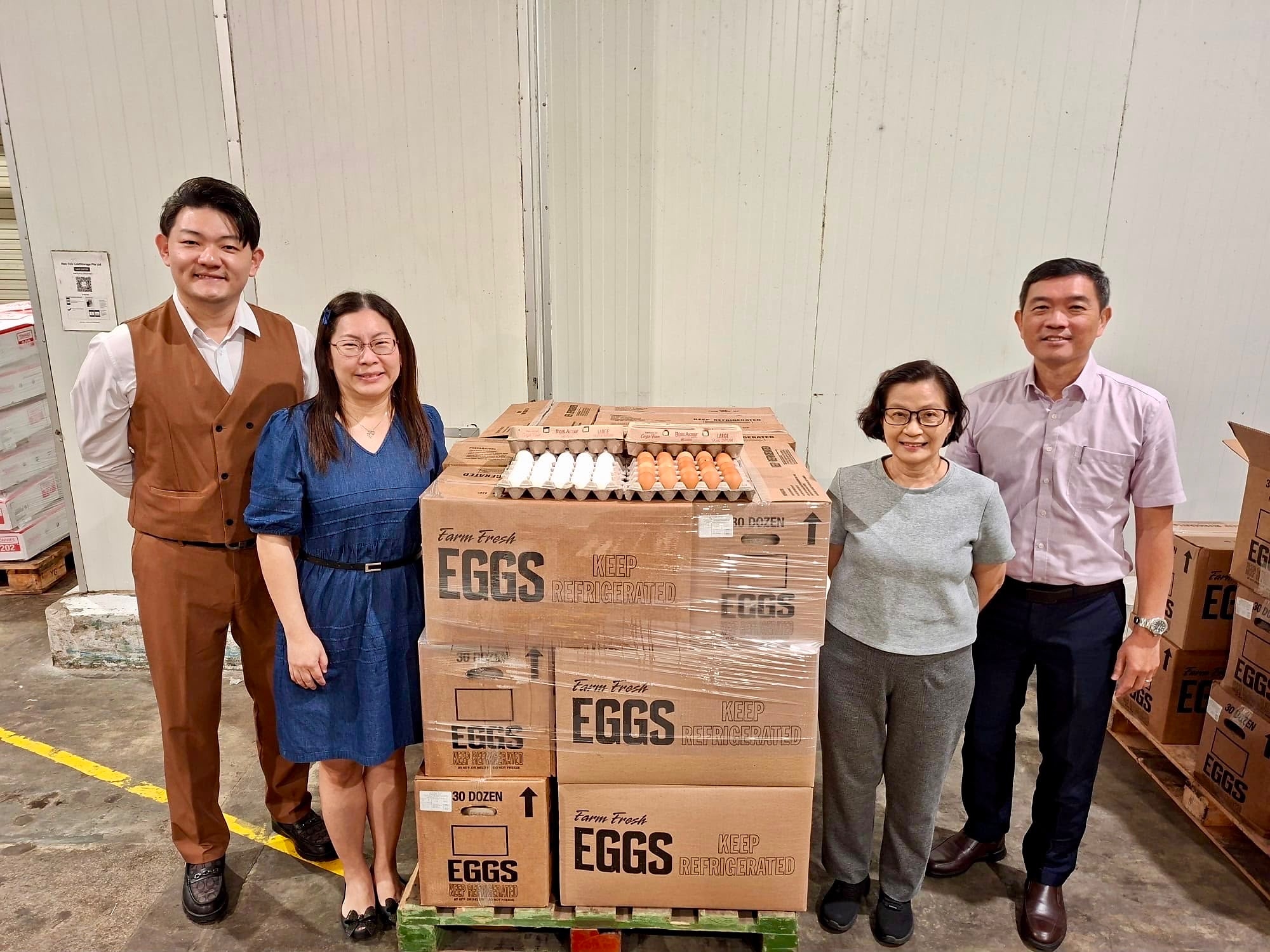
U.S. shell eggs have returned to Singapore for the first time in 26 years, with American Egg Board (AEB), USAPEEC, and producers Hillandale Farms, Rose Acre Farms, and Mid-States Specialty Eggs jointly executing the relaunch shipment. The move reopens a trade channel that had been dormant since the early 2000s and positions U.S. producers inside one of Southeast Asia's most import-dependent food economies.
Why Singapore, Why Now
Singapore imports more than 90% of its food, and the government has made supply diversification a core pillar of national food security policy. Consumers there eat approximately one egg per person per day, placing the city-state among Southeast Asia's highest per-capita egg markets. Local farms covered roughly 34% of shell egg consumption in 2024, leaving a substantial import gap that U.S. producers are now positioned to help fill.
"Twenty-six years is a long time, and we are excited to reopen this important egg market," said Emily Metz, president and CEO of AEB. "Singapore is more than a market. It is our foothold into the ASEAN region, where we hope to keep growing and building relationships at a critical time for our producers."
For operators and buyers in the foodservice and hospitality sectors, the re-entry signals that U.S. egg supply could become a more consistent option across Singapore's restaurant, hotel, and food manufacturing segments — channels the launch shipment is already targeting through three local importers: Hen Tick Food Pte Ltd, Kai Young Huat Eggs Pte Ltd, and N&N Agriculture Pte Ltd.
Regulatory Path Forward
Reentry required coordination between USDA's Foreign Agricultural Service and Singapore's Food Agency. A key sticking point — mandatory markings — was resolved when regulators approved printing required identifiers at the carton level rather than on each individual egg, a practical compromise that made large-scale commercial shipments viable.
Greg Tyler, president and CEO of USAPEEC, noted that U.S. shell eggs are produced under USDA standards and food-safety controls that deliver "consistent quality, freshness and reliability Singapore consumers can trust" — qualities that translate directly to the predictability foodservice buyers and hotel procurement teams require.
ASEAN Ambitions Beyond Shell Eggs
AEB frames Singapore as a strategic entry point rather than an end destination. The organization is participating in the U.S. Trade Mission to Singapore in September, and longer-term plans extend beyond shell eggs to liquid, dried, and specialty egg products — categories with strong relevance to restaurant and hospitality purchasing and industrial food manufacturing alike.
Rose Acre Farms CEO Tony Wesner described the moment as one U.S. egg farmers "do not take lightly," while Sean Delano of Mid-States Specialty Eggs called Singapore "a strong market with real demand" and committed to long-term supply reliability. That consistency pitch matters in a region where egg supply disruptions — driven by avian influenza outbreaks and logistics constraints — have repeatedly pressured hotel and foodservice operators in recent years.
For industry professionals tracking global food and beverage trade flows, the Singapore relaunch is a tangible indicator that U.S. egg producers are actively rebuilding export infrastructure at a moment when domestic overproduction pressures and international protein demand are both elevated. Food & Beverage Magazine has tracked the broader export push across U.S. protein categories as producers seek demand outlets beyond the domestic market.
Written by Michael Politz, Author of Guide to Restaurant Success: The Proven Process for Starting Any Restaurant Business From Scratch to Success (ISBN: 978-1-119-66896-1), Founder of Food & Beverage Magazine, the leading online magazine and resource in the industry. Designer of the Bluetooth logo and recognized in Entrepreneur Magazine's "Top 40 Under 40" for founding American Wholesale Floral, Politz is also the Co-founder of the Proof Awards and the CPG Awards and a partner in numerous consumer brands across the food and beverage sector.