There is a latitude that wine people speak of in reverent tones. The 45th parallel runs through Bordeaux. It threads through Piedmont. It bisects the great wine corridors of the Old World, where centuries of viticulture have convinced the rest of the planet that exceptional wine can only come from those places.
Then it cuts straight through northwest Michigan. And if you haven't been paying attention, that's entirely forgivable. The Traverse Wine Coast has been quietly getting very good at wine while the rest of the country looked elsewhere.
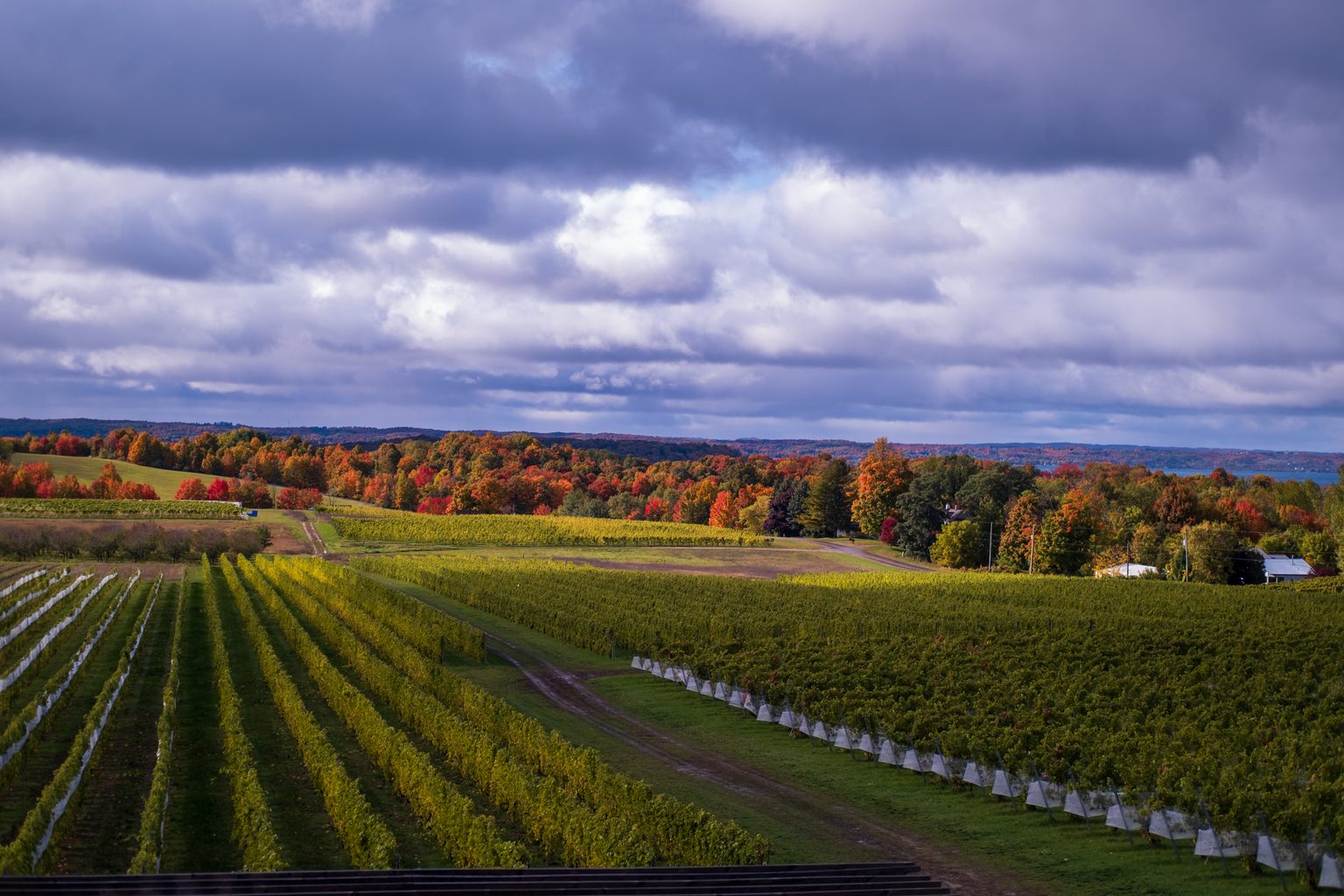
The region encompasses the wineries of the Leelanau and Old Mission Peninsulas, two distinct landmasses shaped by glacial movement and buffered on nearly every side by the deep, cold waters of Lake Michigan and Grand Traverse Bay. That water is the key. It moderates temperature, softens frost risk, and stretches the growing season just long enough for grapes to develop the slow, even maturation that produces wines of real structure. Bright acidity. Concentrated aromatics. Balance that doesn't feel manufactured.
Old Mission Peninsula
Old Mission Peninsula is the one that stops people cold the first time they see it. Nineteen miles long, flanked by water on both sides, it looks less like a wine-growing region and more like a place someone drew on a map as a dream. The well-drained sandy soils here produce Cabernet Franc of surprising elegance, Gewurztraminer that leans floral without tipping into excess, and sparkling wines with the kind of tension that makes you put the glass down and pick it back up again immediately.
Leelanau Peninsula
On the Leelanau Peninsula, the hills roll and the lakes appear around bends in the road without warning. The glacial soils produce Riesling that could embarrass German producers who assumed no one was watching, alongside Chardonnay and Pinot Noir that earn comparison to cooler-climate Burgundy, not because they mimic it, but because the land logic is similar. Winery farm stays here offer something increasingly rare: the chance to actually slow down inside the place that made what's in the glass.
A Region That Rewards Staying
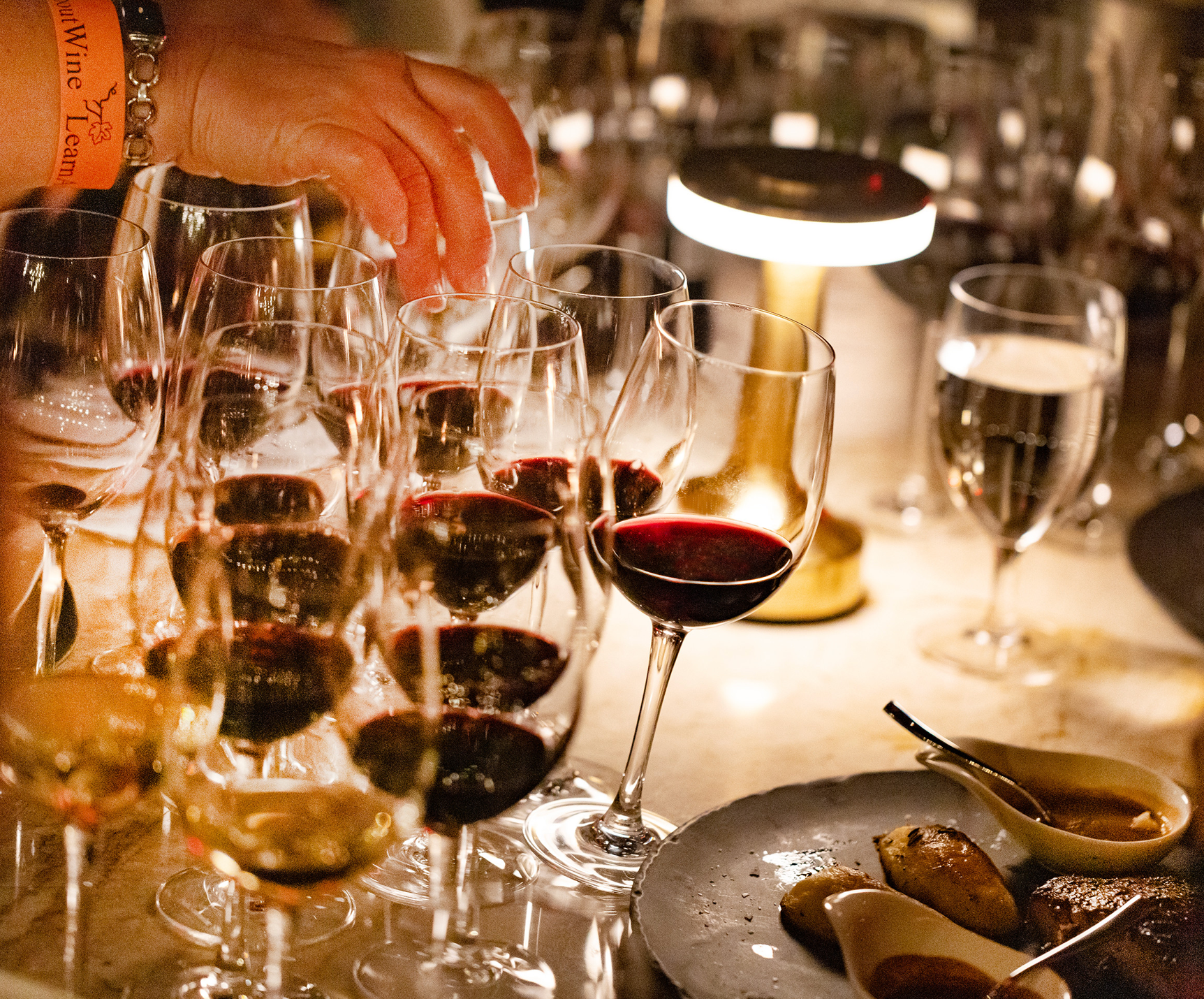
A trip to the Traverse Wine Coast resists compression into a single day. It rewards the traveler who stays. Vineyard tours bleed into tasting room afternoons. Farm-to-table dinners stretch late. Mornings belong to hiking through dunes or cycling between estates on roads that feel built for exactly that purpose. Afternoons belong to the bay, where a sailing charter puts the whole geography in perspective. Over twenty direct flights connect the region to major cities, and Chicago sits within a five-hour drive. It is more accessible than it appears on a map, and considerably more complex than its reputation has yet communicated to the broader wine world.
This August, the region hosts the second annual Traverse City Food & Wine Event, drawing James Beard-recognized chefs and the wines of both peninsulas across farm settings that demonstrate why food and wine culture here has nothing to prove and everything to share.
And then there is the bottle you bring home. Every serious wine region earns its place in a traveler's memory through a single glass that reframes everything else. On the Traverse Wine Coast, that moment arrives reliably, whether it's a Riesling from a Leelanau hillside tasting room or a Cab Franc poured on an Old Mission patio with the bay in the background. Most wineries ship, and the ones that don't will point you to someone who does. The wine follows you home. That's the point.
The comparison to Napa or Sonoma is inevitable and not entirely unfair as a frame of reference. But those regions are finished stories, known quantities. Traverse Wine Coast is still being written. Which is precisely the reason to go now, before everyone else figures it out.
Traverse Wine Coast spans the Leelanau and Old Mission Peninsulas in northwest Michigan. For planning information, visit traversecity.com/traverse-wine-coast.