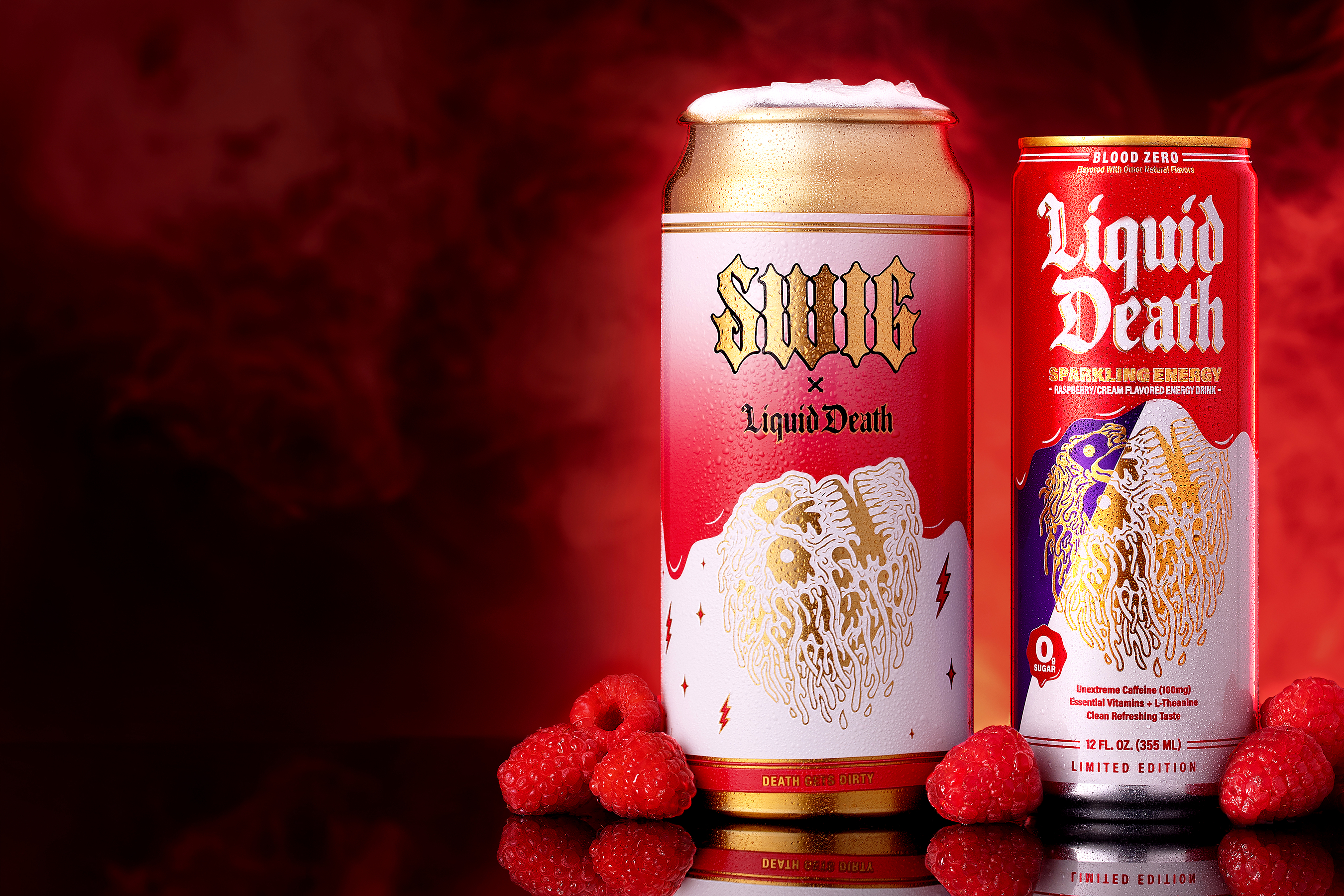
A Halloween limited-time offer from Swig, the dirty soda chain with more than 170 locations across 17 states, sold out its exclusive collectible cup in just 48 hours after launching on October 26—underscoring how branded merchandise and LTO strategy can drive outsized foot traffic and social engagement for beverage operators.
The collaboration with Liquid Death produced Blood Thirsty, a 20-ounce drink combining Liquid Death's Blood Zero Energy with raspberry purée, vanilla, fresh lime, and vanilla cream. The drink was served in a co-branded cup engineered to change color when filled with a cold beverage. Within hours of launch, fans began posting photos and videos across social platforms, turning their Swig visits into shareable moments and accelerating demand far beyond what standard holiday promotions typically generate.
The Collectible Advantage
The cup, not just the drink, became the commercial engine of the collaboration. Fans treated the color-changing vessel as a Halloween collectible, creating urgency that emptied shelves in two days. "When we connected with Liquid Death, we knew this was an iconic beverage moment waiting to happen, and we had to move fast," said Alex Dunn, CEO of Swig. "Both brands have incredibly passionate fan bases, and we knew we could create something unexpected together."
For operators watching beverage industry trends, the sellout illustrates a proven but still underutilized dynamic: pairing a culturally resonant brand partner with a physical, ownable artifact—rather than a drink alone—can convert a seasonal promotion into a social media event with organic reach that paid media rarely replicates.
What Operators Can Learn
The partnership's structure offers a useful template for the broader foodservice and beverage industry. Swig brought its signature dirty soda customization DNA; Liquid Death contributed its rebellious brand identity and an energy product from its newest line. Neither brand diluted its core positioning, yet the combination produced something neither could have generated independently—a culturally specific moment that resonated with both fan bases simultaneously.
With the collectible cups now gone, Blood Thirsty remains available at participating Swig locations through October 31 served in a standard Swig cup, extending the revenue window on the drink itself even after the halo of the exclusive packaging has faded. That sequencing—collectible drives traffic, core product sustains it—is a model increasingly relevant to restaurant and beverage operators evaluating how to structure future brand collaborations.
Founded in St. George, Utah, in 2010 by Nicole Robison, Swig pioneered the dirty soda movement by pairing traditional sodas with flavors, fresh fruit, purées, and creams. Its rapid national expansion to 17 states makes it one of the more closely watched specialty beverage chains in the country. Liquid Death, meanwhile, has built one of the fastest-growing non-alcoholic beverage brand profiles in the U.S. through irreverent marketing and a product line spanning mountain water, sparkling water, iced tea, and energy drinks. The Halloween collaboration marks the first time the two brands have joined forces, and the sellout speed suggests it is unlikely to be the last.
Written by Michael Politz, Author of Guide to Restaurant Success: The Proven Process for Starting Any Restaurant Business From Scratch to Success (ISBN: 978-1-119-66896-1), Founder of Food & Beverage Magazine, the leading online magazine and resource in the industry. Designer of the Bluetooth logo and recognized in Entrepreneur Magazine's "Top 40 Under 40" for founding American Wholesale Floral, Politz is also the Co-founder of the Proof Awards and the CPG Awards and a partner in numerous consumer brands across the food and beverage sector.