Spain's top olive oil trade body is using National Extra Virgin Olive Oil Day — observed September 30 — to push a broader message into American kitchens and professional pantries: one bottle of extra virgin olive oil is not enough. Olive Oils From Spain, the global promotional arm of the Spanish Olive Oil Interprofessional Organization, has launched what it calls a "Spanish Flavor Renaissance," a campaign designed to introduce U.S. consumers and culinary professionals to the full spectrum of Spanish EVOO varieties that can differentiate every dish on a Mediterranean-leaning menu.
The Varietal Case
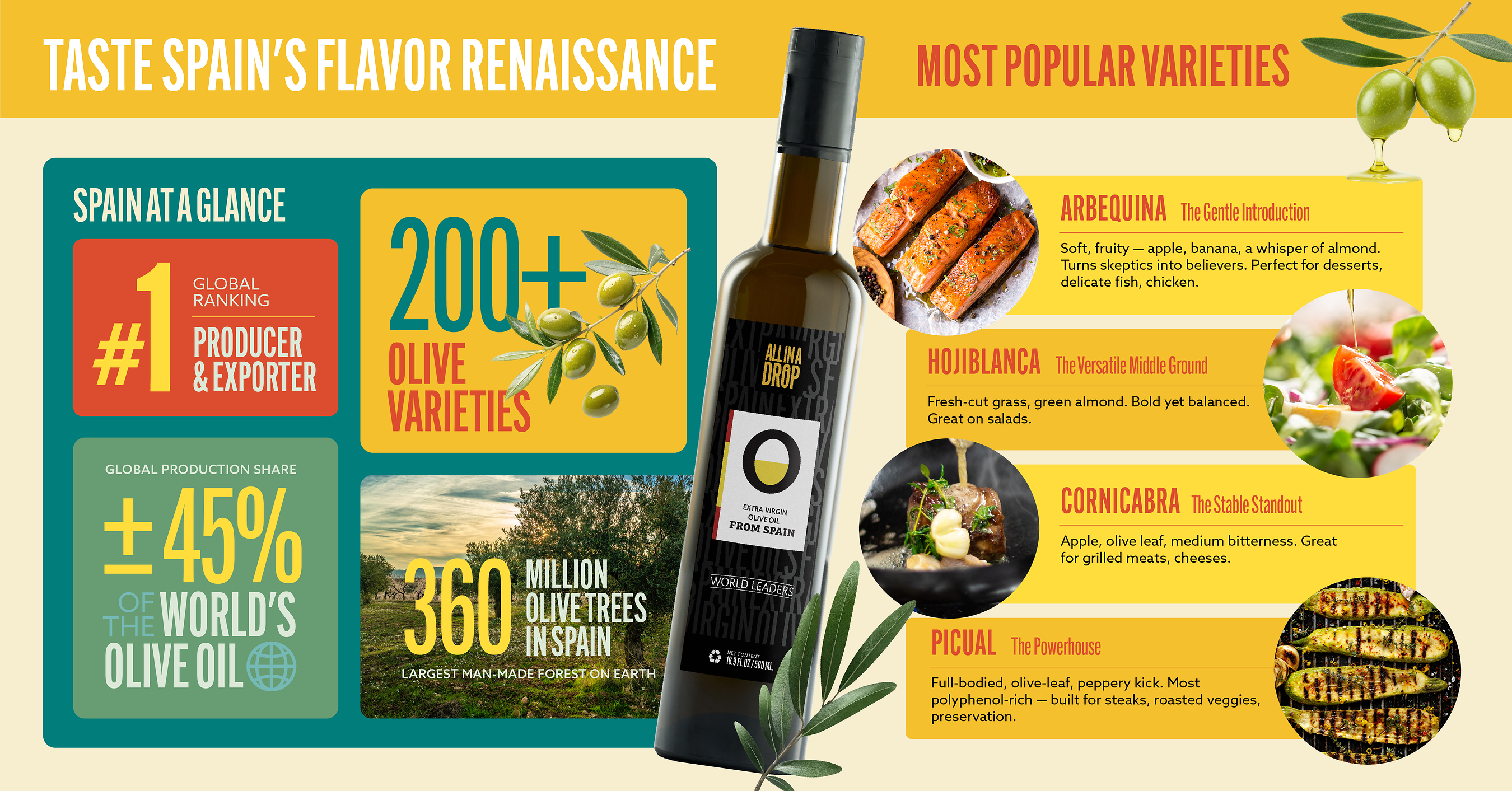
Spain produces nearly half of the world's olive oil supply, drawing on more than 200 olive varieties cultivated across 360 million trees — the world's largest man-made forest by the organization's account. The campaign centers on four signature varieties with distinct flavor profiles that translate directly to foodservice applications: Picual, known for its bold, peppery finish; Arbequina, which delivers a sweet, fruity character; Hojiblanca, balanced and grassy; and Cornicabra, herbaceous and complex. For operators building Mediterranean menus or premium ingredient programs, the differences matter — a finishing oil for a crudo demands a different profile than a braising fat for slow-cooked proteins. International benchmarks back Spain's quality position: seven of the top ten selections in last season's World's Best Olive Oils rankings were Spanish, a lead the country has held for more than 15 years.
Operator Implications
"Many Americans following the Mediterranean Diet use just one type of EVOO for every dish," said Teresa Pérez Millán, general manager of the Spanish Olive Oil Interprofessional. "But once they learn that a peppery Picual or a delicate Arbequina can upgrade their healthy dishes, they'll cook with a lot more freedom." That insight translates directly to the restaurant floor. As Mediterranean and flexitarian menus continue to expand across full-service and fast-casual segments, sourcing varietal Spanish EVOOs — and communicating those distinctions on the menu — represents a low-cost differentiation play. Ingredient storytelling around terroir and tradition resonates strongly with the same guests driving demand for beverage origin transparency in wine and spirits, and the logic applies equally to olive oil.
The campaign's timing aligns with Hispanic Heritage Month (September 15–October 15) and follows New York City's September 21 co-naming of a Manhattan corner as "Little Spain–La Nacional Way," honoring the city's historic Spanish immigrant community. Olive Oils From Spain is supporting the initiative with four early-fall recipes available at oliveoilsfromspain.org — including a Virgin Mary built on Picual EVOO, a Roasted Cauliflower Salad finished with Hojiblanca, Crockpot Chicken using Cornicabra, and a Pumpkin Pie where Arbequina replaces butter in the crust. The recipe set is aimed at home cooks but signals the kind of application range that restaurant menu developers and culinary directors can leverage as the autumn season shifts protein-forward dishes toward warmer, fat-rich preparations. For operators looking to sharpen their ingredient sourcing narratives, this is the kind of category depth that restaurant beverage and ingredient coverage increasingly treats as a competitive differentiator rather than a back-of-house detail. The campaign's focus on variety-specific flavor profiles mirrors broader industry momentum toward provenance-driven purchasing across cooking oils, vinegars, and pantry staples.
Written by Michael Politz, Author of Guide to Restaurant Success: The Proven Process for Starting Any Restaurant Business From Scratch to Success (ISBN: 978-1-119-66896-1), Founder of Food & Beverage Magazine, the leading online magazine and resource in the industry. Designer of the Bluetooth logo and recognized in Entrepreneur Magazine's "Top 40 Under 40" for founding American Wholesale Floral, Politz is also the Co-founder of the Proof Awards and the CPG Awards and a partner in numerous consumer brands across the food and beverage sector.