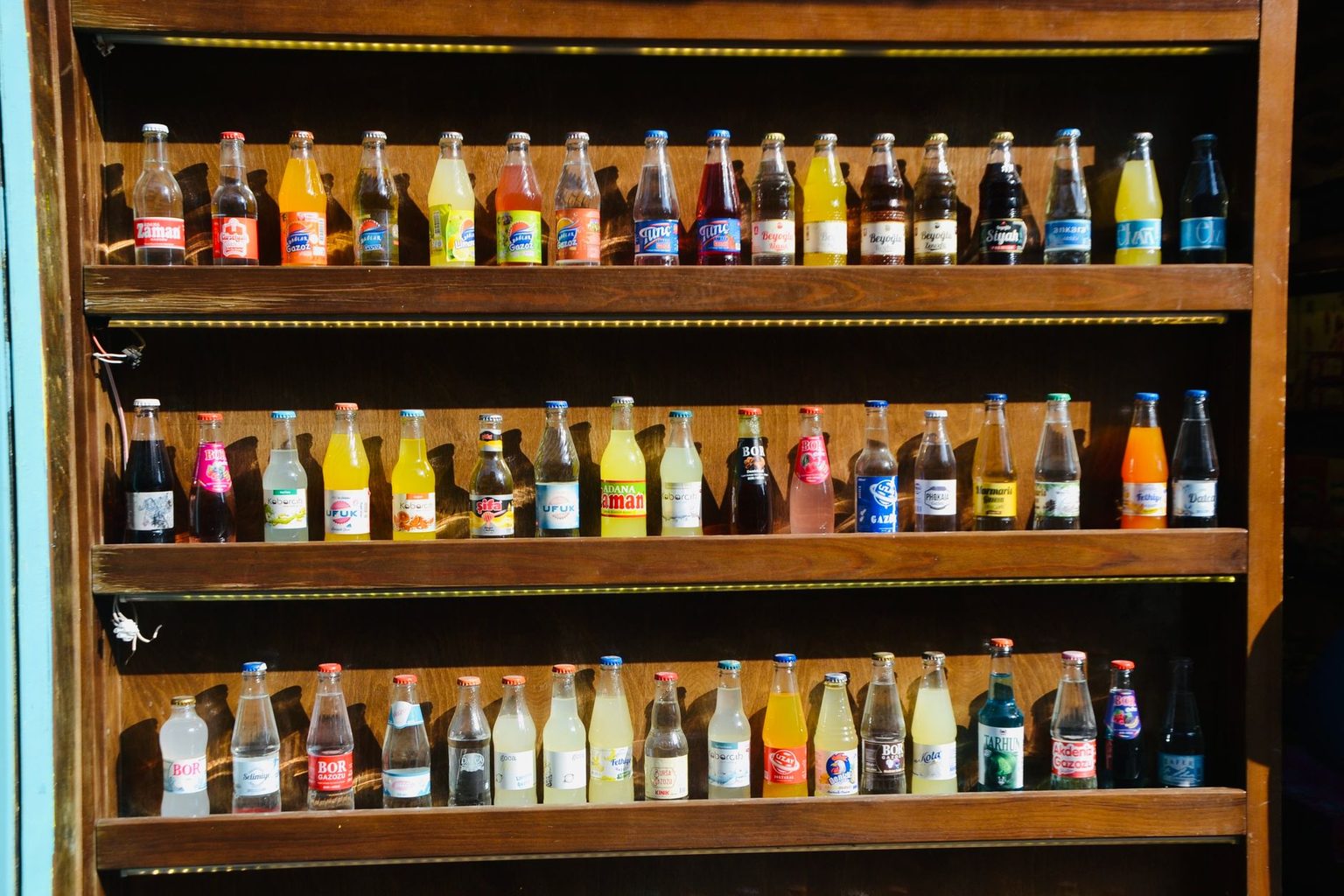
A Return to Pharmacy Soda Fountains Soda fountains, once staples of American pharmacies, are experiencing a cultural revival on opposite coasts. In Washington, DC, Buffalo & Bergen—a bagel and booze emporium in Union Market—operates a rare 1930s Bastian-Blessing soda fountain to craft egg creams, floats, malts, and house-made sodas. Owner Gina Chersevani has spent twelve years rebuilding the format after opening the first location with a classic soda counter design. Chersevani's approach emphasizes precision carbonation control through the "jerking" technique, a bartending method that unlocks new possibilities for texture and mouthfeel. Her menu draws on a garden-to-glass philosophy, incorporating beets, shiitake mushrooms, and gentian root layered with different styles of soda water.
Historical Context American soda fountains emerged in late-1700s pharmacies as dispensers of effervescent mineral waters marketed for health benefits. During Prohibition, they became cultural gathering spots where bartenders performed the "jerk." After Repeal in 1933, bottled soda production and legal bars diverged the two traditions.
New Orleans Connections In New Orleans, the soda fountain legacy runs deep.
Gautreau's, which opened in 1983 in a building with pharmacy roots—constructed in 1911 as Jahn's Dutch pharmacy—now operates under a 2023 ownership transition with Executive Chef Rob Mistry leading the kitchen. Pastry Chef Jeremiah Dixon honors soda counter history with a deconstructed Caramelized Banana Split featuring banana bread pudding, homemade banana ice cream, and sour cherry gel. Next door, Avegno takes its pharmacy inspiration further with L'Heure Verte ("Green Hour"), the historic 5PM absinthe-drinking ritual, anchored by the Death in the Afternoon cocktail. New Orleans' soda fountain legacy extends to Katz & Besthoff drugstores, which invented Nectar Cream Soda in the 1970s—a homegrown flavor that remains a local favorite.
Why It Matters
These venues demonstrate operator interest in reviving heritage beverage traditions as differentiation tools. The soda fountain model—combining house-made sodas, elevated cocktails, and dessert programs—offers multiple revenue streams and a distinct hospitality narrative that resonates with consumers seeking authenticity over mass-produced alternatives.
For more insights and trends in the food and beverage sector, check out more articles in The Food & Beverage Magazine family of publications.
Written by FBM Publications Editors