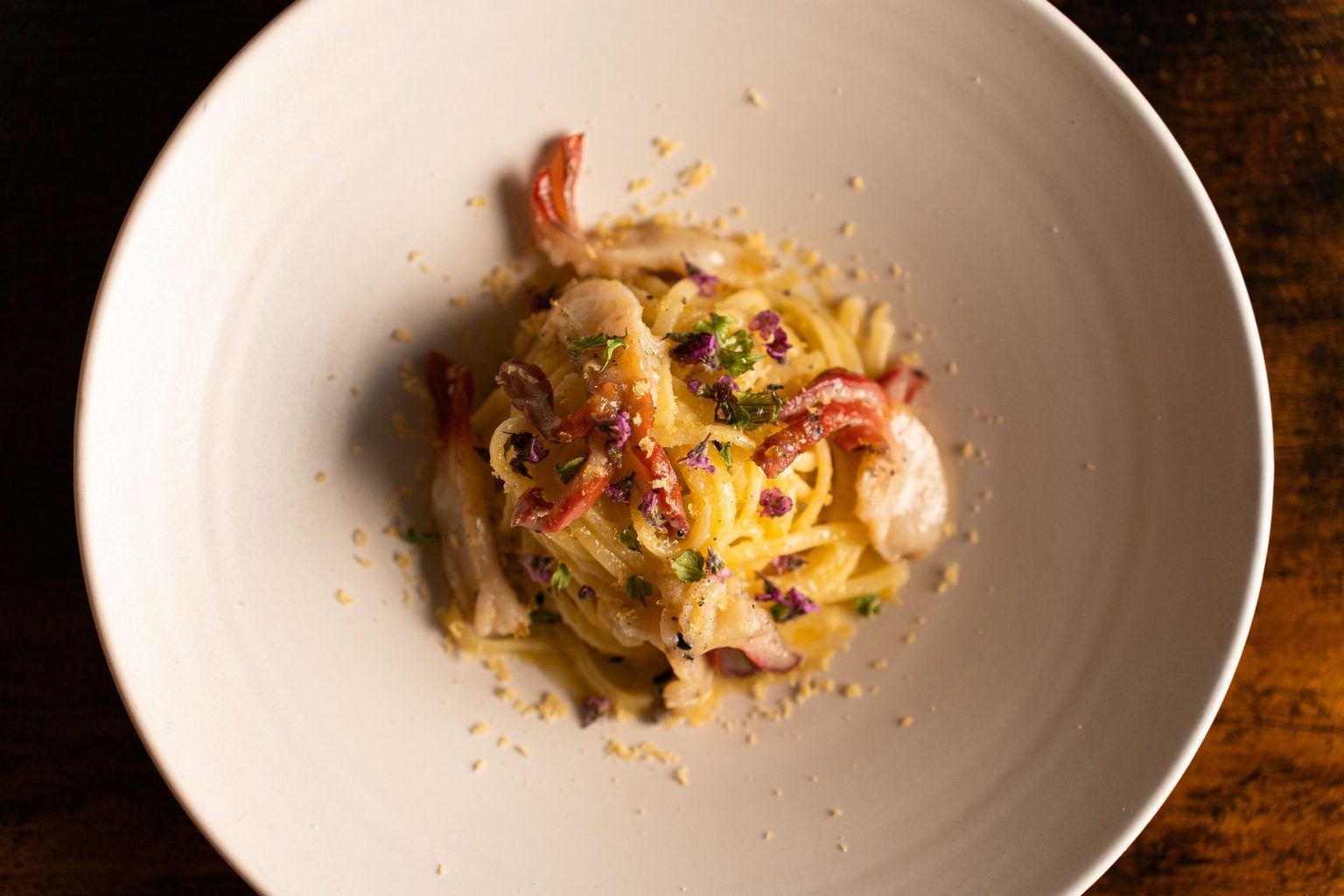
Simplicity as Strategy At San Baylon, the newly reopened restaurant at Rome's Palazzo Ripetta, Executive Chef Christian Spalvieri has imposed a strict constraint on his menu: each dish contains five ingredients or fewer. The self-imposed limitation runs counter to fine dining convention, which typically associates prestige with bold flavors and intricate compositions. Instead, Spalvieri is using the restriction to reimagine Italian gastronomy through a lens of minimalism, where familiar flavors are meant to trigger memory and emotion rather than demand intellectual decoding.
Technique Beneath Simplicity The constraint does not mean simplistic preparation.
Spalvieri employs fermentation, brining, drying, smoking, and preserving—techniques that create depth and complexity within the five-ingredient framework. A dish built from rice, tomato, pecorino, and pepper, for instance, can be layered with preservation methods that shift its character without adding new elements to the plate. Spalvieri describes his culinary philosophy as "cleanliness of palate and thought"—a deliberate rejection of dishes designed to obscure their components. The approach invites each guest to experience the same limited set of flavors through different emotional and memory-based lenses.
Why It Matters
As fine dining increasingly emphasizes technical virtuosity and ingredient maximalism, Spalvieri's model offers operators a counterargument: that restraint, combined with precise technique, can communicate sophistication more effectively than complexity alone. The strategy also simplifies sourcing and kitchen operations while maintaining culinary credibility.
For more insights and trends in the food and beverage sector, check out more articles in The Food & Beverage Magazine family of publications.
Written by FBM Publications Editors