Austin-based franchisees Carol and Marcos Blanco will open their seventh Pokeworks location — and second of 2026 — in Round Rock, Texas, at 2601 Sundance Parkway before year-end, adding to one of the fast-casual poke brand's densest single-operator footprints in the country.
The couple began their Pokeworks journey in June 2020, launching their first unit during the height of the pandemic after relocating to the United States. At signing, they chose a five-location territory commitment over a three-unit option — a bet that has paid off as the Austin metro continues to absorb fast-casual concepts. Their growth now extends beyond that original territory into the broader Central Texas market.
The Second-Gen Advantage
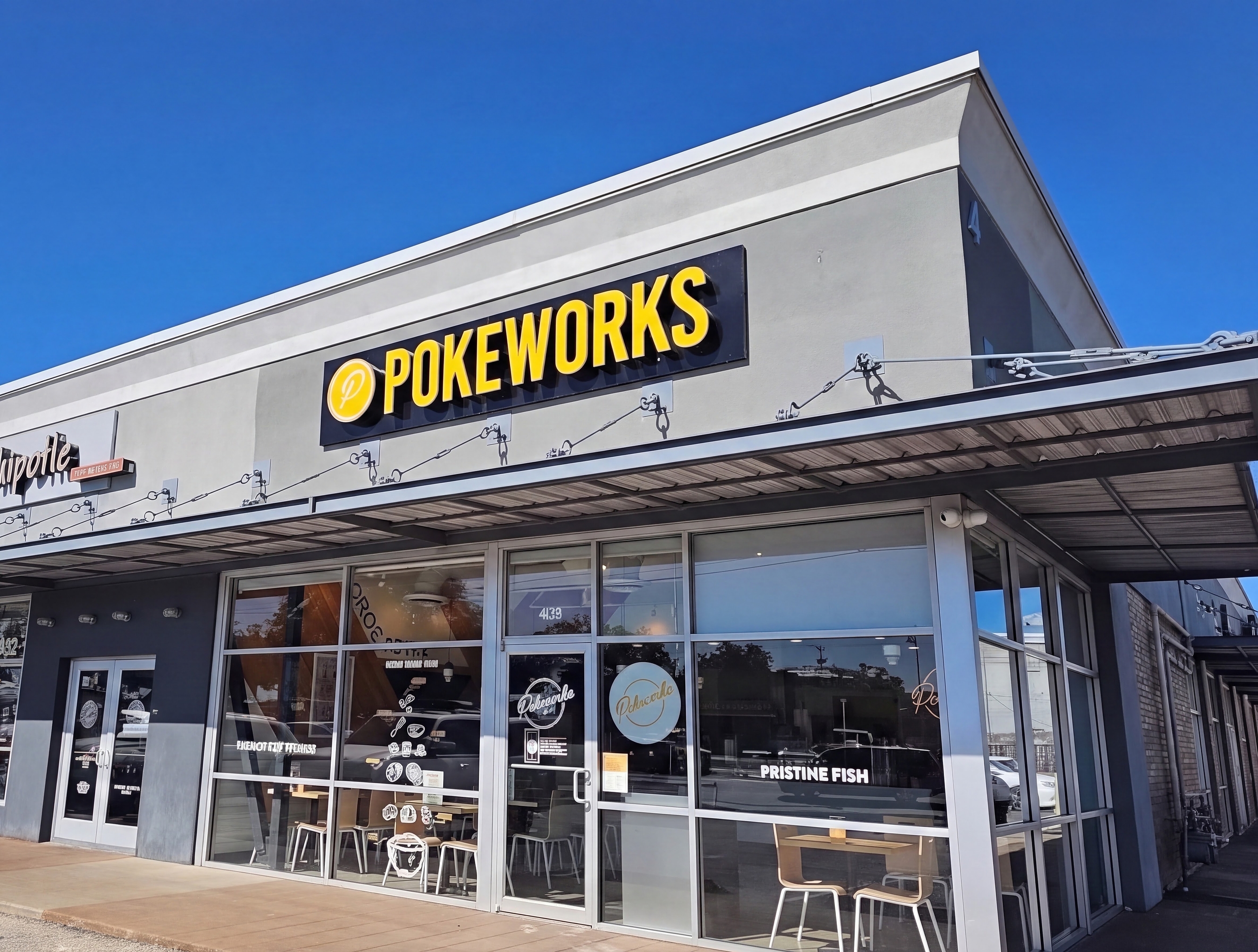
The Blancos' real estate playbook centers on one repeatable tactic: targeting second-generation spaces vacated by coffee shops, boba tea bars, and juice concepts. Because Pokeworks does not require commercial hoods or full-service kitchen builds, its footprint is compatible with light-use food-and-beverage spaces that other fast-casual operators would need to gut-renovate. The brand's Cedar Park location converted from a former tenant to a fully operational Pokeworks in two months from start to finish — a timeline that meaningfully compresses pre-opening carrying costs.
"Pokeworks' streamlined construction and operations give us incredible site flexibility, making the launch process faster and more efficient — especially when taking advantage of second-generation spaces," said Marcos Blanco, Pokeworks franchisee.
Carol Blanco, who oversees the business's administrative functions while Marcos manages day-to-day operations, credits relationship-building with landlords and property owners for keeping their pipeline active. "Sometimes finding the right location means starting the conversation early," she said. "Having that flexibility in the types of spaces we can consider has been tremendously valuable."
What the Model Means for Operators
For multi-unit operators weighing fast-casual franchise expansion, the Blancos' approach highlights a structural advantage that brands with minimal equipment requirements hold in a tight real estate market. Second-generation spaces typically carry lower tenant improvement allowances and shorter permitting timelines than vanilla shell buildouts — factors that directly affect a franchisee's return timeline. As lease rates in high-traffic suburban corridors remain elevated, the ability to convert lighter-use retail or F&B space rather than competing for prime end-caps can be a meaningful differentiator.
Pokeworks Co-founder Peter Yang framed the pair's discipline as a model for the broader franchise system. "Finding a great location and pairing it with high-level operations is the key to building a successful Pokeworks restaurant, and they're a wonderful example of how to do just that," Yang said.
The Round Rock opening also reflects broader momentum for the brand, which now operates 85 locations across 22 states, Taiwan, and Canada. The chain has appeared on Fast Casual's "Top 100 Movers and Shakers" list for seven consecutive years. For franchise development teams and multi-unit operators tracking emerging fast-casual brands, Pokeworks' low-infrastructure model and its demonstrated real-estate flexibility represent a replicable growth framework worth watching as suburban Texas markets continue to attract foodservice investment.
Written by Michael Politz, Author of Guide to Restaurant Success: The Proven Process for Starting Any Restaurant Business From Scratch to Success (ISBN: 978-1-119-66896-1), Founder of Food & Beverage Magazine, the leading online magazine and resource in the industry. Designer of the Bluetooth logo and recognized in Entrepreneur Magazine's "Top 40 Under 40" for founding American Wholesale Floral, Politz is also the Co-founder of the Proof Awards and the CPG Awards and a partner in numerous consumer brands across the food and beverage sector.