
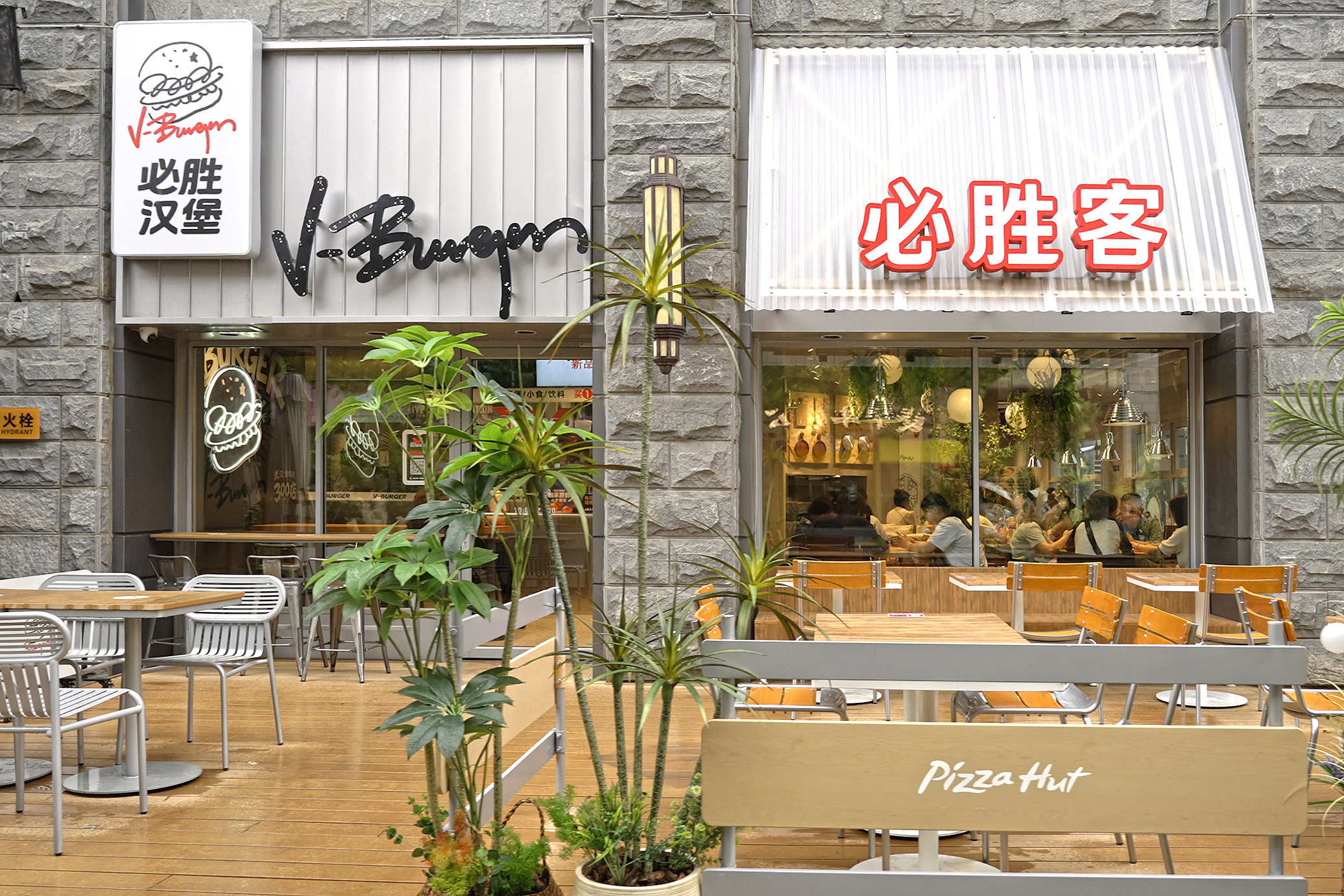
Pizza Hut's burger-focused side-by-side module has scaled to 300 locations across China in less than a year, with Yum China Holdings now targeting 500 to 600 Burger Bar units by December 31, 2026 — a figure that would represent roughly 10% of Pizza Hut's nearly 5,000-store portfolio in the country.
The format launched in late 2025 and has averaged more than one new opening per day since. That pace puts it among the most aggressive quick-service rollouts in the Asia-Pacific region in recent memory, and it signals how operators can use modular, resource-sharing concepts to accelerate growth without proportional capital outlay.
The Unit Economics
The Burger Bar model is deliberately lean. Positioned side-by-side with existing Pizza Hut stores, each unit shares staff, kitchen infrastructure, and supply chain resources with its parent location. In the second quarter of 2026, the modules contributed double-digit incremental sales and meaningful profit to their host stores — a result that validates the light-investment thesis and gives operators a template for sweating existing real estate harder. Jeff Kuai, General Manager of Pizza Hut China, noted that the company entered the burger category two years ago with Pizza Dough Burgers before accelerating through the Burger Bar format: "We are now taking the business to the next level through Pizza Hut Burger Bar, while continuously refining the module to meet the diverse needs of our consumers."
Menu execution centers on a differentiated build: Parmesan-and-parsley buns made from pizza dough and baked fresh in-store daily, with patties seared on a hot griddle in an open kitchen. The signature Pineapple and Beef Burger anchors the lineup, which has expanded to teppan-style proteins including a Black Pork Burger and a Sizzling Grilled Chicken Burger with Egg. At the 300th location in Wuhan, the brand introduced a limited-edition Crayfish Crispy Lotus Root Cheeseburger tying into local Hubei flavors — a localization play that reflects broader restaurant menu strategy trends seen across global QSR operators entering new regional markets.
The Bigger Growth Picture
Pizza Hut's full burger category — spanning both Burger Bar locations and burger SKUs sold inside standard Pizza Hut stores — is projected to exceed RMB 1 billion in 2026, accounting for 5% to 6% of Pizza Hut China's total sales. That contribution matters in the context of a portfolio that is simultaneously accelerating core store openings.
Following Yum China's acquisition of the Pizza Hut brand in Mainland China on August 7, the company has raised its new-store targets sharply: Pizza Hut now aims for more than 800 net new openings in each of 2027 and 2028, up from a prior target of over 600. The brand acquisition removes ongoing licensing fees and is expected to improve margins — a structural change that gives the company more room to invest in unit growth and format innovation simultaneously.
For global foodservice operators watching China as a bellwether, the Burger Bar playbook — modular co-location, shared resources, focused menus with local customization, and a value-forward price positioning aimed at young consumers and solo diners — offers a replicable framework worth tracking. The beverage and dining segment trends driving solo-dining demand in urban China are increasingly evident in other densely populated markets, making this format concept relevant well beyond its current geography.
Written by Michael Politz, Author of Guide to Restaurant Success: The Proven Process for Starting Any Restaurant Business From Scratch to Success (ISBN: 978-1-119-66896-1), Founder of Food & Beverage Magazine, the leading online magazine and resource in the industry. Designer of the Bluetooth logo and recognized in Entrepreneur Magazine's "Top 40 Under 40" for founding American Wholesale Floral, Politz is also the Co-founder of the Proof Awards and the CPG Awards and a partner in numerous consumer brands across the food and beverage sector.
