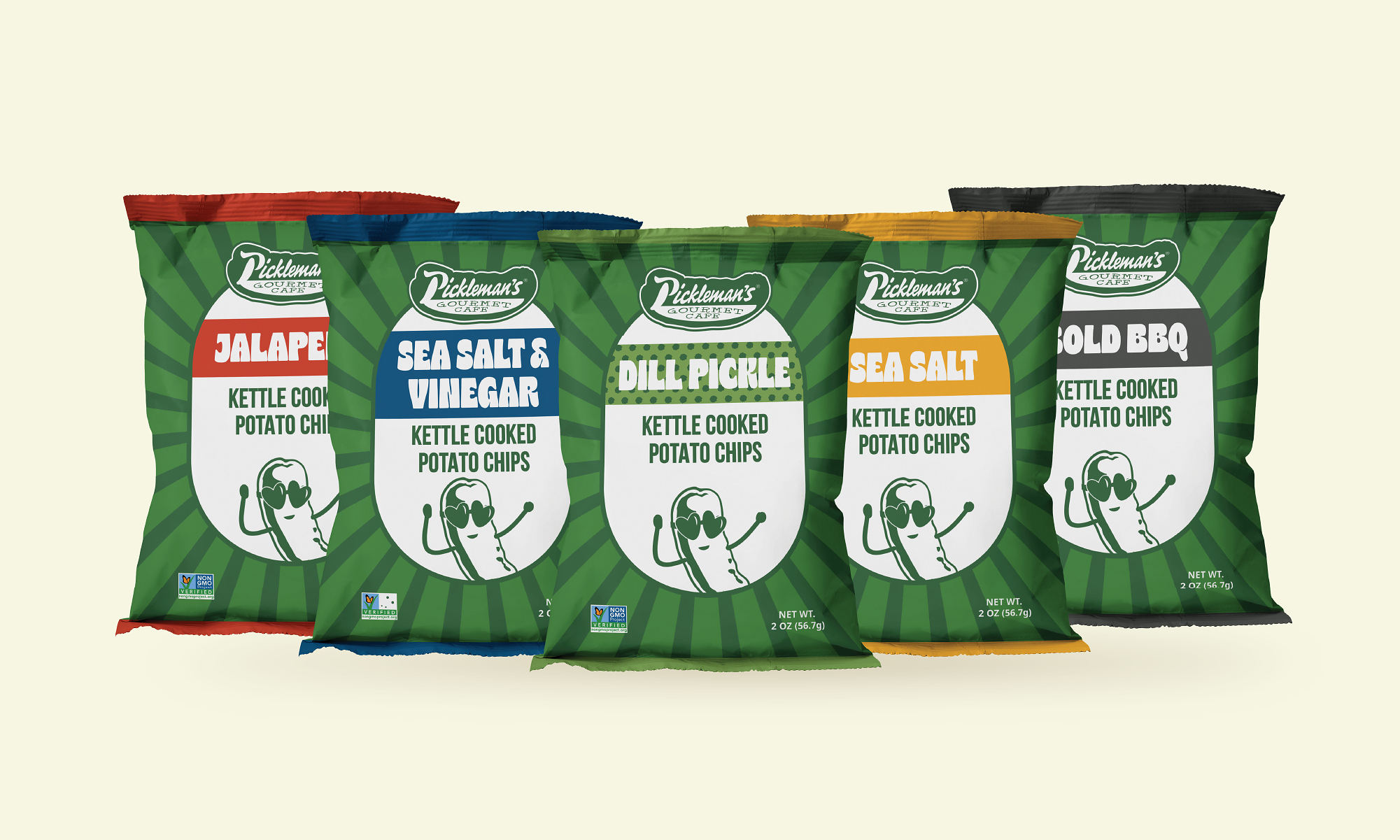
Fast-casual sandwich brand Pickleman's Gourmet Cafe has introduced a proprietary potato chip line made with non-GMO ingredients and clean-sourced sunflower oil, launching first in a Dill Pickle flavor that mirrors the brand's signature identity. A portion of proceeds from every bag sold will benefit Brave Like McKenna, a nonprofit founded by Pickleman's franchisees Keith and Janell Royer in memory of their daughter McKenna, who died of pediatric cancer.
The Product Play
The chips are produced in partnership with Community Snacks, which has also committed to donating a portion of its own proceeds to Brave Like McKenna — amplifying the charitable impact beyond what Pickleman's alone contributes. The minimal ingredient list, sunflower oil base, and non-GMO certification are designed to align with the brand's broader menu philosophy, which already includes No Antibiotics Ever chicken, fresh-sliced produce, and scratch-made recipes. For operators watching the fast-casual better-ingredients trend, Pickleman's move signals that the clean-label push is extending past entrees and into traditionally commoditized side categories.
"We've built a brand around making thoughtful decisions about the food we serve, and that commitment shouldn't stop with the entrée," said Doug Stritzel, Founder and CEO of Pickleman's Gourmet Cafe. "Creating our own chip line allowed us to take a fresh look at a classic side item and develop something that better reflects who we are as a brand."
Cause Marketing Built In
The Brave Like McKenna partnership gives the chip launch a community dimension that straightforward product extensions typically lack. Because the nonprofit was founded by members of Pickleman's own franchise system, the connection is more than a third-party sponsorship — it roots the product in a story already embedded within the brand culture. That kind of franchise-community alignment is increasingly valued by guests and by multi-unit operators looking for differentiation tools beyond price and convenience. For a growing fast-casual concept expanding its national footprint, a cause-linked proprietary product also functions as a retention and recruitment signal to prospective franchisees.
Stritzel described the initiative as a continuation of the brand's approach to continuous improvement: "This isn't simply a new side item. It's another example of our commitment to making every item we serve reflect the standards our guests have come to expect."
What It Means for Operators
Proprietary branded snack programs are not new in foodservice — several QSR and fast-casual chains have built meaningful revenue and guest loyalty through owned CPG-style items sold in-unit. What distinguishes the Pickleman's model is the dual-donation structure (brand plus manufacturer) and the tight narrative connection to its franchise community. The Dill Pickle flavor also reinforces brand identity in a way that generic commodity chips cannot, turning a low-attention purchase moment into a touchpoint that communicates values. As beverage and snack innovation continues reshaping side-item economics, proprietary chip programs represent a low-capital way for emerging chains to deepen menu ownership without expanding kitchen complexity.
Founded in 2005, Pickleman's serves artisan toasted sandwiches, thin-crust pizzas, salads, soups, and scratch-made cookies. This chip launch expands the brand's portfolio of proprietary products as it continues a nationwide growth push.
Written by Michael Politz, Author of Guide to Restaurant Success: The Proven Process for Starting Any Restaurant Business From Scratch to Success (ISBN: 978-1-119-66896-1), Founder of Food & Beverage Magazine, the leading online magazine and resource in the industry. Designer of the Bluetooth logo and recognized in Entrepreneur Magazine's "Top 40 Under 40" for founding American Wholesale Floral, Politz is also the Co-founder of the Proof Awards and the CPG Awards and a partner in numerous consumer brands across the food and beverage sector.