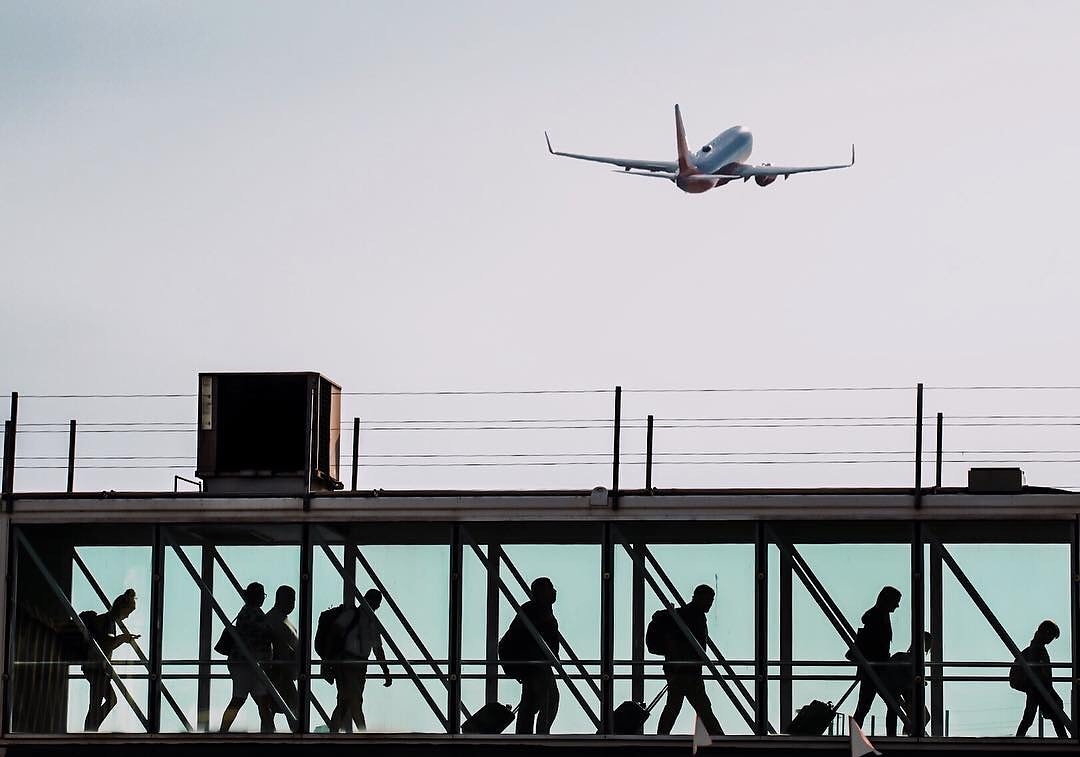
International travel at Ontario International Airport surged 30.8% year-to-date through August 2026, pushing total passenger volume to 4,692,801—a 0.3% gain over the same period in 2025 and a meaningful demand signal for hospitality and foodservice operators across Southern California's Inland Empire.
The airport welcomed more than 455,000 international travelers in the first eight months of the year, a figure driven by a growing slate of nonstop flights to Taiwan and Mexico. For hospitality operators—from airport concessionaires to hotels ringing the Ontario corridor—that international mix represents a shift in guest demographics worth tracking. International travelers historically generate higher per-visit food and beverage spend and longer dwell times than domestic passengers, making terminal dining and nearby hotel F&B programs increasingly important revenue centers.
August Softness, Fuel Drag
August alone saw 606,809 total passengers, down 6.2% from August 2025, as airlines trimmed capacity in response to elevated fuel prices. Domestic traffic fell 6.5% for the month to 554,242, while international volume slipped 2.6% to 52,567. Despite the single-month dip, the year-to-date trajectory remains positive, and the airport's carrier mix—Southwest Airlines leading with 35.3% of August passengers, followed by American (12.9%), Alaska (11.1%), Frontier (11.0%), and Delta (9.7%)—reflects a broad competitive presence that supports sustained traffic levels heading into the fall travel season.
Cargo Growth Adds Supply-Chain Context
Beyond passenger figures, air cargo throughput at ONT climbed 3.3% in August year-over-year, with total tonnage reaching 71,344 tons for the month. Year-to-date cargo volume stands at 574,783 tons, up 6.5% from the prior year. Freight specifically rose 9.3% on a YTD basis to 493,711 tons, underscoring ONT's role as a regional logistics hub. For food and beverage suppliers and distributors relying on expedited air freight into Southern California, that upward trajectory in freight capacity is operationally significant.
The airport also earned a score of 705 out of 1,000 in the JD Power 2026 North America Airport Satisfaction Study, ranking highest among all California airports of any size and second among medium-size airports across North America. High satisfaction scores tend to support repeat visitation and longer terminal dwell, both of which benefit airport concession and foodservice programs that depend on captive foot traffic.
For hospitality operators tracking demand across Southern California, ONT's international growth story is part of a broader regional travel recovery. Properties and F&B venues in the Inland Empire that align their offerings with the tastes and expectations of travelers connecting through Taiwan and Mexico routes stand to capture a meaningfully different—and potentially more lucrative—guest segment. Our colleagues at Food & Beverage Magazine have been tracking how airport dining concepts are evolving to meet the demands of international travelers at regional gateways. The convergence of rising international traffic, strong cargo growth, and top-tier satisfaction ratings positions ONT as a hospitality market worth watching closely through the remainder of 2026, particularly for operators and restaurant groups evaluating airport or travel-corridor expansion.
Written by Michael Politz, Author of Guide to Restaurant Success: The Proven Process for Starting Any Restaurant Business From Scratch to Success (ISBN: 978-1-119-66896-1), Founder of Food & Beverage Magazine, the leading online magazine and resource in the industry. Designer of the Bluetooth logo and recognized in Entrepreneur Magazine's "Top 40 Under 40" for founding American Wholesale Floral, Politz is also the Co-founder of the Proof Awards and the CPG Awards and a partner in numerous consumer brands across the food and beverage sector.