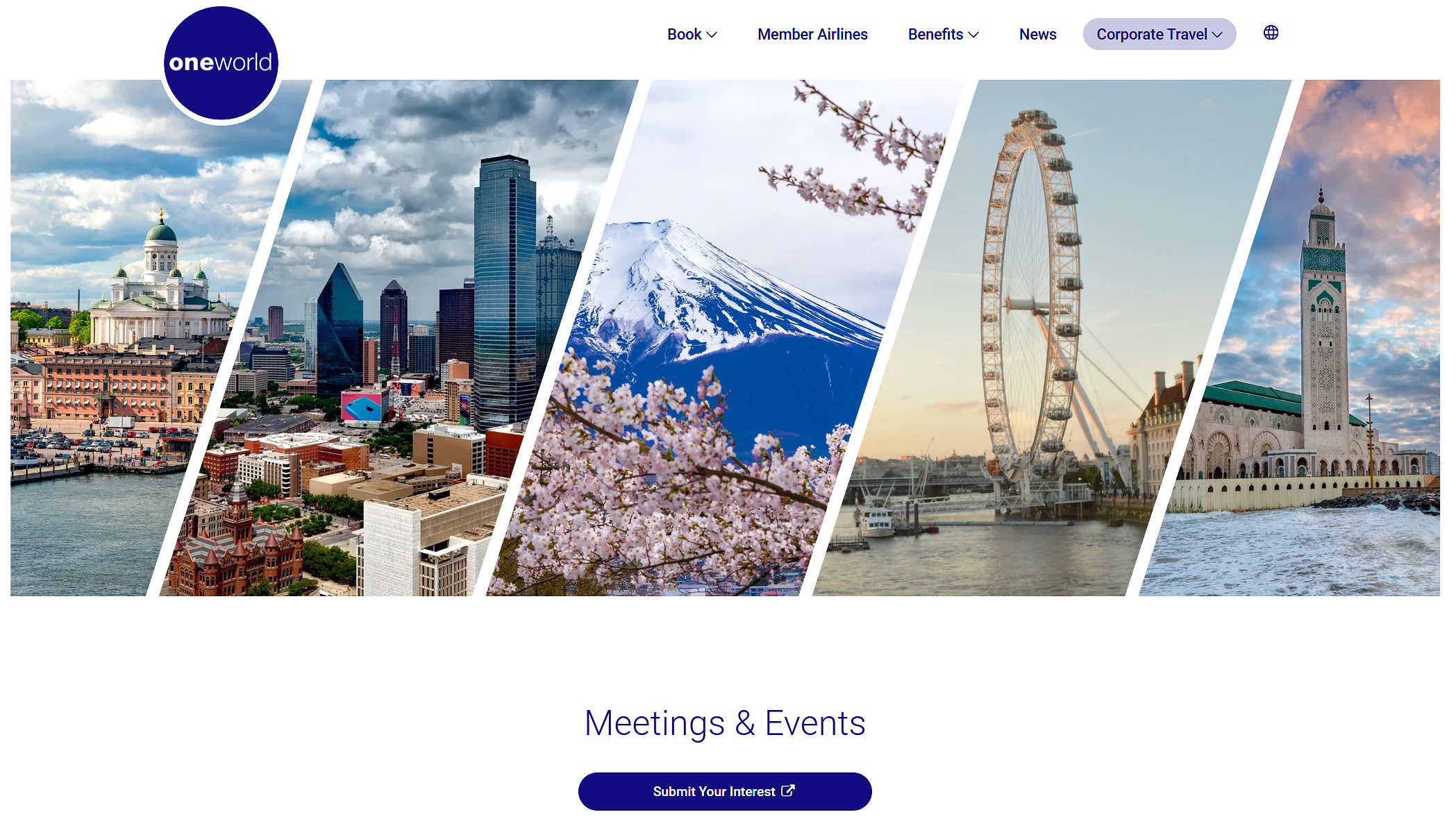
The oneworld airline alliance has relaunched its Meetings & Events platform, giving hospitality and event professionals a centralized tool to arrange group air travel across 15 member carriers to nearly 1,000 destinations worldwide. The relaunch, unveiled at IMEX Las Vegas, targets organizers coordinating a minimum of 50 independently travelling delegates converging on a shared destination.
How the Tool Works
Event planners receive a dedicated booking link they can embed on an event website or distribute directly to attendees. Each delegate then books their own flights independently from their home city, selecting itineraries that fit their individual schedules — a design that removes the coordination burden from the organizer while still unlocking preferential alliance fares. The platform is built for a wide range of gatherings, from corporate conferences and association conventions to religious events and large private celebrations.
"Even in an increasingly digital world, research shows the enduring value of connecting in person, and that the best events create relationships, ideas and opportunities that are difficult to replicate virtually," said Roger Blackburn, Vice President of Commercial and Loyalty at oneworld. "The relaunch of oneworld Meetings & Events will make it easier for organisations to bring people together for these important opportunities for connection."
Seven Trends Through 2030
The platform relaunch coincides with the release of a trend report co-authored with travel forecasting agency Globetrender, outlining seven forces expected to reshape international meetings and events between 2027 and 2030. The findings carry direct implications for hospitality operators — hotels, venues, and F&B teams — whose group business pipelines depend heavily on whether international delegates actually show up.
The report's seven trends are: The Human Premium (face-to-face connection gaining professional value as AI saturates digital communication); The ROI of Presence (rising travel costs pushing organizers to justify attendance with measurable outcomes); Experience-First Events (conferences adopting festival and immersive-entertainment formats); Destination as Content (host cities functioning as headline attractions); Geo-compression (ultra-long-haul routes and geopolitical shifts expanding viable event destinations); Loyalty Ecosystems (airline and hotel partnerships delivering more seamless, rewarded journeys); and Meet Me Airside (airport hotels emerging as standalone meeting venues).
Jenny Southan, CEO of Globetrender, framed the shift bluntly: "People are becoming more selective about where they travel, who they meet and what they expect to gain from the experience. By 2030, the most successful events will be those that give people a compelling reason to make the journey — and something extraordinary to take home."
What It Means for Operators
For hospitality professionals, the trends carry concrete strategic weight. The "Destination as Content" and "Experience-First Events" findings align with a broader shift in hotel and venue programming that RHFNews has tracked across the industry — operators increasingly competing not just on room blocks and catering menus but on curated local experiences that drive delegate attendance decisions in the first place.
Similarly, the "Meet Me Airside" trend signals growing demand for airport-adjacent meeting and F&B infrastructure, an area where hotel brands with airport properties are already investing. The "Loyalty Ecosystems" finding reinforces why integrated airline-hotel reward programs remain a priority for major hospitality groups courting high-value group business.
For event food and beverage planning, the shift toward experience-first formats means catering concepts, activations, and dining moments are no longer secondary line items — they are increasingly part of what makes a delegate decide the trip is worth taking. Hospitality operators that position their culinary and venue programming as central to the delegate experience stand to benefit most as the sector evolves toward 2030.
Written by Michael Politz, Author of Guide to Restaurant Success: The Proven Process for Starting Any Restaurant Business From Scratch to Success (ISBN: 978-1-119-66896-1), Founder of Food & Beverage Magazine, the leading online magazine and resource in the industry. Designer of the Bluetooth logo and recognized in Entrepreneur Magazine's "Top 40 Under 40" for founding American Wholesale Floral, Politz is also the Co-founder of the Proof Awards and the CPG Awards and a partner in numerous consumer brands across the food and beverage sector.