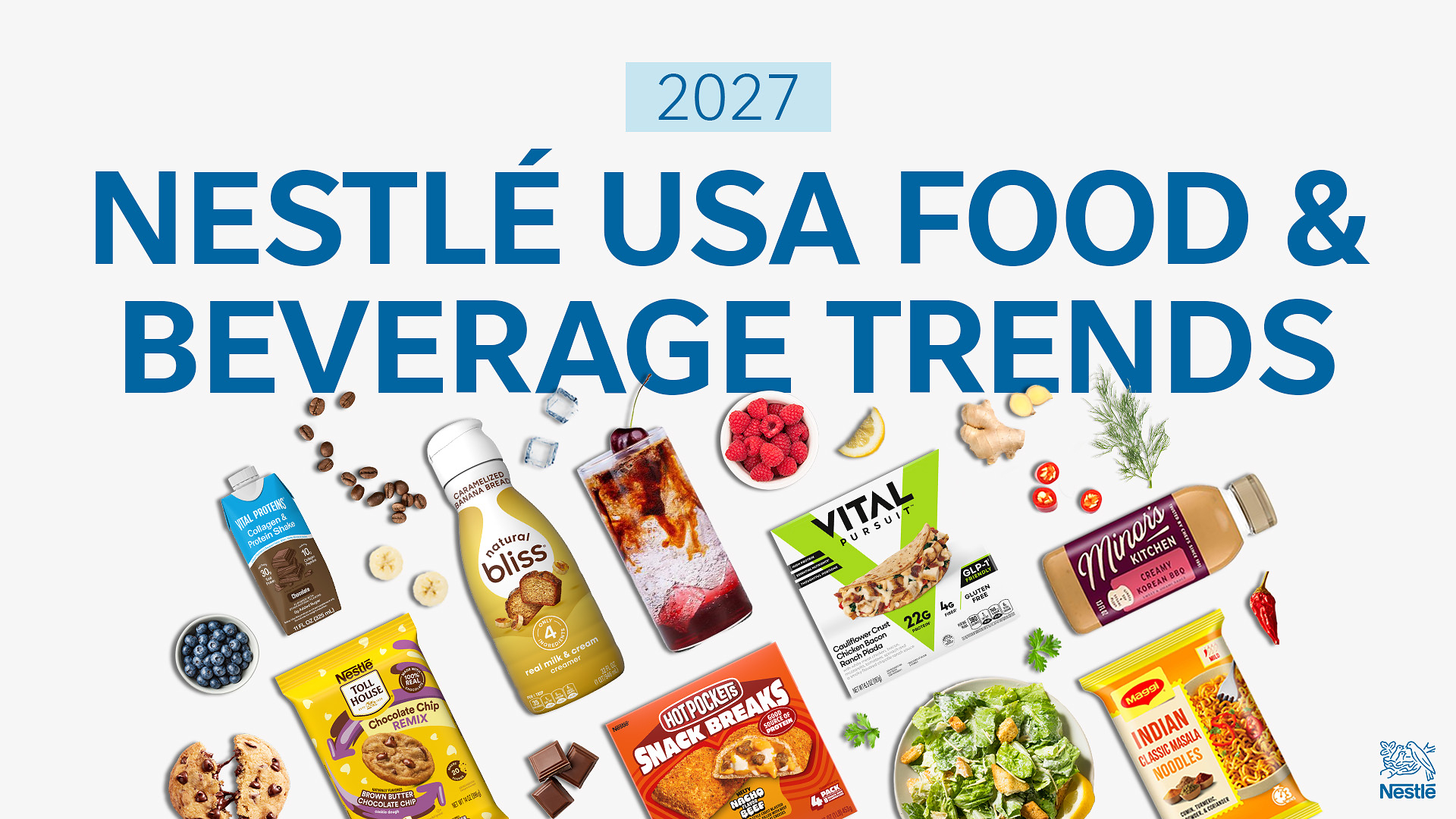
Consumer expectations are climbing faster than menus are evolving, according to Nestlé USA, which released its 2027 Food and Beverage Trend Forecast on October 15. The report identifies five shifts operators and product developers should be building toward now, anchored by a single through-line: every bite and sip has to feel worth it.
"What's coming through clearly is that value has become personal," said Linh Phillips, Director of Consumer Insights & Foresight at Nestlé USA. "Consumers are defining what's 'worth it' on their own terms — whether that means more flavor, a specific benefit or an experience that feels made for them."
Five Shifts for 2027
The first trend, which Nestlé calls "The Zest Is Yet to Come," signals a pivot beyond heat-forward flavor. After a decade of chasing spice, consumers are moving toward brightness — citrus zip, herbaceous tang, and ingredients like yuzu kosho, calamansi, and sumac. Searches for "zesty foods" rose 130% year over year, while sour category sales have climbed 309% since 2022, according to data cited in the report.
The second shift reframes the protein conversation. About 63% of U.S. consumers are actively seeking more protein, per Mintel's 2026 functional claims research, but in 2027 protein alone won't be enough. Consumers want a second benefit stacked on top — gut health, collagen support, or fiber. Google Trends data shows searches pairing protein with probiotics up 300% year over year, with collagen up 190% and fiber up 150%. Searches for "protein comfort food" have also hit breakout status, signaling that functionality and indulgence are no longer in tension.
For beverage operators, the third trend may be the most immediately actionable. Fruit-forward coffee is moving from novelty to expectation, driven largely by Gen Z drinkers who treat the cup as a discovery vehicle. Social conversation around fruit-flavored coffee surged more than 23% over the past year. Searches for "banana bread lattes" are up 6,267% year over year, and 63% of Gen Z coffee drinkers say they prefer coffee with a lot of flavor. Matcha is running a parallel track, with fruit-forward versions gaining share in a category projected to reach $7.3 billion by 2030. This trend has direct implications for beverage program development at both quick-service and full-service concepts.
Hyper-Local Global and the Sensory Premium
The fourth trend tracks the maturation of global cuisine on American menus. Nearly three in four Gen Z and Millennial consumers count an international dish among their comfort foods, per Mintel's 2026 Regional and International Cuisines report. The demand has become more granular: 66% of consumers are interested in exploring regional variations within international cuisines, not just broad national categories. Regional Mexican preparations, for example, report 30% higher customer satisfaction scores than generic versions. For restaurant menu strategy, specificity is now a competitive advantage.
The fifth trend captures a broader experiential shift Nestlé calls "A Little Extra Goes a Long Way." Nearly three-quarters of U.S. consumers say small extras and special touches make an experience feel more worth the cost, while nearly half say they are hunting for new foods and flavors most or all of the time. Presentation, texture complexity, and emotional resonance are being built into product development — not treated as finishing touches.
The full 2027 outlook, authored by Phillips, is available at nestleusa.com/stories. The forecast draws on consumer research, search behavior analysis, menu tracking, and retail sales data across Nestlé's portfolio, which reaches 98% of U.S. households. For additional food and beverage industry analysis, Food & Beverage Magazine provides ongoing coverage of category trends shaping the industry.
Written by Michael Politz, Author of Guide to Restaurant Success: The Proven Process for Starting Any Restaurant Business From Scratch to Success (ISBN: 978-1-119-66896-1), Founder of Food & Beverage Magazine, the leading online magazine and resource in the industry. Designer of the Bluetooth logo and recognized in Entrepreneur Magazine's "Top 40 Under 40" for founding American Wholesale Floral, Politz is also the Co-founder of the Proof Awards and the CPG Awards and a partner in numerous consumer brands across the food and beverage sector.