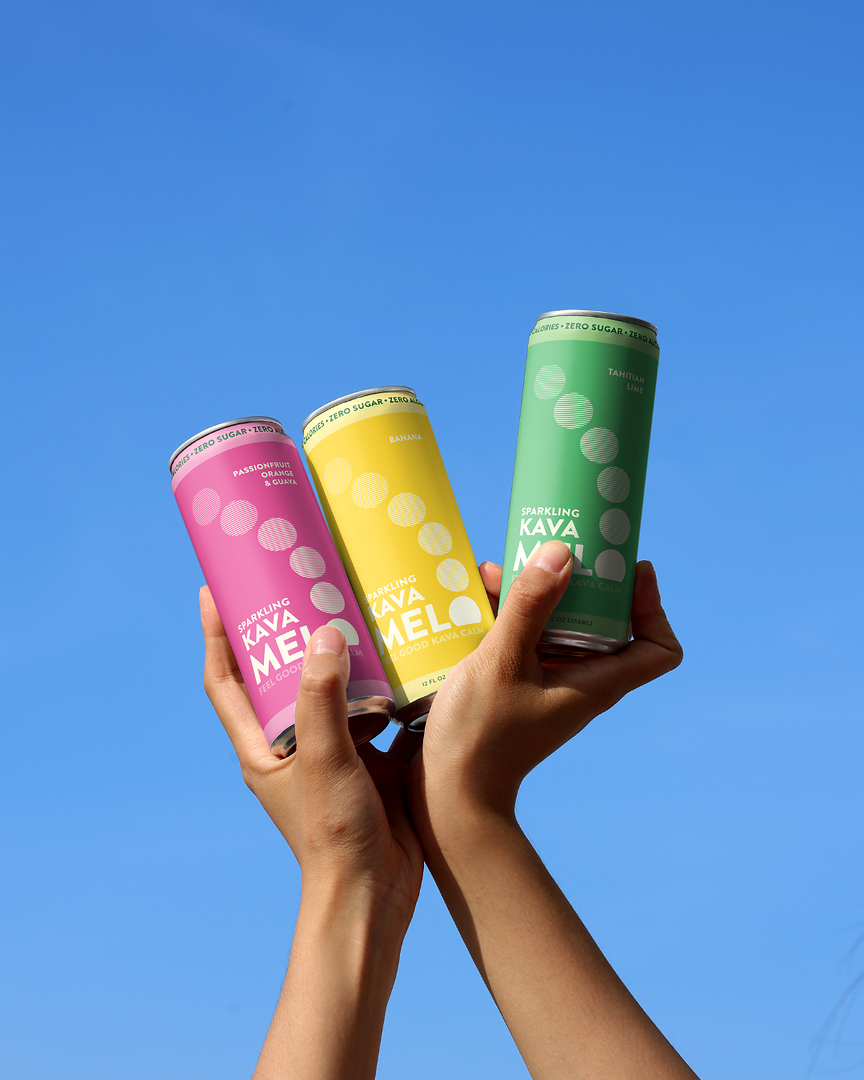
Sparkling kava brand Melo hits all 13 Southern California Erewhon Market locations on Oct. 30, marking one of the most prominent natural-channel placements yet for a beverage category that has historically lived in kava bars and loose-leaf teas rather than mainstream grocery coolers. Two of the brand's three flavors — Passionfruit Orange & Guava and Tahitian Lime — will be stocked in the functional beverage sets at launch, available in 12 fl. oz. cans that are zero-sugar, zero-calorie, alcohol-free, vegan, and gluten-free.
The Calm Category Shift
The Erewhon placement reflects a broader reordering happening inside the functional beverage category. For years, energy and focus dominated innovation and shelf allocation, but buyer interest has visibly rotated toward stress relief, relaxation, and sleep — benefits that kava, a root plant traditionally consumed across the Pacific Islands, has delivered for centuries. Melo co-founder and CEO Amy Betts frames it plainly: "For a decade, the functional beverage market has run on the go, go, go mentality of energy drinks, but now what people actually want is permission to slow down. Kava has done that job for centuries; it just needed a format that fit a modern shelf."
For retail buyers and foodservice operators tracking the better-for-you space, the signal here is that "calm" is consolidating into its own functional set — one with a distinct ingredient story and a consumer willing to pay a premium for it at venues like Erewhon.
Supply Chain and Mission Differentiation
Melo's sourcing model adds a layer of supply-chain credibility that increasingly matters to natural-channel gatekeepers. The brand works directly with family-owned farms in Vanuatu and holds official private-sector partner status with the UN and International Trade Centre's Pacific Islands Kava Initiative, a program designed to raise quality standards and connect kava-growing communities with global markets. The use of noble kava — a designation that refers to traditional, safer cultivars of the plant — is a key quality marker that differentiates Melo from lower-grade kava products that have faced scrutiny in other markets.
That traceability story is becoming table stakes in natural retail, where buyers at chains like Erewhon increasingly expect brands to demonstrate ethical sourcing and third-party validation alongside clean labels.
Retail Footprint and What's Next
Ahead of the Erewhon launch, Melo had already built distribution across Raley's, Bristol Farms, Lassen's, BevMo!, Thrive Market, Gopuff, and Amazon. The brand characterizes the Erewhon entry as part of a broader natural-channel growth push, with additional retail doors expected through 2027. For operators and buyers watching the relaxation and functional beverage space, Melo's trajectory — from specialty kava bars to Certified B Corp grocers — illustrates how quickly a niche ingredient can move toward mainstream retail when it arrives in a format, flavor profile, and package format that fits modern planograms.
The kava category's evolution also has implications for on-premise beverage programs at restaurants and hospitality venues seeking non-alcoholic options with a genuine functional story, a segment that restaurant beverage directors have been increasingly asked to develop as sober-curious dining grows. Melo's sparkling, flavored format translates more readily to a bar or table setting than traditional kava preparations, which has historically limited the ingredient's crossover appeal.
Written by Michael Politz, Author of Guide to Restaurant Success: The Proven Process for Starting Any Restaurant Business From Scratch to Success (ISBN: 978-1-119-66896-1), Founder of Food & Beverage Magazine, the leading online magazine and resource in the industry. Designer of the Bluetooth logo and recognized in Entrepreneur Magazine's "Top 40 Under 40" for founding American Wholesale Floral, Politz is also the Co-founder of the Proof Awards and the CPG Awards and a partner in numerous consumer brands across the food and beverage sector.