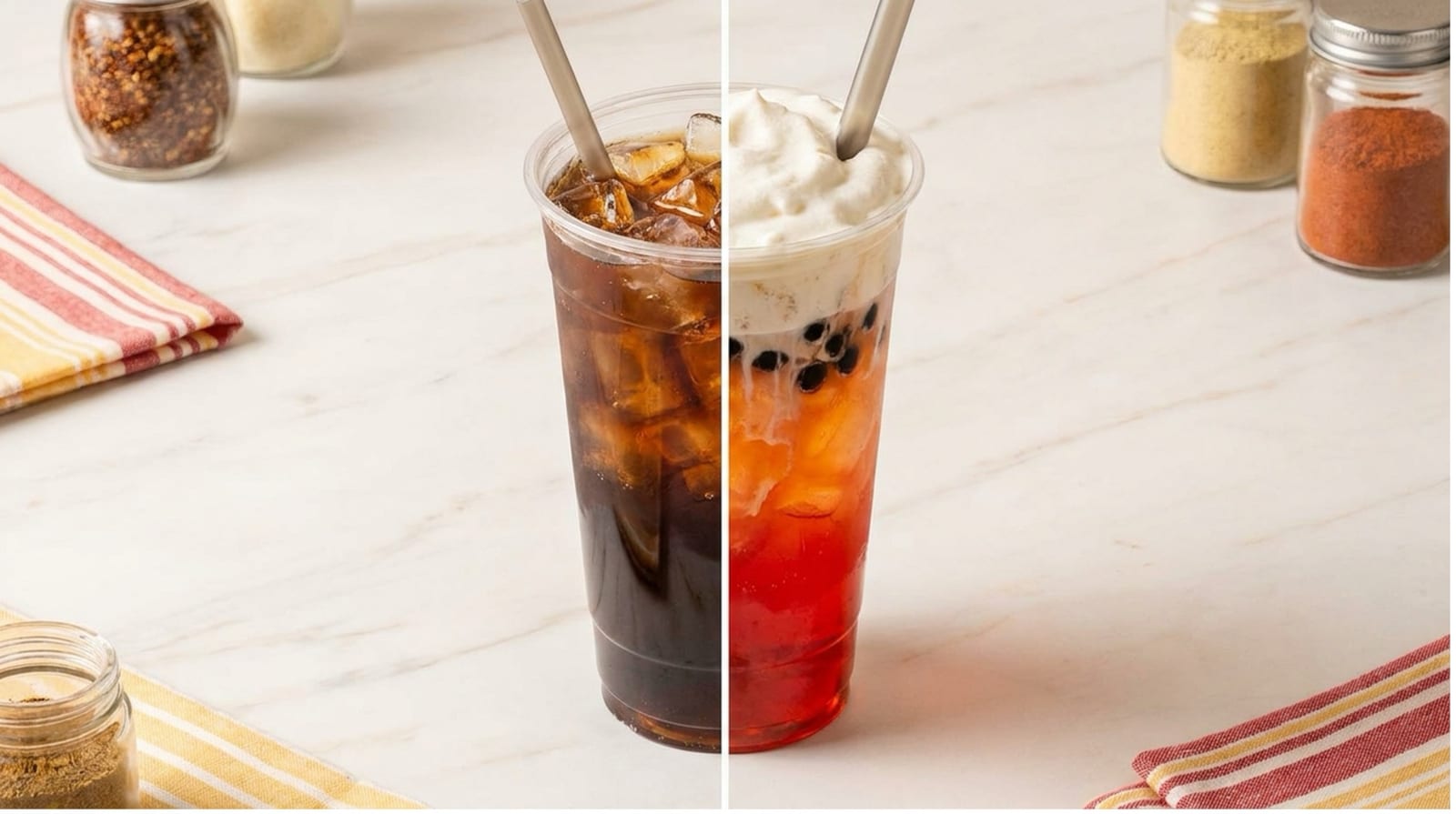
McDonald's has launched six crafted sodas and refreshers across nearly 14,000 U.S. locations, including Dirty Dr Pepper with cold foam, Mango Pineapple Refresher with boba pearls, and a Red Bull Dragonberry Energizer—marking a $100 billion category bet that's reshaping how operators think about beverage strategy. The move carries significant strategic weight: McDonald's is one of Coca-Cola's most important fountain accounts, yet it brought in Red Bull for energy despite Coke owning a stake in Monster Energy. This signals that bundled pouring-rights agreements—where a single supplier handles all beverage categories—no longer fit an increasingly fragmented market.
The Economics of Crafted Beverages Crafted beverages command dramatically different margins than traditional fountain drinks. A standard fountain soda generates roughly $2.15 in gross profit on a $2.50 sell. A crafted dirty soda at $5.50, costing an additional $0.50–$0.90 in ingredients (syrups, creams, cold foam, boba), grosses $4.25–$4.75—nearly doubling profit per serve. Dirty sodas currently represent just 2% of menu penetration but are growing at 42% with average pricing of $5.50, climbing 6% quarter over quarter. Swig, the chain that pioneered the category, grew 46% in 2025 to 146 stores. Taco Bell has set a $5 billion beverage revenue target by 2030 through its Live Más Café concept. Consumers no longer compare these drinks to fountain pours. They benchmark against $6 Starbucks drinks or $8 smoothies, fundamentally shifting reference prices and profit opportunity.
Why Bundled Deals Are Breaking Apart For decades, beverage categories could fit neatly under one supplier.
Today, the portfolio spans carbonated sodas, energy drinks, functional refreshers, gut-health beverages, premium non-alcoholic options, and hydration products. No single company dominates all lanes. Coke leads fountain CSD, but energy, gut health, and functional categories are fragmented across multiple brands and suppliers. McDonald's decision to carve energy out of its Coke agreement creates downstream pressure. Multi-unit operators will likely begin demanding similar flexibility in their next negotiations. That forces major suppliers to either acquire category leaders or loosen exclusivity clauses to protect their core CSD business—a shift already visible in Pepsi's $1.95 billion acquisition of Poppi and Coke's launch of Simply Pop.
What Operators Should Do Now Multi-unit operators with beverage agreements coming due should evaluate three things: audit beverage categories across CSD, energy, functional, hydration, and indulgence to identify where current contracts limit margin or differentiation; model the economics of carving out categories, weighing the cost of second distribution relationships and new equipment against premium pricing and traffic-driving potential; and negotiate flexibility into the next contract, since beverage portfolios will shift significantly over 5–10 year terms. Bundled deals still deliver real value through rebates, marketing dollars, and operational simplicity. But the operators winning in this environment won't be those with the largest rebate checks—they'll be those who designed their beverage program as a platform with the right partners in each category.
Why It Matters
McDonald's unbundling its energy agreement from Coke signals that exclusive pouring-rights deals are structural limitations in a category that has moved beyond commoditized fountain soda. Operators managing 50+ locations should rethink whether their current beverage contracts provide the flexibility to compete on product quality and pricing power rather than just bundled discounts.
For more insights and trends in the food and beverage sector, check out more articles in The Food & Beverage Magazine family of publications.
Written by FBM Publications Editors