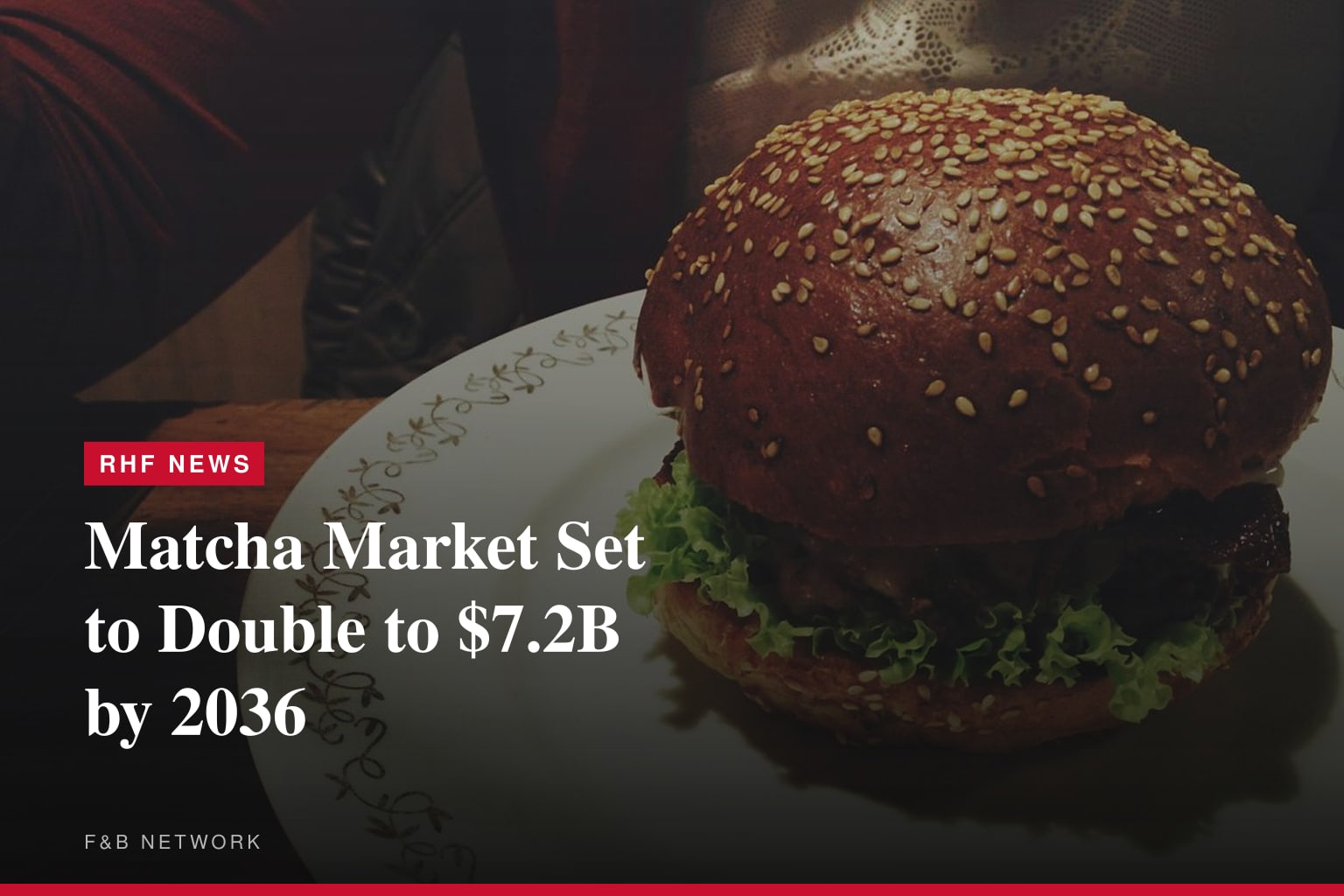
The global matcha market was valued at $3.4 billion in 2025 and is on pace to reach $7.2 billion by 2036, according to new data from Future Market Insights — a compound annual growth rate of 7.1% that underscores just how decisively the ingredient has moved from specialty tea counter to mainstream foodservice and retail channels.
For restaurant and hospitality operators, the trajectory is hard to ignore. Consumer appetite for clean-label, plant-based, and antioxidant-rich products is no longer a niche preference; it is reshaping beverage menus, bakery programs, and dessert offerings across quick-service, fast-casual, and full-service formats. Matcha's versatility — lending itself to lattes, smoothies, baked goods, sauces, and nutraceutical formulations — gives operators a single ingredient that can work across dayparts and meal occasions. Coupling that flexibility with a premium positioning story makes it especially attractive as operators look for ways to justify higher price points in a cost-sensitive environment.
Functional Demand as a Growth Engine
The wellness-focused consumer is the central force behind matcha's commercial expansion. Growing awareness of functional nutrition, combined with rising interest in premium tea consumption globally, has elevated matcha beyond its traditional Japanese culinary roots. Analysts at Future Market Insights frame the ingredient's trajectory as part of a broader shift: food and beverage buyers — from independent restaurateurs to large chain buyers — are increasingly sourcing ingredients that carry inherent health narratives, making matcha a natural fit alongside adaptogens, probiotics, and other functional add-ins now appearing on beverage and snack menus. Operators tracking broader beverage industry trends will recognize matcha as one of the more durable functional-ingredient stories of the past several years, distinct from flash-in-the-pan superfood cycles.
What Operators Should Watch
With the market projected to expand from $3.6 billion at the close of 2026 to $7.2 billion a decade later, supply chain dynamics will matter as much as menu strategy. Ceremonial-grade and culinary-grade matcha carry meaningfully different price points and flavor profiles, and procurement teams should expect continued premiumization pressure at the sourcing level as global demand grows. Restaurants and hotel food-and-beverage programs that lock in supplier relationships now — particularly with origins-transparent, clean-label producers — may gain a cost and marketing advantage as competition for quality material intensifies.
The nutraceutical crossover is equally relevant. As matcha increasingly appears in supplement and wellness product formats, foodservice operators face a positioning opportunity: framing matcha-forward menu items within a functional wellness context rather than simply as a flavor trend. Coverage from Food & Beverage Magazine has tracked the broader clean-label movement that is underpinning this kind of ingredient repositioning across categories. Operators who build staff knowledge around matcha's sourcing story, grade distinctions, and health attributes will be better positioned to convert consumer curiosity into repeat purchases — and premium check averages. For a broader look at how ingredients like matcha are reshaping menus and supply chains, see our ongoing restaurant food trends coverage.
Written by Michael Politz, Author of Guide to Restaurant Success: The Proven Process for Starting Any Restaurant Business From Scratch to Success (ISBN: 978-1-119-66896-1), Founder of Food & Beverage Magazine, the leading online magazine and resource in the industry. Designer of the Bluetooth logo and recognized in Entrepreneur Magazine's "Top 40 Under 40" for founding American Wholesale Floral, Politz is also the Co-founder of the Proof Awards and the CPG Awards and a partner in numerous consumer brands across the food and beverage sector.