Marriott International's Sugar House Hotel, a Tribute Portfolio property in Winooski, Vermont, has opened as the company's first hotel globally designed to achieve all-electric, net-zero energy operations and LEED Platinum certification. The 115-room property runs entirely on electricity — including its commercial kitchen — with no gas lines or fuel tanks on site, setting a new operational benchmark for sustainable hospitality at scale.
F&B as a Sense of Place
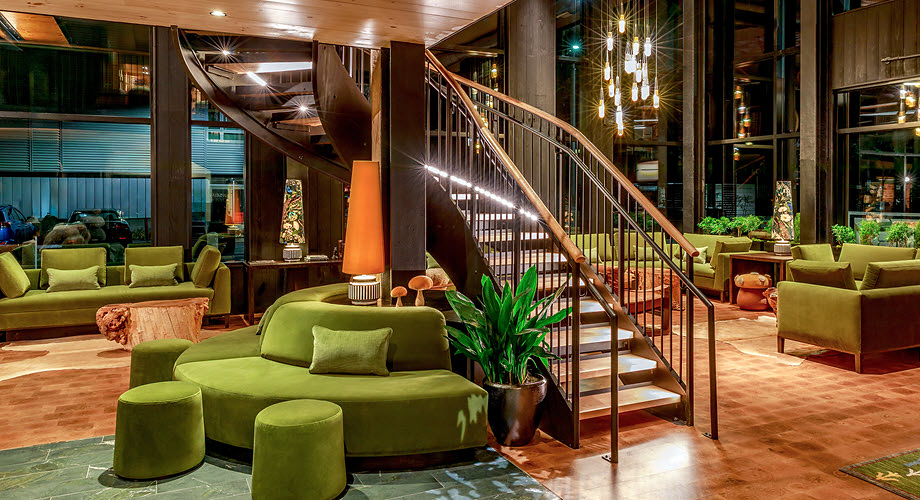
The hotel's food and beverage program is central to its identity and its local community strategy. Treetops Restaurant occupies the only rooftop dining and bar space in the Greater Burlington area, pairing seasonal cuisine with floor-to-ceiling views and an outdoor terrace. At street level, MOSS Café + Bar functions as an all-day social hub beneath a 20-foot indoor maple tree, moving from morning coffee and locally baked maple pastries through deli fare, small bites, and seasonal cocktails. Guests also receive a complimentary maple creemee at a make-your-own station upon check-in — a small but deliberate touch that roots the hospitality experience in Vermont's food culture. For operators watching how independents and soft-brand hotels are using hyper-local food and beverage programming to drive both loyalty and community engagement, Sugar House offers a replicable model.
Sustainable Operations at Work
The property's energy infrastructure is designed to support the kind of high-output commercial kitchen operations that hospitality professionals know are among the hardest to decarbonize. Rooftop solar panels are designed to generate roughly one-third of the building's energy needs, while a geothermal well system handles heating, cooling, and hot-water production. Water-efficient plumbing fixtures, including low-flow showerheads, complement those systems. Reclaimed materials appear throughout: timbers from Vermont's historic North Hero drawbridge were repurposed in the Treetops bar and elevator lobby tables, connecting the building's material story to its regional sourcing narrative.
Eight electric-vehicle charging stations and an all-electric Volkswagen airport shuttle round out the property's zero-emission guest services. Sugar House was developed by Nedde Real Estate and Lodging Capital Partners and is operated by Fathom Companies. "Our goal was to create a building that wasn't just in Vermont, but of Vermont," said Doug Nedde, Principal of Nedde Real Estate. "The opening of Sugar House Hotel is the result of a talented local team, combining world-class environmental sustainability and embracing the culture and artisans of our community."
Peggy Roe, Executive Vice President and Chief Customer Officer at Marriott International, framed the opening as proof that sustainability and meaningful guest experience are complementary rather than competing priorities — a perspective increasingly shared across the hospitality industry's sustainability conversation. With Tribute Portfolio now spanning more than 200 hotels across 35-plus countries, Sugar House marks a significant first for the broader Marriott system and a signal of where the company's design and development thinking may be heading for future soft-brand additions.
Written by Michael Politz, Author of Guide to Restaurant Success: The Proven Process for Starting Any Restaurant Business From Scratch to Success (ISBN: 978-1-119-66896-1), Founder of Food & Beverage Magazine, the leading online magazine and resource in the industry. Designer of the Bluetooth logo and recognized in Entrepreneur Magazine's "Top 40 Under 40" for founding American Wholesale Floral, Politz is also the Co-founder of the Proof Awards and the CPG Awards and a partner in numerous consumer brands across the food and beverage sector.