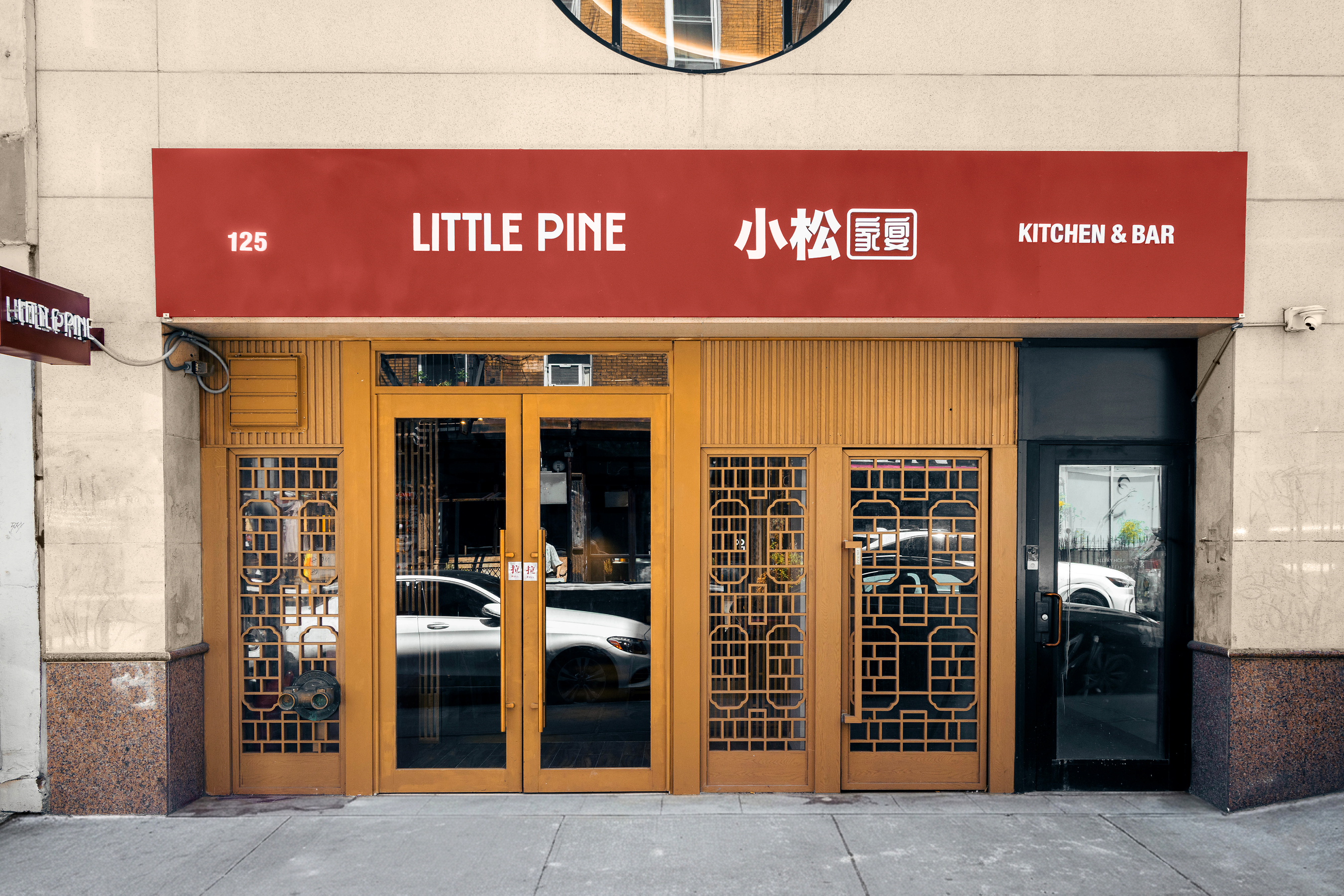
Dongbei cuisine — the rustic, fermentation-forward cooking of Northeastern China — has a new standard-bearer in Manhattan. Little Pine, which opened this spring at 125 Division Street on the Lower East Side, is positioning itself as the city's primary destination for a regional Chinese culinary tradition that remains largely absent from New York's restaurant landscape.
Owner Cathy Sun designed the concept as a deliberate counterweight to the Cantonese, Sichuan, and Shanghainese styles that have long defined Chinese dining in the United States. Dongbei food — shaped by the hard winters and industrial blue-collar culture of China's northeastern provinces — leans on iron-pot stews, braised meats, cumin-heavy skewers, and heavy fermentation. It is communal by nature, built for large groups who linger.
The Menu and the Mission
The kitchen's standout dishes reflect that communal ethos directly. Night Market Skewers — featuring cumin-dusted lamb, "Red Willow" beef, and enoki mushrooms — are portioned small and meant to be ordered in successive rounds, mimicking the social rhythm of Dongbei street culture. The One-Pot Stew (Yi Guo Chu) arrives in a cast-iron vessel loaded with braised pork ribs, vegetables, and steamed buns. The Sweet & Sour Crispy Pork (Guo Bao Rou) departs from ketchup-based shortcuts in favor of a soy-and-vinegar glaze drawn from a family recipe — a distinction that has resonated with early diners. The bar program extends the regional narrative with cocktails infused with northern spices including cumin and hawthorn.
Pricing is a conscious operator decision. Sun keeps lunch specials under $20, directly honoring Dongbei's working-class roots and broadening accessibility in a Manhattan market where regional Chinese concepts can skew expensive.
Room Designed for Lingering
The physical space underscores the restaurant's social philosophy. Little Pine seats 152 guests across a layout that includes two bars and a soundproofed interior designed to encourage long, loud, conversation-driven meals. Sun has spoken openly about wanting customers to treat the space as a destination rather than a quick stop — a model that prioritizes repeat visits and regularity over high table-turn velocity.
"We want people to come, and we don't care how much they spend, to be honest," Sun said. "We just want people to come and to be regulars."
That hospitality philosophy has real implications for operators tracking emerging regional cuisine trends in the U.S. market. Dongbei's cultural moment in China — where the region has recently generated outsized influence in music and pop culture after decades of post-industrial decline — is beginning to travel. For restaurateurs, that cultural tailwind can accelerate consumer curiosity and media attention in ways that purely culinary arguments cannot.
The Lower East Side, with its long history of immigrant foodways and density of adventurous diners, provides a logical testing ground. Whether Little Pine's model — large format, low price point, cuisine-as-education — can sustain itself in one of the country's most competitive restaurant markets will be closely watched by operators interested in underrepresented global foodservice concepts. The bet Sun is making is that New York diners, already fluent in regional Chinese distinctions, are ready for the Northeast.
Written by Michael Politz, Author of Guide to Restaurant Success: The Proven Process for Starting Any Restaurant Business From Scratch to Success (ISBN: 978-1-119-66896-1), Founder of Food & Beverage Magazine, the leading online magazine and resource in the industry. Designer of the Bluetooth logo and recognized in Entrepreneur Magazine's "Top 40 Under 40" for founding American Wholesale Floral, Politz is also the Co-founder of the Proof Awards and the CPG Awards and a partner in numerous consumer brands across the food and beverage sector.