Layne's Chicken Fingers closed the first half of 2026 with more than 50 restaurants open and 24 new franchise agreements signed — a dual milestone that signals the Texas-born chain is moving from emerging contender to established player in the fiercely competitive chicken-finger segment.
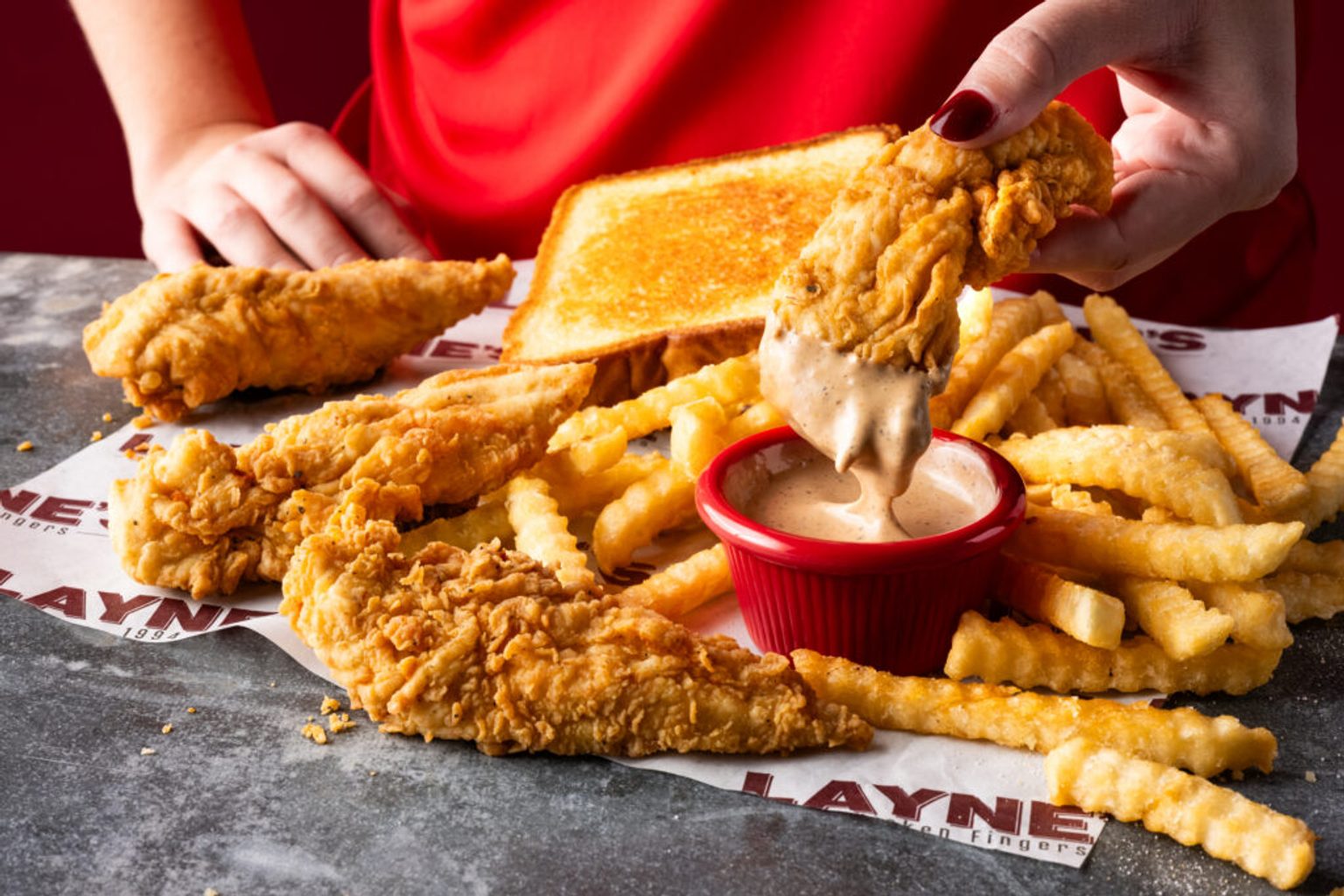
Founded in 1994 near Texas A&M University in College Station, Layne's built its identity around hand-breaded tenders, a proprietary secret sauce, and a personality-forward brand. The chain also landed a spot on the Entrepreneur Franchise 500 earlier this year, a signal that it's drawing serious attention from prospective multi-unit operators.
Oklahoma and California in Play
The brand's pipeline growth is being driven by both new and returning franchisees. Taylor Thomas, a multi-unit operator across Layne's and Whataburger, executed three restaurant openings within a 60-day window, broke his own system record for opening-week sales, and committed to 30 new Layne's locations across Oklahoma. That kind of operator re-investment — incumbent franchisees claiming additional territory before competitors can — is a reliable indicator of system health in restaurant franchise development.
Layne's is also eyeing California for the first time, securing a 12-unit deal with experienced IHOP operators. Multi-brand operators who already understand labor markets, real estate dynamics, and guest-service standards at scale represent lower execution risk for emerging franchisors pushing into new geographies.
What the 50-Unit Mark Means
For franchise brands, the 50-unit threshold carries operational significance. It typically marks the point at which a system must graduate from founder-led instinct to documented infrastructure — field support, training systems, supply chain redundancy, and technology stack. CEO Garrett Reed acknowledged that directly. "For many brands, the 50-unit mark is where you turn from an emerging or startup brand to a 'real company,'" he said. "We've been focused on the structure and support of Layne's since the beginning, and reaching that milestone knowing that we already have such strong scaffolding in place feels great."
Reed, who brings more than 30 years of industry experience to the role, framed the moment as a transition rather than a destination, noting the brand is now "doing things at an even higher level."
Thomas echoed that confidence from the franchisee side: "Layne's has 51 units open right now, but when you talk to Layne's fans, based on the passion and visibility they have, you'd think Layne's was a 500-unit brand."
The chicken-finger category has become one of quick-service's most crowded and closely watched segments, with established players and regional chains all competing for the same pool of experienced multi-unit franchisees. For operators tracking QSR growth trends, Layne's trajectory — internal franchisee reinvestment, new-market entries, and a top-500 franchise ranking — suggests the brand is gaining enough traction to attract the caliber of operators that can sustain aggressive expansion. Whether the California bet and the Oklahoma push deliver on their pipeline potential will be the real test of Layne's infrastructure heading into 2027.
Written by Michael Politz, Author of Guide to Restaurant Success: The Proven Process for Starting Any Restaurant Business From Scratch to Success (ISBN: 978-1-119-66896-1), Founder of Food & Beverage Magazine, the leading online magazine and resource in the industry. Designer of the Bluetooth logo and recognized in Entrepreneur Magazine's "Top 40 Under 40" for founding American Wholesale Floral, Politz is also the Co-founder of the Proof Awards and the CPG Awards and a partner in numerous consumer brands across the food and beverage sector.