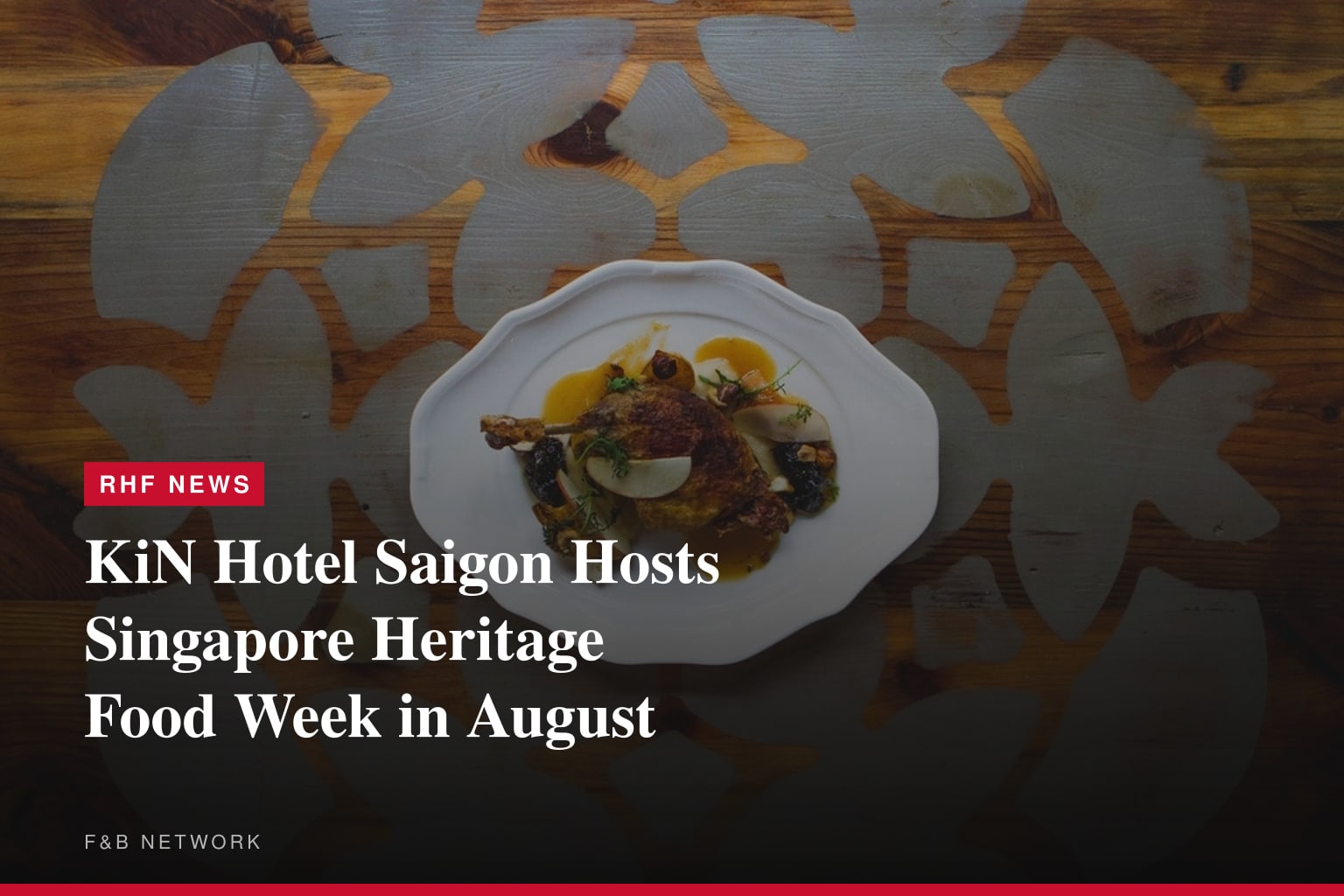
KiN Hotel Thi Sach Edition in Ho Chi Minh City will host The Lepak Makan Club, a Singapore heritage gastronomy week timed to Singapore National Day, running on August 8, 14, 15, and 16, 2026. The programming positions the property as a cross-cultural dining destination in Vietnam's competitive hospitality market.
The event's name draws on two distinctly Singaporean concepts: lepak, a Malay term for relaxed, unhurried socializing, and makan, meaning food. Together they signal an experience rooted in the communal hawker-center culture that defines Singaporean identity — an approach increasingly valued by hospitality operators looking to deliver authentic, story-driven food and beverage programming rather than generic hotel dining.
Why It Matters
For operators tracking restaurant and hospitality trends across Southeast Asia, the event reflects a broader shift toward culturally anchored food programming as a hotel revenue and guest-experience driver. Boutique and lifestyle hotels in the region are moving away from generic international menus and toward curated, heritage-focused concepts that give guests a reason to eat on-property rather than venturing out. Tying the activation to a national holiday — Singapore's August 9 National Day — adds a calendar hook that sharpens marketing relevance and creates natural urgency around the limited four-night run.
The Lepak Makan Club concept also speaks to the growing diaspora and business-travel audience moving between Singapore and Ho Chi Minh City, two of Southeast Asia's most dynamic commercial hubs. Programming that resonates emotionally with that traveler segment can meaningfully lift food-and-beverage capture rates, a metric that full-service hotels continue to prioritize as room-rate growth moderates in several regional markets.
Operator Implications
For foodservice and hospitality professionals following cross-cultural culinary programming, events like The Lepak Makan Club illustrate how limited-run, themed gastronomy weeks can generate media coverage, social engagement, and incremental F&B revenue with relatively contained production costs compared to permanent concept changes. The model — anchored to a cultural moment, branded with local-language identity cues, and spread across multiple evenings — is replicable across hotel categories and city-pair markets where strong cultural or trade connections exist.
KiN Group's choice to activate around Singapore National Day in Vietnam also underscores how hospitality brands are leveraging national and cultural calendars as a programming framework, a strategy that food and beverage operators across Asia-Pacific have adopted to differentiate their on-premise dining from standalone restaurant competition.
Written by Michael Politz, Author of Guide to Restaurant Success: The Proven Process for Starting Any Restaurant Business From Scratch to Success (ISBN: 978-1-119-66896-1), Founder of Food & Beverage Magazine, the leading online magazine and resource in the industry. Designer of the Bluetooth logo and recognized in Entrepreneur Magazine's "Top 40 Under 40" for founding American Wholesale Floral, Politz is also the Co-founder of the Proof Awards and the CPG Awards and a partner in numerous consumer brands across the food and beverage sector.