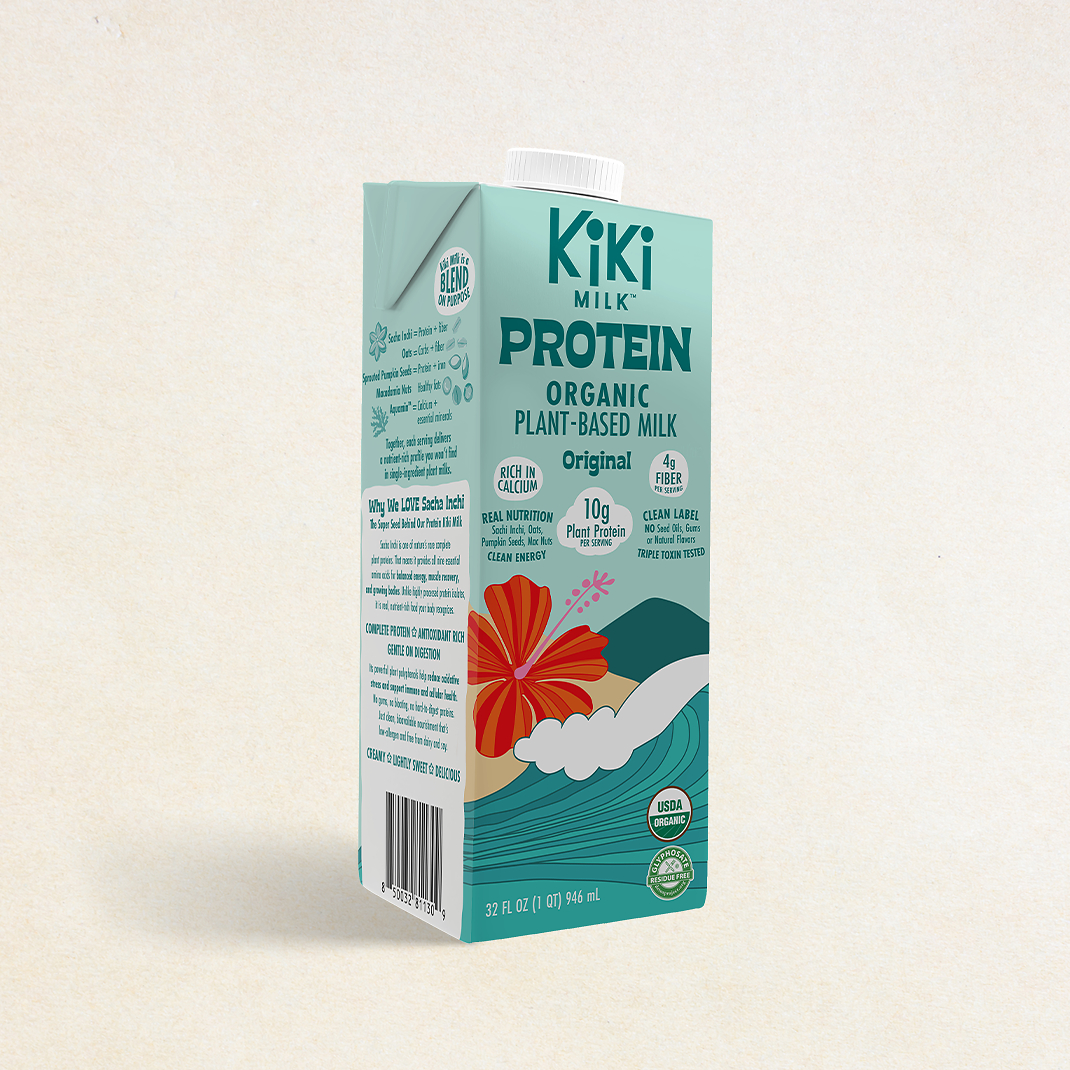
Organic plant-based beverage brand Kiki Milk is moving into the functional protein category with Kiki Milk Protein, a USDA Certified Organic product line built around sacha inchi — an Amazonian seed prized for its naturally complete amino acid profile. The product launches online nationwide through kikimilk.com and Amazon, retailing at $49.99 for a 32 oz six-pack.
The launch arrives at a moment of significant momentum in the protein beverage space. Industry data from Towards FnB places the high-protein food market at $52 billion, with protein drinks alone accounting for $30 billion of that figure and the broader category projected to reach $117 billion by 2034. Seventy-one percent of American shoppers report actively seeking more protein, led by Millennials, Gen Z, and women. For foodservice and retail operators tracking plant-based beverage trends, the skew toward whole-food, clean-label formats is increasingly difficult to ignore.
The Formulation Rationale
The brand, owned by Marin, California-based PlantBaby, is positioning Kiki Milk Protein explicitly against conventional protein isolates. "When you create a protein isolate, the ingredient typically goes through significant processing to separate the protein from the rest of the seed," said Co-Founder Alex Abelin. "In that process, you can lose naturally occurring components like fiber, healthy fats, and other nutrients that are part of the whole food." Sacha inchi, which PlantBaby describes as minimally processed, provides all nine essential amino acids along with 4g of fiber, omega-3 fatty acids, and antioxidant compounds per serving — without gums, seed oils, or natural flavors. The Original variety pairs the seed with oats for texture suited to cereal, shakes, and baking applications.
Co-Founder Lauren Abelin framed the fiber component as central to the product's nutritional premise. "Protein without fiber is an incomplete equation," she said. "Fiber helps slow digestion, support sustained fullness and energy, and creates a more balanced nutritional experience."
Operator and Retail Implications
For buyers and category managers in natural grocery and specialty foodservice, the Kiki Milk Protein launch signals continued consumer appetite for products that marry high-protein claims with recognizable, minimally processed ingredients. The brand's existing distribution across major national chains — built on its core plant-based milk line — gives the new SKU a running start into conventional retail channels. The 55% of parents in the Towards FnB survey who said they want to introduce children to more plant-based protein but don't know how represents a specific consumer segment that Kiki Milk's whole-food positioning is designed to reach.
Kiki Milk's recognition on the 2026 Inc. 5000 Fastest Growing Private Companies list reinforces PlantBaby's growth trajectory as it extends beyond its flagship beverage line. Operators and buyers exploring the intersection of clean-label and functional nutrition will find Kiki Milk Protein representative of a broader shift in how plant-based protein products are being developed and marketed — prioritizing nutrient density over isolated macronutrient counts. The brand's partnership with EcoCart for carbon-conscious commerce also speaks to sustainability expectations increasingly baked into retail and foodservice procurement conversations.
Written by Michael Politz, Author of Guide to Restaurant Success: The Proven Process for Starting Any Restaurant Business From Scratch to Success (ISBN: 978-1-119-66896-1), Founder of Food & Beverage Magazine, the leading online magazine and resource in the industry. Designer of the Bluetooth logo and recognized in Entrepreneur Magazine's "Top 40 Under 40" for founding American Wholesale Floral, Politz is also the Co-founder of the Proof Awards and the CPG Awards and a partner in numerous consumer brands across the food and beverage sector.