Korea's kimchi exports more than doubled in value between 2016 and 2025—rising from approximately $78.9 million to approximately $164.41 million—and one brand is driving an outsized share of that growth. Daesang Corporation's Jongga label, now distributed in around 90 countries, accounted for roughly 56% of the total value of Korea's kimchi exports in the first three quarters of 2026, and recorded about $90 million in kimchi exports in 2025 alone. For restaurant and foodservice operators tracking fermented-food trends, the numbers signal that kimchi is moving decisively from specialty-aisle novelty to mainstream ingredient.
U.S. Infrastructure Build-Out
Jongga's expansion into American foodservice and retail reflects a deliberate investment in domestic supply-chain depth. In 2022, the company completed a production facility in City of Industry, California, capable of processing up to 2,000 metric tons of kimchi annually. The factory sources key raw materials—napa cabbage, radishes, and green onions—locally, shortening lead times and reducing import exposure. A year later, in 2023, Jongga strengthened its distribution footprint further by acquiring U.S. food company Lucky Foods. The brand has since expanded shelf presence through major retail channels, including Costco, while simultaneously pursuing foodservice placement.
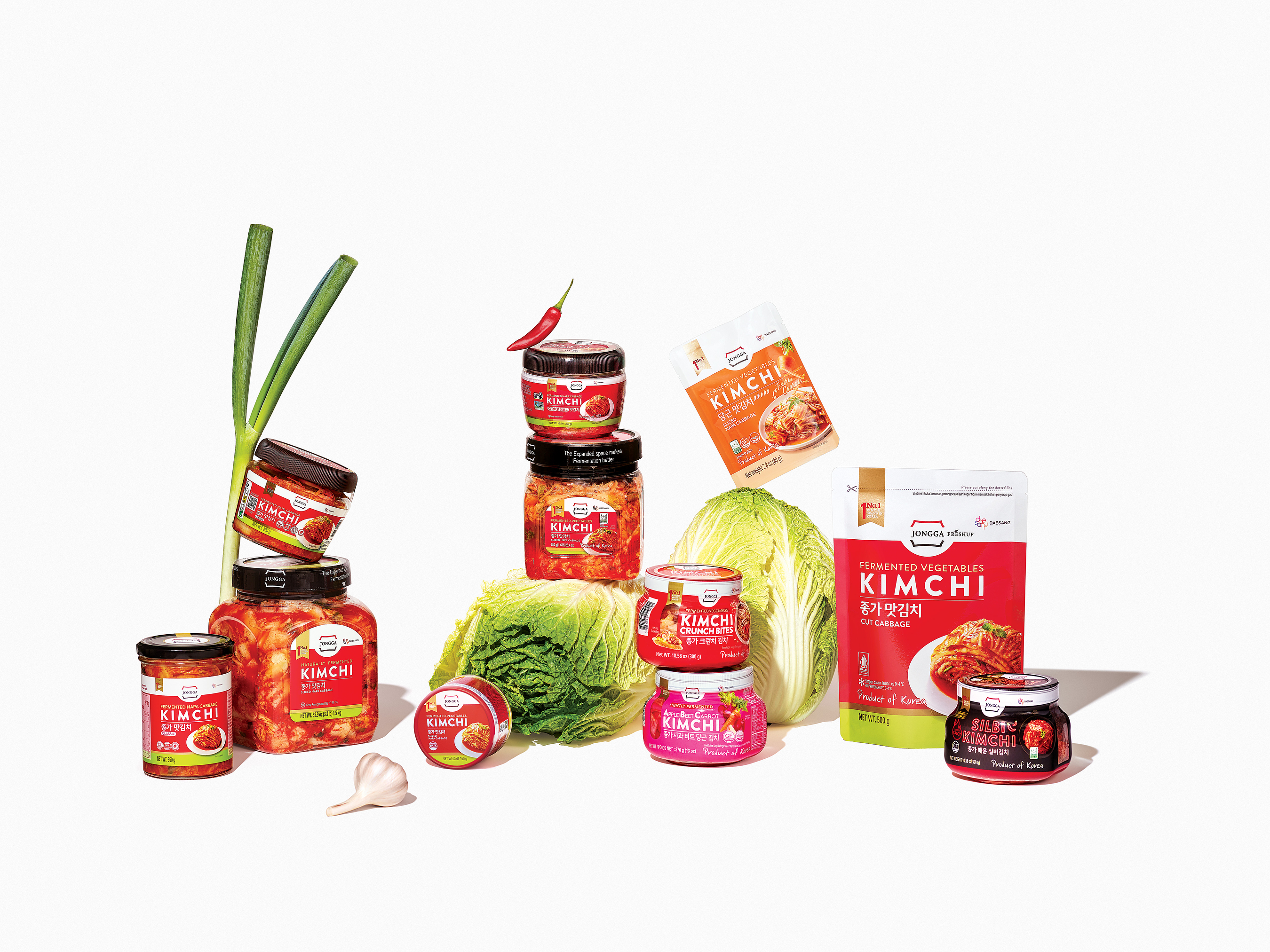
The product portfolio is designed to minimize adoption friction for operators working with customers unfamiliar with fermented foods. Jongga's U.S. lineup spans original kimchi, vegan kimchi, white kimchi, and cucumber kimchi—giving chefs options that reach beyond heat-tolerant diners. In 2025, the brand partnered with New York restaurant Rokstar Chicken to introduce kimchi chicken sandwiches and kimchi french fries, a move that illustrates how kimchi can function as a condiment or topping within familiar American formats.
A Category Primed for Menus
The broader market context supports continued operator interest in fermented food trends across foodservice. Consumer appetite for fermented ingredients is rising in tandem with K-content's global popularity, and kimchi fits neatly into the high-flavor, gut-health positioning that many restaurant concepts are pursuing. November 22 is observed internationally as Kimchi Day—established in South Korea through the Kimchi Industry Promotion Act in 2020—and the date has since been designated by several U.S. states, beginning with California in 2021, followed by New York and Virginia. In 2025, Paris's 15th arrondissement officially recognized the day, a sign of kimchi's accelerating penetration in European markets as well.
Oh Yeon-taek, Head of Daesang's Kimchi CIC, described the brand's dual mandate as preserving authenticity while adapting to local food cultures: "Jongga will continue to preserve the authenticity of kimchi while pursuing innovation tailored to local food cultures, working to make kimchi an everyday choice on tables around the world."
For operators scouting ingredients that carry both culinary versatility and a compelling wellness narrative, Jongga's expanding distribution network and diversified SKU lineup lower the barrier to menu experimentation. Foodservice buyers in restaurant beverage and ingredient sourcing should note that the brand's California production base can now supply domestic accounts without the import timelines that previously complicated menu planning.
Written by Michael Politz, Author of Guide to Restaurant Success: The Proven Process for Starting Any Restaurant Business From Scratch to Success (ISBN: 978-1-119-66896-1), Founder of Food & Beverage Magazine, the leading online magazine and resource in the industry. Designer of the Bluetooth logo and recognized in Entrepreneur Magazine's "Top 40 Under 40" for founding American Wholesale Floral, Politz is also the Co-founder of the Proof Awards and the CPG Awards and a partner in numerous consumer brands across the food and beverage sector.