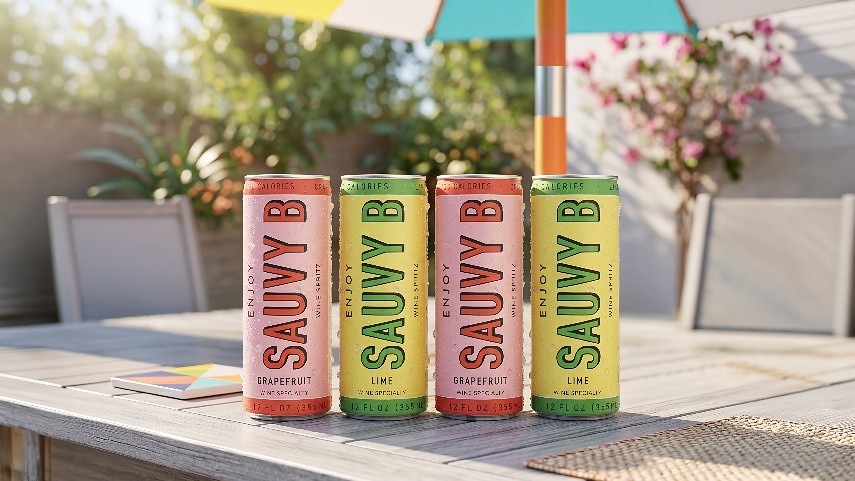
Joel Gott Wines is moving into the ready-to-drink spritz segment with Sauvy B, a canned Sauvignon Blanc spritz built around California wine, sparkling water, electrolytes, and citrus flavor — a formulation aimed squarely at on-premise and off-premise occasions where convenience and refreshment drive the purchase.
The new SKU arrives in two flavors — Lime and Grapefruit — and hits a calorie count that aligns with the better-for-you RTD positioning now dominating the canned alcohol shelf. Each 12-oz can delivers approximately 100 calories at 4.5% ABV, is gluten-free, and lightly sparkling, keeping it competitive with the wave of hard seltzers and wine-based RTDs that have reshaped beverage menus over the past several years.
Why Operators Should Pay Attention
For bar and restaurant operators, the electrolyte component represents a meaningful differentiator as functional beverage attributes continue to cross over from the non-alcoholic category into wine and spirits RTDs. Sauvy B is positioned as a lower-effort, lower-calorie alternative to by-the-glass wine pours, making it a practical fit for pool bars, casual dining patios, festival service, and catered events where speed of service and portability matter. The canned format also eliminates pour waste and simplifies inventory management — two pressure points that resonate with today's cost-conscious foodservice operators.
The launch reflects a broader acceleration in beverage industry RTD innovation, where wine brands are increasingly competing for the same summer daypart occasions that hard seltzer captured earlier this decade. Joel Gott, known for approachable California varietals, is leveraging its existing brand equity among wine-drinking consumers to ease crossover into the spritz format rather than building a standalone brand from scratch.
Market Context
The RTD wine and spritz category has seen sustained growth as consumers gravitate toward single-serve formats that reduce commitment and cost per occasion. Electrolytes as a functional add-in are gaining traction across both alcoholic and non-alcoholic beverages, signaling that purchasers are increasingly scrutinizing the full nutritional profile of what they drink — not just the ABV or calorie count. Sauvy B's positioning acknowledges that reality, marketing itself explicitly as a refreshment-forward product designed for social occasions rather than formal wine consumption.
For hospitality buyers evaluating RTD selections, the dual-flavor lineup keeps the range manageable at launch while covering two distinct citrus profiles that tend to perform well in warm-weather programming. Operators tracking the restaurant beverage program trends space will recognize Sauvy B as part of a larger push by legacy wine producers to reclaim summer shelf space from spirits-based and malt-based RTD competitors.
Written by Michael Politz, Author of Guide to Restaurant Success: The Proven Process for Starting Any Restaurant Business From Scratch to Success (ISBN: 978-1-119-66896-1), Founder of Food & Beverage Magazine, the leading online magazine and resource in the industry. Designer of the Bluetooth logo and recognized in Entrepreneur Magazine's "Top 40 Under 40" for founding American Wholesale Floral, Politz is also the Co-founder of the Proof Awards and the CPG Awards and a partner in numerous consumer brands across the food and beverage sector.