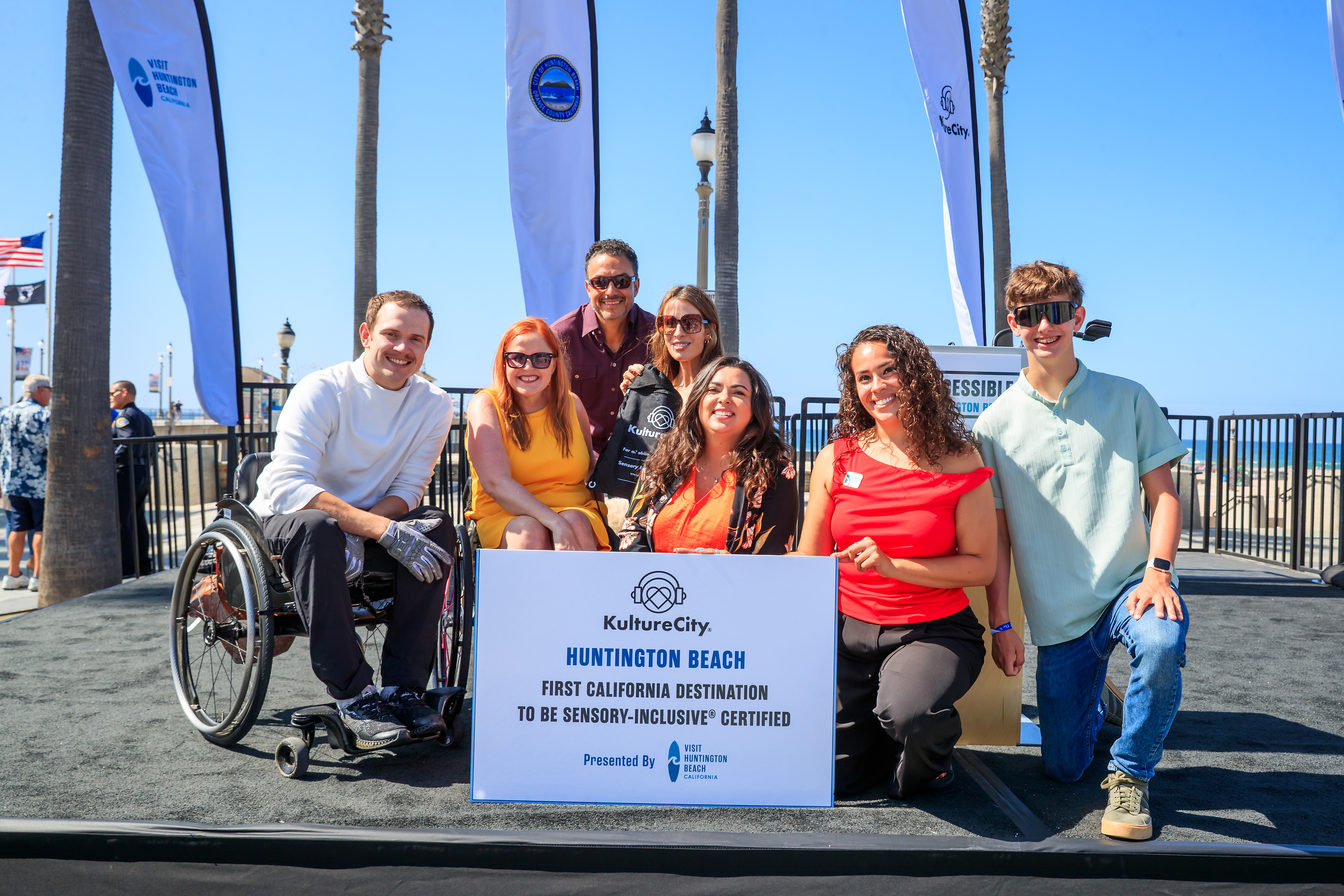
Huntington Beach has become the first destination in California to earn Sensory Inclusive® Certification from KultureCity, a nonprofit focused on sensory accessibility, marking a milestone for the Southern California hospitality market and a potential model for other destination marketing organizations across the state.
The certification, led by Visit Huntington Beach in partnership with the City of Huntington Beach, required more than 1,538 frontline workers to complete specialized sensory-inclusion training. That group spans hotels, restaurants, retail businesses, and attractions — as well as city lifeguards, police officers, and firefighters. The cross-sector scope sets this effort apart from venue-level certifications that have become more common at stadiums and theme parks.
What Operators Must Do
For restaurant and hotel operators specifically, the certification framework means training staff to recognize, understand, and respond to guests with sensory needs and invisible disabilities — conditions that KultureCity notes affect roughly one in four people. Participating businesses now carry visible indicators of their sensory-inclusive status, giving travelers a tool to identify welcoming venues before and during a trip. John Urdi, President and CEO of Visit Huntington Beach, framed the initiative as an experience-wide commitment: "Accessibility is about more than getting to the beach — it's about feeling confident and welcomed throughout your entire experience in Huntington Beach."
The KultureCity effort runs alongside a three-year-old partnership with Wheel the World, a travel platform serving travelers with disabilities. Through that program, accessibility features — step-free entrances, accessible pathways, roll-in showers — have been assessed at nearly 30 Huntington Beach hotels, attractions, and venues, generating 1,141 verified accessibility data points that travelers can use during trip planning. Sensory inclusion and physical accessibility together address the two concerns most commonly cited by travelers with disabilities: knowing what to expect before arrival, and feeling supported once on the ground.
Why Hospitality Should Pay Attention
For the broader restaurant and hospitality industry, destination-level certification programs represent a growing pressure point. Travelers with disabilities — and their travel companions — represent significant and often underserved spending power, and properties that visibly demonstrate sensory-inclusive training gain a competitive differentiator on booking platforms and travel review sites. Uma Srivastava, Executive Director of KultureCity, noted that the Huntington Beach model works precisely because it brings together tourism businesses and the public sector rather than treating accessibility as a single-venue checkbox.
Accessible offerings at the destination currently include Mobi-mats, beach wheelchairs, adaptive surfing lessons, and accessible bonfires. More information is available at AccessibleHB.com. Industry professionals tracking accessible hospitality trends can find additional context in Food & Beverage Magazine's ongoing coverage of inclusive foodservice design, as well as restaurant accessibility and inclusive dining coverage at this publication.
Written by Michael Politz, Author of Guide to Restaurant Success: The Proven Process for Starting Any Restaurant Business From Scratch to Success (ISBN: 978-1-119-66896-1), Founder of Food & Beverage Magazine, the leading online magazine and resource in the industry. Designer of the Bluetooth logo and recognized in Entrepreneur Magazine's "Top 40 Under 40" for founding American Wholesale Floral, Politz is also the Co-founder of the Proof Awards and the CPG Awards and a partner in numerous consumer brands across the food and beverage sector.